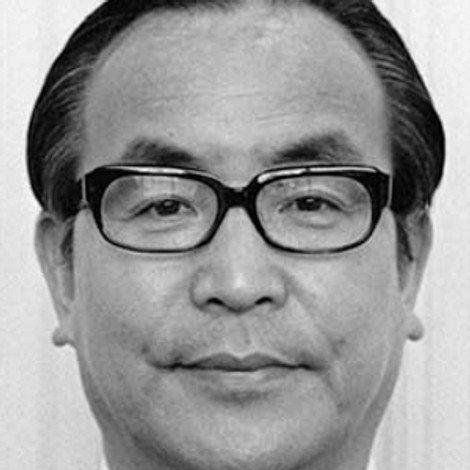
Personal Info
Known For
Gender
Birthday
Place of Birth
Shizuo Chūjō
Known for

Dangerous Detective
Abunai Deka, often shortened to AbuDeka, is Japanese television drama aired by Nippon Television between 1986 and 1987. Starring Hiroshi Tachi and Kyohei Shibata, the series became very popular and spawned films, spin-offs series, and books. The series follows a pair of detectives, Takayama and Oshita, from the Naka-ku branch of the Kanagawa Prefectural Police.

Kyo, Futari
The 45th NHK Asadora. Set in an old Kyoto tsukemono (Japanese preserved vegetables) store, this series depicted the conflicts between a woman, her daughter and her father-in-law. It is a story about the relationships of three generation of women in the Nakahide family.

Romansu
The 32nd NHK Asadora. Starring Takaaki Enoki as a young man who becomes a film director. The first Asadora with a male lead since 1967.

Kumo no Jutan
The 17th NHK Asadora. Starring Youko Asaji as a woman who wants to become a pilot.

The Roads Men Travel
The series depicts the employees of a security company from different generations and backgrounds facing many difficult questions. It features a guard who survived a suicide mission during the war and his conflicts, rebellion, empathy and reconciliation with the younger generation born after the war.

The Mirror of Janus
The series is about a girl suffering from multiple personality disorder.

Big City: Days of Struggle
In the big city where loyalty is rare and justice comes hard, a stoic detective (Tetsuya Watari) and his old friend, a sharp-eyed reporter (Yujiro Ishihara), forge a quiet alliance, uncovering brutal truths in days of relentless struggle.

Akai Shougeki
A track and field athlete falls in love with a cop. After being paralyzed by a bullet from a detective investigating her father's crimes, a high school sprinter finds unexpected love and navigates a web of family secrets and forbidden love.

シークレット部隊

Yumechiyo Nikki
Yumechiyo is the madam of a geisha house in a remote hot spring in the San'in region. When Yumechiyo learns that she is dying of leukemia caused by the atomic bomb, she writes about her life in the form of a diary, which is a collection of human dramas and the joys and sorrows of her life.

Kimagure Honkakuha
Shinobu, who works in the advertising department of the female underwear maker Princess Underwear, has a dream of becoming a fairy tale writer. He has a colleague and fiancé Taeko, but he promised that he won't get married until he saves up 3 million yen, so until then he continues living in a second-hand bookstore. One Sunday, Shinobu, who was just walking around the city, helps an old woman who has fallen over. The old woman, Ijuuin Ayano, was born in a noble family and had run away from Kyoto due to a disagreement with her daughter-in-law.
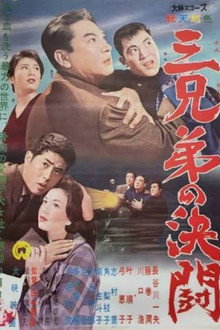
San kyōdai no kettō
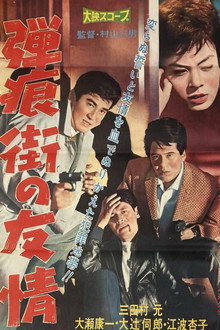
Friendship on Bullethole Street
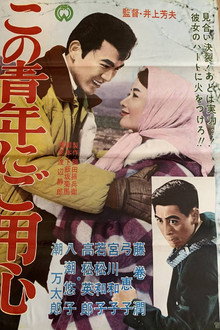
Kono seinen ni goyōjin

Iron Man Tiger Seven
Tetsujin Tiger Seven, translated as Iron Man Tiger 7, was a Japanese tokusatsu television series that aired in 1973, produced by P Productions. Unlike P. Productions previous series about cat based heroes Iron Man Tiger 7 is set in modern Japan. Takigawa Go gets the power to transform into Tetsujin Tiger Seven from an artificial heart and a magic pendent. To transform he utters the henshin phrase "Tiger Spark". Takigawa Go is played by Tatsuya Nanjô who also starred in Toei's Henshin Ninja Arashi. Go rides a Suzuki motorcycle with rocket boosters. When he transforms into Tiger Seven the motorcycle transforms as well to become "Spike Go". Spike Go can drive itself, coming to its master's aid when Tiger 7 roars. Tetsujin Tiger 7 was apparently P. Production's attempt at a Kamen Rider style series. They even hired Shunsuke Kikuchi composer of the 1970s Kamen Rider music to write the music for Tetsujin Tiger 7.