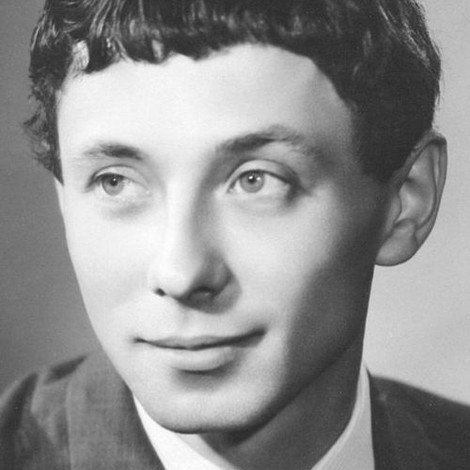
Personal Info
Known For
Gender
Birthday
Place of Birth
Oleg Dal
Known for

To Remember

The Adventures of Sherlock Holmes and Dr. Watson
The Adventures of Sherlock Holmes and Dr. Watson is a series of five films produced by Lenfilm for the Soviet Central Television, split into eleven episodes, starring Vasily Livanov as Sherlock Holmes and Vitaly Solomin as Dr. Watson. They were directed by Igor Maslennikov and filmed in Russia (the then Soviet Union) between 1979 and 1986, and the series was one of the most successful in the history of Russian television.

Memories of Sherlock Holmes
Detective television series based on the works of Arthur Conan Doyle. Five films about Sherlock Holmes, shot by Igor Maslennikov earlier, were remounted in 2000, a connecting story about Conan Doyle's literary secretary, Mr. Wood, who is preparing an anniversary collection of stories about Holmes for the beginning of the coming XX century. Sir Arthur receives huge mail every day, addressed not to him, but to Sherlock Holmes. And then one day a letter arrives with a plea for help, and Doyle begins an investigation...

The First Trolleybus
Svetlana, young pretty girl, works as a trolleybus driver in a small town and almost all her permanent passengers are at least a little bit in love with her.

Golden Mine
The film is set in the 1970s Leningrad, Russia. Fugitive Brunov is a dangerous criminal, who escaped from jail. He is after the treasure that was hidden by him years ago at his former country-house. He is having plastic surgery to hide his identity, while preparing for his next crime. He is trying to kill another man, who is also after the same treasure. Investigators Zarubin, Kromkin and Lebedeva are untangling the case.

Variant 'Omega'
The miniseries is based on documentary material about the actions of Soviet intelligence in Tallinn occupied by the Nazis.

The Adventures of Prince Florisel
A mostly comical tale of all-powerful and wealthy Bavarian prince adventures that started when prince was seeking to deal with the boredom. Joining the Club of Suicide society, he uncovered the mastermind criminal behind it, and vowed to get rid of him by any means necessary, following deaths of several servants when dreaded president of club makes dashing escape. During that point, story changes into nearly second movie, as prince has to uncover yet another crime.

The Sannikov Land
A group of people setting out to find a previously assumed land and upon reaching it, not knowing how to deal with the customs of the place, have to deal with all the consequences.

A Very Old Story
Based on the famous fairytale "The Tinderbox" by Hans Christian Andersen. The main character of the film is a puppeteer who lives in a poor and gray world. He composes a fairy tale in which he himself, in the guise of a brave soldier, finds a flint and is helped by a kind wizard. The soldier falls in love with a spoiled, capricious princess who, as befits a princess, poses riddles to her numerous suitors. Her father, the king, is eager to see the soldier as her husband, as he believes the soldier has a great deal of gold. In the fairy tale, everything ends well, but in real life, not so much. "But life is not a fairy tale," his beloved girl says to him as she bids him farewell.
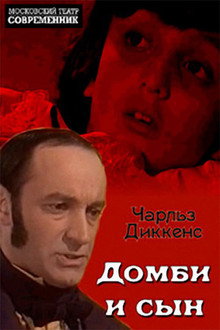
Dombey & Son
The dream of Paul Dombey, the wealthy owner of the shipping company, is to have a son to continue his business. Tragically, Dombey's wife dies shortly after giving birth to their son.

For Better and for Worse
In December 1825, distinguished members of the Russian military, most of whom were quite affluent and of noble lineage, took it upon themselves to stir revolution against the autocratic and tyrannical Czar Nikolai I in the wake of his not honoring the drafting of a constitution for the Russian people. The revolution failed miserably and the conspirators (known as the Decembrists) were weeded out by the czar himself. One by one, each of the conspirators confess and are systematically exiled to the harsh winters of Siberia, slated to work and wither in a prison/mine. The wives of the conspirators are faced with the prospect of leaving the bosom of wealth and family (including their own children) to be with their husbands in the brutal Siberian locale. If they agree to this, they face having their illustrious social stations stripped away and certain disdain from everyone around them...
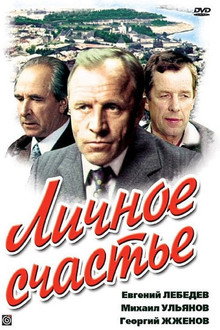
Personal Happiness
The distinctive traits of the Doroshin family are hard work, courage, and principledness. Pavel Nikolaevich is a war veteran and the chief engineer of a factory, while Anastasia Mikhailovna is the head of a university department and an active participant in the partisan movement. Their eldest son, Ilya, a sanitary doctor, demands the closure of one of the city's enterprises. However, war criminals, who are hiding from retribution, know that the Gestapo archives are hidden in the building's basement and fear that the documents might be discovered. Terrified of exposure, they try to prevent Ilya from carrying out this action and attempt to discredit the Doroshins.


Shadow
The good-natured scholar Christian-Theodore arrives in a small country where miracles occur. He falls in love with the beautiful Princess, whose marriage is a matter of national importance, because her husband will become the new king. But unlike many “suitors”, selfish thoughts are alien to Christian-Theodore. He is sincerely fascinated by her beauty and releases his Shadow, hoping to get a faithful helper in his quest to marry the Princess. But the Shadow is the embodiment of egoism, greed and meanness. Quickly betraying the scholar, he marries the Princess himself and takes the royal throne.

The Ordinary Arctic
The plot is based on stories by B. Gorbachev: "The Trial of Stepan Grokhot," "Birth on Cucumber Land," "The Merchant Labas," and "The Great Flood." The main circumstance of the plot is five days of blizzard that began immediately after the arrival of a new boss at the Arctic construction site. The time of the action is 1935. A new manager arrives at a construction site that is in a state of crisis.