Personal Info
Known For
Gender
Birthday
Place of Birth
Djenane Machado
Known for

The Trapalhões
Os Trapalhões was a Brazilian comedy group and also a Brazilian television series created by Wilton Franco. Its members were Dedé Santana, Zacarias, Mussum and their leader Didi Mocó, that was played by Renato Aragão. The name Trapalhões is derived from the Portuguese verb atrapalhar, which means the opposite of helping, to do something the wrong way or to Those that confuse. The name is translated "Tramps" in English DVD subtitles. It was aired by Rede Globo from 1977 to 1999. On March 18, 1990, Zacarias died due to respiratory failure, but the group and the series didn't come to an end until July 29, 1994, when Mussum died due to an unsuccessful heart transplant.

Véu de Noiva

Dancin' Days
A down-on-her-luck former inmate tries to reconnect with her daughter--to the objections of her sister who raised the girl, meets a millionaire, and transforms into a strong woman, returning to society at Dancin' Days nightclub's opening.

Rosa Rebelde

Telerromance

O Primeiro Amor
Professor Luciano Lima arrives in the fictional town of Nova Esperança to take over as principal of a school. A widower, he hires a governess to take care of his four children: Júnior, Babi, Zizi, and Rui. The professor and the governess, Paula, fall in love, but the romance faces strong resistance from the children, especially Babi, the most rebellious of the four. Luciano also encounters difficulties at the school. His former girlfriend, English teacher Maria do Carmo, does everything she can to steal his position as principal. Meanwhile, a group of maladjusted and rebellious students, led by the biker Rafa, disrupts the school environment and bothers the other students. In this scenario, Giovana, a young psychologist hired by Luciano to help him deal with the rebellious students, emerges. She ends up forming a love triangle with Paula and the professor.

Espelho Mágico

Ciranda de Pedra
Set in 1940s São Paulo, the story follows Laura, a modern woman devoted to the arts who is oppressed by her husband, Natércio Prado—a wealthy man with traditional views. Amidst marital turmoil, Laura suffers a severe trauma and is even committed to an asylum by her husband. The couple separates, and the family is torn apart: Laura keeps her youngest daughter, Virgínia, while Natércio retains custody of the other daughters, Otávia and Bruna. Frail and penniless, Laura moves into the Vila Mariana home of her neurologist, Daniel. He is in love with his patient and believes her condition is physical rather than mental. Laura hides the fact that Virgínia is actually Daniel's daughter. The youngest daughter eventually returns to live with her father, where she faces hostility and harshness from the housekeeper, Frau Herta.

Assim na Terra Como no Céu

O Cafona
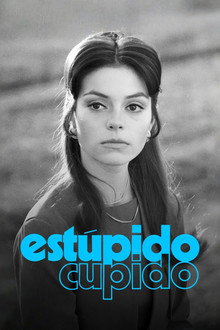
Estúpido Cupido
The story is set in the fictional city of Albuquerque, in the interior of São Paulo, in the early 1960s – a time marked by changing behaviors in much of the world. There, young people enjoy the sounds of rock and twist on the dance floors, follow the fashion of jeans and leather jackets, and show off on Lambrettas and motorcycles through the city streets. In this context, Maria Tereza, a student teacher, dreams of living in the capital and being elected Miss Brazil, but clashes with her boyfriend, João. An idealistic young man who intends to pursue a career in journalism, he is consumed by jealousy of his beloved.

Passo dos Ventos

Tudo ou Nada

A Ponte dos Suspiros
