Personal Info
Known For
Gender
Birthday
Place of Birth
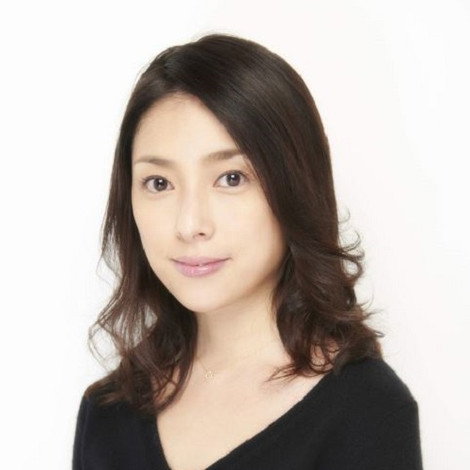
Maki Miyamoto
Known for

AIBOU: Tokyo Detective Duo
Detective Ukyo Sugishita confronts crime on the basis of his own convictions. He has a partner that works for him in the Special Task Unit. For the first 7 seasons, Ukyo’s first partner is Kaoru Kameyama. He is a good-natured, hot-tempered, straightforward and somewhat scattered detective. Beginning in Season 8, Takeru Kanbe replaces Kameyama. Contrary to his predecessor, Takeru is a lanky, cool, conceited and confident detective. From Season 11 to Season 13, Ukyo’s partner is a young detective Toru Kai. Toru is a son of Deputy Director-General of The National Police Agency. But he became a detective by his own effort. And starting with Season 14, Ukyo’s current partner is Wataru Kaburagi, an elite bureaucrat who came to the Metropolitan Police Department on temporary assignment. As the first partner without any career of a police officer, he will face challenging cases together with Ukyo.

The Woman of S.R.I.
Mariko is a forensic scientist working at the Kyoto PD Crime Lab. Her credo is “science never lies” and she delves into the truth of the case with her colleagues with their specialized skills and knowledge in forensic medicine, physics, chemistry etc. Mariko’s steadfast belief in science makes her stand against conventional institutional ethics of the police department, diehard detectives averse to scientific investigation and sometimes even with her own colleagues, but she stays faithful to her belief in science and continues to pursue the truth.

Tokyo MPD – From ZERO to HERO
The First Investigative Division is the star unit of the Tokyo Metropolitan Police Department. Jun'ichi Ōiwa, the head of the division, leads around 400 elite detectives. He has an extremely heavy responsibility: attends initial investigations at the scenes of all brutal crimes that occur within the metropolis, decides on the course of action of the investigations at the same time as he directs many investigation task forces and gets into investigations himself at the critical phase. However, Ōiwa is definitely not a superman. Amid his suffering, Ōiwa overcomes this grave responsibility and is quite simply a "life-size hero" and "ideal boss" to his subordinates.

Mission To Kill
Continuation of the popular series of films about the assassins in Edo. This show marks the return of the jidaigeki series "Hissatsu Shigotonin," which has had several seasons between the 1970s and the 1990s. The franchise came back in 2007 with a one-shot special, but this is its first full season since 1992. Makoto Fujita returns as the protagonist Nakamura Mondo, one of the "shigotonin," a team of hired assassins.

Youkai Sharehouse
Mio Meguro is a timid person. She is afraid of being hated by others, and this causes her to refrain from saying what she really wants to say. She doesn't have any specific things she wants to do. She got a job and eventually dated a man from her workplace. Mio Meguro wanted to marry the man, but he turns out to be a bad guy. Because of him, she becomes penniless and unemployed. Her life descends into a bottomless pit. Mio Meguro then happens to get a sharehouse, where the mysterious creatures known as yōkai live. The yōkai try to solve her problems in radical ways.

愛の迷宮

Maid Deka
Aoi is a moe-type maid working on a wealthy Osaka estate. In reality, though, she is an undercover detective sent by the police on a special mission to investigate a suspect.

The Secrets of the Married
A love-hate drama series that follows Noyama Honoka as a florist shop owner who finds her comfortable life messed up by distrust and suspicion when she receives a letter that her newlywed husband Masamichi is hiding a secret from her. As time goes on, she begins to become suspicious of the women around Masamichi, and her negative emotions develop into ones of betrayal and revenge.

Painless - Eye Can Diagnose
Eisuke Tameyori is a middle-aged private practice physician. He has the ability to diagnose someone's condition just by looking at their appearance. He is also able to recognize people who will commit crimes in the future by certain symptoms and tries to prevent them from committing those acts. He meets Detective Junichiro Hayase and they soon work together to solve cases.


Service Oath
A member of the Japan Self-Defense Forces, Lieutenant Kasuga, was assigned to the earthquake-stricken area. Though he had lost his wife and young daughter in the tsunami, Kasuga concealed his own grief and devoted himself entirely to his mission. At an evacuation shelter, he encountered a boy named Kazuki Yoshimura, who had also lost his family and shut his heart. As Kazuki quietly observed the Self-Defense Forces at work, he eventually began to help people around him as well. Two people who met at the depths of despair decided to believe in hope and began to move forward. A story of “rebirth”, arising from loss.

あなたの人生お運びします!

The Geisha House
Set in a Kyoto geisha house during the post-WWII era, the young Omocha begins her rigorous apprenticeship within the traditional community of geiko and maiko. She must navigate complex internal rivalries and a strict social hierarchy while the house struggles to maintain its customs. As modern society shifts around them, the residents face the increasing pressure of Japan's changing cultural identity.
冤罪~父と子の旅路~

Yoko the Cherry Blossom
In 1940, Masaaki Takaoka works as a teacher in the agricultural division at a youth training institute. Although Japan’s defeat seems imminent, all of Masaaki’s students are drafted in a futile last-ditch effort. In an attempt to give the young men some hope, he makes everyone promise that they will all meet again under the cherry blossoms upon their safe return. Consumed by sadness over the fate of his students, Masaaki devotes the next 30 years of his life to develop a new species of cherry blossoms that could thrive in any climate in remembrance of his students.