
Personal Info
Known For
Gender
Birthday
Place of Birth
Wanda Stefânia
Known for

Telerromance

Amor com Amor Se Paga
Nonô Corrêa, a character inspired by Molière's "The Miser", is the story's protagonist. The orphan Zezinho crosses paths with Nonô and wins the neurotic gentleman's heart.
Como Salvar Meu Casamento
A Barba Azul
O Julgamento

Cavalo Amarelo
The irreverent Dulcinéa struggles to keep her revue theater, *Mambembe*, afloat; the building itself belongs to the traditional Maldonado family. The patriarch, Salvador Maldonado—a conservative man—keeps a tight rein on the clan, maintaining control over both the business and his children: Joana, an elegant and snobbish woman who is the staunchest defender of the views held by Pops, as the children call him; Téo, who has always silently submitted to the old man's high-handedness; Walter, dominated by his older sister and his father's favorite; and Lalucha, the youngest, a film student who challenges the status quo and rebels against the family's stuffy conservatism.

Te Contei?
Sabrina is a wealthy young woman who hides her compulsion to steal from her parents – Hilda and Fred – and also conceals the fact that she rents a room at Lola's boarding house in the Rio de Janeiro suburbs, where she pretends to be a modest young woman looking for work. The parallel plots of the story unfold through these two distinct worlds in which Sabrina lives.

Aritana
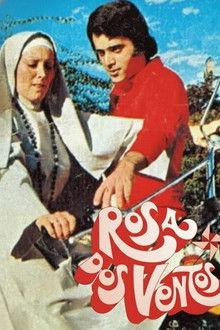
Rosa dos Ventos

Canavial de Paixões
Canavial de Paixões is a Brazilian telenovela produced and shown by the Sistema Brasileiro de Televisão from 13 October 2003 through 22 March 2004. Based the original text of Caridad Bravo Adams, it was translated into the Portuguese for Enrique Zambelli and Simoni Boer, with supervision of text of Ecila Pedroso and general direction of teledramaturgia of David Grimberg. It had 118 chapters. Bianca Castanho and Gustavo Haddad are the main protagonists. Débora Duarte, Helena Fernandes, Oscar Magrini are the main antagonists.
Ovelha Negra

Rosa Baiana
Rosa Baiana is a strong and courageous woman, the companion of Edmundo Lua Nova, who abandoned her with seven children to travel the world. Her children, Agenor, Ivan, Bráulio, Walter, Orestes, Cláudia, and Edinho, ended up connecting their lives to oil, working in the oil fields of Bahia, without, however, detaching themselves from their mother, the ultimate authority and final word in the family. Rosa imposes her personal worldview on everyone. The children don't dare contradict her, even when their lives conflict with their mother's standards. Until the day Edmundo Lua Nova returns home after twenty years away.

Maçã do Amor
Lia rises professionally and finds the strength to ask her husband, Mário, a good-natured rogue, for a divorce. The separation will decisively influence the life of one of her sons, Chico-Tico, who begins to show symptoms of a rare neurological disease known as "absence syndrome." Through temporal lapses, the boy absents himself from the present life, living in another reality, of which he later retains no memory. In the village where the family lives, there also reside Nicola, a teenager infatuated with older women; his mother, Filomena, an Italian woman who tries to contain her son's passionate outbursts; Seu Oliveira, the newsstand owner, a friendly Spaniard with a slightly anarchist past; and his two daughters, Margô and Heleninha. Also living in Lia's house are Astrides, the maid who dreams of parading with the Mangueira samba school, and Manequinho, her son, who works at Seu Oliveira's newsstand.
Canção para Isabel

Avenida Paulista
The miniseries portrays the greed for money, power and prestige through the rise and fall of Alex Torres, a consequence of the schemes of the unscrupulous banker Frederico Scorza.