
Personal Info
Known For
Gender
Birthday
Place of Birth
Cacilda Lanuza
Known for

A Menina do Veleiro Azul

Meu Pedacinho de Chão
Colonel Epaminondas is a retrograde and authoritarian man, who commands and dismantles the region. He declares war on Pedro Galvão, his main rival, when he donates part of his land – purchased from the colonel – for the construction of a church and a school. The arrival of professor Juliana, right at the beginning of the plot, changes the lives of the residents of the small village. Juliana takes over the school and ends up arousing the interest of Fernando, Epaminondas' son. Oblivious to the fights that drive the story are Pituca (Patrí and Serelepe (Aires Pinto). The friendship between the two children, however, does not please the colonel, who is always fighting with his daughter. 'Meu Pedacinho de Chão' was co-produced and shown simultaneously by Globo and TV Cultura in São Paulo.

Dez Vidas

Eu Prometo
Os Diabólicos

Os Miseráveis
The story begins during the French Revolution, at the end of the 18th century. Jean Valjean steals a loaf of bread to feed his younger sister and ends up imprisoned for it. Released many years later, he tries to start his life anew and redeem himself. He becomes a rich man, but always lives in the shadow of his "criminal" past. While trying to escape the pursuit of Inspector Javert, Jean meets the poor girl Cosette. Treated as a slave, he takes her into his home to raise her as his daughter.
O Pintor e a Florista

Padre Cícero
When accused of disobeying Church norms and having his priestly rights suspended, Father Cícero intensifies his political activity in fulfilling his pastoral mission.
O Direito dos Filhos

Chão Bruto
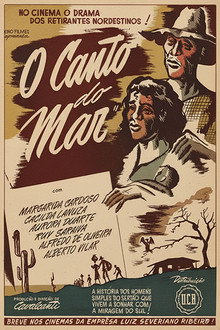
Song of the Sea
In the drought areas of Northeastern of Brazil, groups of migrants move trying to find better place to live, at least with water. Some of them go to Recife, to get a vessel to Santos expecting to have a better life in the Southern. In the poor area of Recife, an old washerwoman launders clothes to survive and support her family. Her husband Zé Luis, a former sailor, is crazy due to a hit of the boom of a mast on his head. Her older son Raimundo works in a grocery and selling mangoes on the street, trying to save money to move to the Southeastern with his girl-friend Aurora. Her daughter wants to be a prostitute to have a better quality of life. Her younger son is seriously sick.

Case of the Naves Brothers
After their relative and associate runs way, the Naves brothers inform the police of the incident, who end up arresting them under the accusation of murdering the missing person. The brothers are tortured in order to confess a crime they did not commit while their wives are raped.

Compasso de Espera
Jorge de Oliveira is an Afro-Brazilian poet who works in a publicity agency in São Paulo. Torn between his rich white lovers and his black family and friends, Jorge's situation serves as a springboard to a discussion about racial issues in Brazil.

Morte e Vida Severina
The saga of Severino, a poor guy living in the back country of Northeast Brazil, leaving for the big city of Recife, in search of a better life.

Trilogy of Terror
An anthology divided in three segments, helmed by three of the most important Brazilian directors of the 20th century. A mother becomes involved with black magic and offers a virgin woman to the Devil in exchange for curing the illness of her only son. A poor laborer is the only man in the village with courage to face a group of guerrilheiros ("guerrilla ghosts") that haunt the minds of the locals. A young man is afflicted by fear of reptiles and spiders and the fear of being buried alive. When he undergoes a shocking event, he becomes unresponsive and is mistakenly buried, only to revive in the coffin after burial.