Personal Info
Known For
Gender
Birthday
Place of Birth
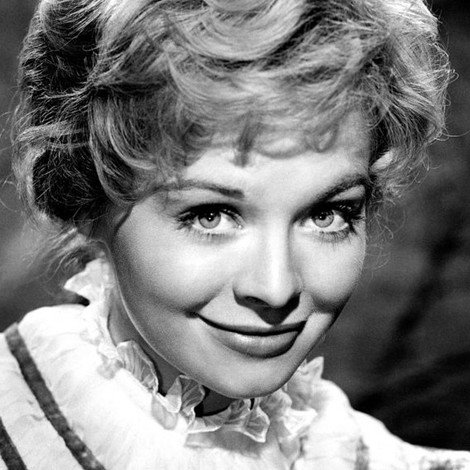
Susannah York
Biography
Known for
Casualty
Drama series about the staff and patients at Holby City Hospital's emergency department, charting the ups and downs in their personal and professional lives.

The Merv Griffin Show

The Dick Cavett Show
The Dick Cavett Show has been the title of several talk shows hosted by Dick Cavett on various television networks.


ITV Playhouse
ITV Playhouse is a British comedy-drama TV series that ran from 1967 to 1983, which featured contributions from playwrights such as Dennis Potter, Rhys Adrian and Alan Sharp. The series began in black and white, but was later shot in colour and was produced by various companies for the ITV network, a format that would inspire Dramarama. Actors appearing in the series included Leslie Anderson, Gwen Nelson, Ricky Alleyne, Pat Heywood, Michael Elphick, Ian Hendry, Edward Woodward, Margaret Lockwood, Jessie Matthews and Lloyd Peters.

Theatre 625
Theatre 625 is a British television drama anthology series, produced by the BBC and transmitted on BBC2 from 1964 to 1968. It was one of the first regular programmes in the line-up of the channel, and the title referred to its production and transmission being in the higher-definition 625-line format, which only BBC2 used at the time.

The Ray Bradbury Theater
A Canadian-produced fantastic anthology series scripted by famed science-fiction author Ray Bradbury. Many of the teleplays were based upon Bradbury's novels and short stories.

The Ruth Rendell Mysteries
The Ruth Rendell mysteries is a British television series made by TVS and Meridian Television for ITV between 2 August 1987 and 11 October 2000.

Hollywood Squares
Hollywood Squares is an American panel game show, in which two contestants play tic-tac-toe to win cash and prizes. The "board" for the game is a 3 × 3 vertical stack of open-faced cubes, each occupied by a celebrity seated at a desk and facing the contestants. The stars are asked questions by the host, or "Square-Master", and the contestants judge the veracity of their answers in order to win the game. Although Hollywood Squares was a legitimate game show, the game largely acted as the background for the show's comedy in the form of joke answers, often given by the stars prior to their "real" answer. The show's writers usually supplied the jokes. In addition, the stars were given question subjects and plausible incorrect answers prior to the show. The show was scripted in this sense, but the gameplay was not. In any case, as host Peter Marshall, the best-known "Square-Master" and the man in whose honor the show's first announcer, Kenny Williams, actually "coined" the term, would explain at the beginning of the Secret Square game, the celebrities were briefed prior to show to help them with bluff answers, but they otherwise heard the actual questions for the first time as they were asked on air.

Orson Welles' Great Mysteries
Orson Welles’ Great Mysteries is a British television anthology series produced by Anglia Television for the ITV network and broadcast between 1973 and 1974. The series presents standalone adaptations of classic mystery, crime, and supernatural stories drawn from literary sources including Dickens, Conan Doyle, Wilkie Collins, Balzac, Maugham, O. Henry, and others. Each episode is framed by original introductory and closing sequences performed by Orson Welles, who serves as the series’ host and sole recurring on-screen presence. These segments, written and directed by Welles (uncredited), function as stylized narrative framing devices rather than dramatic participation in the stories themselves. The dramatic content of each episode is performed by separate casts and directors, with no continuing characters or serialized narrative, establishing the series as a unified television anthology rather than a collection of standalone films.

Superman
Mild-mannered Clark Kent works as a reporter at the Daily Planet alongside his crush, Lois Lane. Clark must summon his superhero alter-ego when the nefarious Lex Luthor launches a plan to take over the world.

Superman II
Three Kryptonian criminals led by General Zod team up with Lex Luthor to conquer Earth, forcing a depowered Superman to regain his strength and stop them.

Mystery and Imagination
Mystery and Imagination is a British television anthology of classic horror and supernatural dramas. Five series were broadcast from 1966 to 1970 on ITV and produced by ABC and Thames Television.

Thursday Theatre
Thursday Theatre is a British television anthology programme produced by and aired on the BBC from 1964–1965. The productions ranged in duration from 75 to 95 minutes. Out of the 23 episodes, 13 are believed lost, and one is incomplete.