Personal Info
Known For
Gender
Birthday
Place of Birth
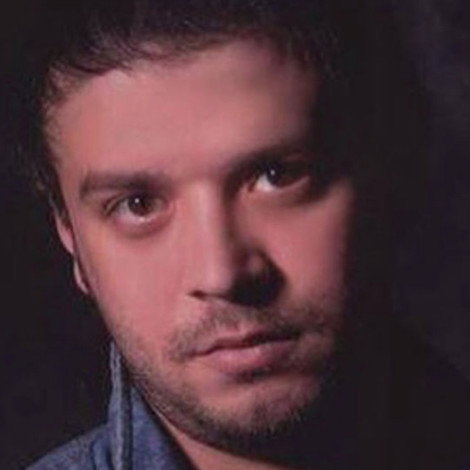
Maher Essam
Biography
Known for

Al-Gama'a
Al-Gama'a is an Egyptian television drama, Historical and Political drama series written by Wahid Hamid, directed by Mohammed Yasin and produced by Kamel Abu Ali. The series began filming in January 2010 with a budget of 50 million Egyptian pounds. The show deals with the rise of the Muslim Brotherhood, Egypt’s largest Islamist political group, which was officially banned but nonetheless tolerated to an extent before the revolution. Critics have decried the show's pro-government stance, charging that it plays into the Egyptian government's agenda prior to the 2010 Egyptian parliamentary elections.

Om Kulthum
Throughout its episodes, the series narrates the biography of the Arab singing lady (Umm Kulthum) since her inception in Sinbillawain and her journey with her father and siblings in singing religious songs on all occasions, through her artistic career and her move to stability in Cairo, and the stories of love that she went through during her life, and her artistic glory until she mastered The lyric scene in Egypt, and the crises she encountered during her artistic work and social life.

King Farouk
The biography of King Farouk I of Egypt, the penultimate king of the Muhammad Ali dynasty. Succeeding his father, Fuad I, to the throne, Farouk's reign ended when the Egyptian revolution of 1952 broke out, and he was overthrown and exiled.

Ferqet Naji Atallah
A retired Egyptian officer working at the Egyptian embassy in Tel Aviv decides to plot revenge against Israel for freezing his bank accounts when he objected to its monstrous conduct in Palestine. In Egypt, he recruits five of his former students to rob Israel’s largest bank.

عصابة بابا وماما

Chi Tutu Restaurant
Where one of the restaurants owned by Adel and his friend Nagaty, after Adel returns from abroad deciding to start a small business that generates income for him, his friend Nagaty offers him a stay.
And the Day Passed
In the sixties, Al-Sharawi Pasha, who was a well-known businessman during the monarchy, tries to flee with his daughter, after the new revolutionary government tries to confiscate his fortune for his illegal activities.

Al Foryagy
The series takes place in a social comedy framework about a man who sees himself living in an absurd society, which makes him deal with everything around him in a farcical way.

For Security Purposes
When a reckless young man loses all his fortune, all his acquaintances turn their back on him, except for his secretary who takes him in. A while after, the man meets with a friend who offers him a job at a company for private security.

Blessed Signs
Abo El-Maaty buys a piece of land to cultivate it. A film crew comes to shoot near the farm, but the film star Salwa has an accident and Abo El-Maaty takes her to his farm to take care of her. She discovers that no one there knows who she is and becomes impressed by the simple life they're living.

Abouda Is a Trademark
The series follows a young man named Abouda who is facing many financial difficulties in life and is unable to prepare his marital apartment, until he suddenly finds himself coming into a great fortune.

Nour Maryam
The events revolve around the conditions of corruption during the period of the previous regime and attempts by righteous people to confront it, as Nour (Youssef Al-Sharif) is trying hard to achieve his goal regardless of the means, while Dr. Maryam (Nicole Saba) is trying to confront this corruption.

Dream Travel
As Mr. Anis retires from his job at the railroad, he is soon devastated by the utter loneliness he has to live with. Seeking companionship and intimacy, he turns his house into a motel, not for material gain, but for human interaction, for company and friendship.
Captain Gouda
A physical education teacher moves to work in a remote area of the Egyptian countryside, where education is not considered a priority or sport in general, as he tries to advance the children of the village and work to adapt to the new environment.

September 11
Eleven directors from eleven countries each contribute an eleven-minute short reflecting on the events of 11 September 2001: A village teacher in Iran tries to explain to her young students what's happened; city kids in Burkina Faso think they've spotted Osama bin Laden; a deaf Frenchwoman in Manhattan writes a Dear John letter to a man who left that morning for work at the World Trade Center; a Chilean remembers Allende; events recall other deaths; a mother endures more than her son's death. Tones vary, as do the locales. Most concern coming to terms with the events of the day, but at least one confronts the viewer with tragedy and death.