Personal Info
Known For
Gender
Birthday
Place of Birth
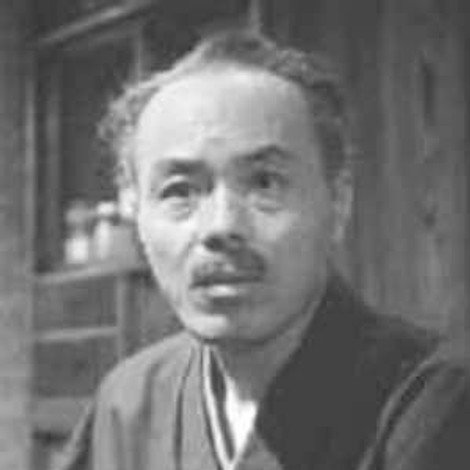
Ichirō Sugai
Known for

Ashita Koso
The 8th NHK Asadora. Starring Yumiko Fujita in a family drama. The first Asadora filmed in color.

Kogarashi Monjiro
Monjiro was born into a poor farm family in Mikazuki Village, Nitta County, Ueshu, and abandoned his hometown when he was 10 years old. He has been traveling aimlessly with a long toothpick in his mouth. Monjiro avoided getting involved in anything, but wherever he went, he ended up getting involved in incidents
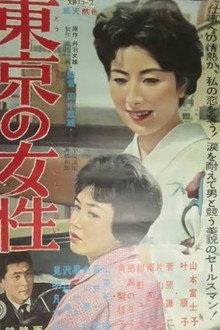
Tōkyō no josei
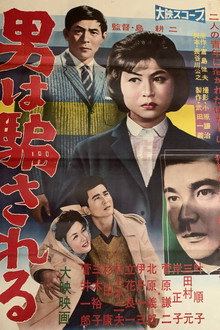
Otoko wa damasareru
One night, a college student is found dead, his body charred black. The victim’s girlfriend, Nobuko, vanishes right before the eyes of the authorities’ search team.

Sansho the Bailiff
In 11th-century feudal Japan, following the exile of an idealistic governor, his wife and children are separated by slave traders; the children, Zushio and Anju, are sold into brutal servitude under the cruel bailiff Sansho.

Stray Dog
A bad day gets worse for young detective Murakami when a pickpocket steals his gun on a hot, crowded bus. Desperate to right the wrong, he goes undercover, scavenging Tokyo’s sweltering streets for the stray dog whose desperation has led him to a life of crime. With each step, cop and criminal’s lives become more intertwined and the investigation becomes an examination of Murakami’s own dark side.
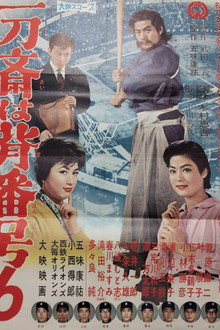
Ittōsai wa sebangō 6
Ittōsai, who trained in the Itto-ryu style deep in the mountains of Nara, joins a professional baseball team.

Gamera vs. Barugon
Gamera escapes from his rocket enclosure and makes his way back to Earth as a giant opal from New Guinea is brought back to Japan. The opal is discovered to have been an egg that births a new monster called Barugon. The creature attacks the city of Osaka by emitting a destructive rainbow ray from his back, along with a freezing spray capable of incapacitating Gamera.

Toki no teizo: Sōshūban
A silk mill worker living through a dark and twisted youth… What is chastity? A powerful work that speaks to society through the anguished expression of a woman twisted by torment.

I Am Being Targeted
A thriller of deduction and duels, in which a newspaper reporter bravely takes on a gang in the city’s skyscraper district over a mysterious recording by a diva.

Reminiscence
Kazuo Miyagawa’s prizewinning black-and-white cinematography draws out the moral shadings of Nobel laureate Yasunari Kawabata’s 1952 novel Thousand Cranes, a quietly devastating story of a young man, orphaned during the war, who stumbles into a passionate yet tragic relationship with his late father’s mistress and her daughter.

Mitsurin no mehyō
A film filled with eroticism and humor, set in the Northern Alps where a naked woman has appeared, as depicted in the article “Naked Woman Appears in the Jungle,” and featuring a showman and a newspaper reporter.

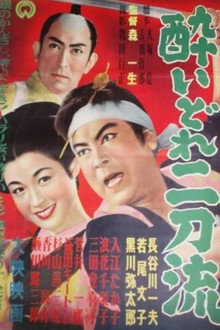
Yoidore nitōryū

Haha tsubaki
Kamezo, a manzai comedian, had been taking a break from performing while his partner Tsuruko was giving birth, but Tsuruko announced that she was retiring from the stage. That child was, in fact, the son of Takashi Yashiro, a politician with a promising future. Believing that a relationship between a politician and a female manzai comedian would bring unhappiness to Yashiro and his wife, Tsuruko changed her address and was even preparing to leave the stage. Tsuruko’s alcoholic father, having caught wind of this, snatched the child, Yoko, and squandered the small sum of money he had received from Yashiro on drinking.