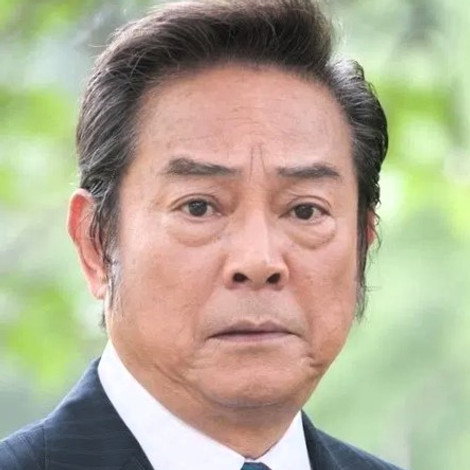
Personal Info
Known For
Gender
Birthday
Place of Birth
Kenichi Sakuragi
Known for

Yell
NHK's 102nd morning drama depicts the life of a famous composer. Koyama Yuichi with his wife Oto. They meet each other through music and overcome hardships together. Yuichi composes songs that became "Yells" for people all over Japan in the Showa Era (1926-1989) in which radical changes were going on.

Princess Go
Princess Go was the youngest of the most famous three sisters in Japanese history, who each led a remarkable life in an age of turmoil and civil war. Go loses her parents in the war, marries three times, and feuds with her own sister in competing for power. Go's husband becomes the second Tokugawa Shogun and she ensures her prominence as she gives birth to a son who later becomes the third Shogun and a daughter, a wife of the Emperor. The drama describes the age of the civil war through the eyes of Princess Go, who plays a significant part in establishing the age of peace that lasts over 200 years in Japan.

Special Crime Investigation Front
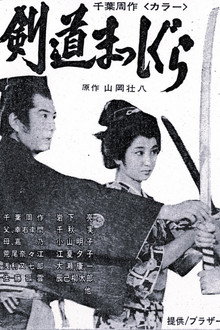
Chiba Shusaku: Kendo Masshigura
Chiba Shusaku: Kendo Masshigura is a Japanese period drama that aired on the TBS network from November 2, 1970 to August 30, 1971 in the "Brother Gekijo" slot. It ran for 44 colour episodes of 30 minutes each. Based on Sohachi Yamaoka's novel "Chiba Shusaku", it depicts the youth of Chiba Shusaku, founder of the Hokushin Itto-ryu school of swordsmanship. A hot-blooded young man who calls himself Shusaku enters the dojo of Asari Matashichiro and, through encounters with all kinds of people, grows rapidly both in swordsmanship and in character. Produced by TBS and Shochiku. Rerun on the Japanese CS channel Jidaigeki Senmon Channel from March 17, 2025.
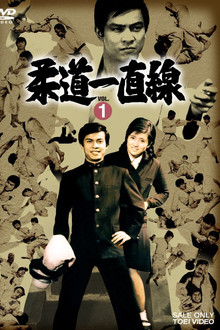
Judo Icchokusen
Based on the manga by Ikki Kajiwara, with art by Shinji Nagashima and Yuzuru Saito. After his father dies following defeat at the 1964 Tokyo Olympics, Naoya Ichijo meets the mysterious judoka Shusaku Kuruma and becomes his disciple, mastering special techniques such as the "Jigoku-guruma" (Hell Wheel) and "Ebi-guruma" (Shrimp Wheel) while fighting rivals and foreign judoka on the way to becoming a top judoka.

Bushimeshi!--The Samurai Cook
Set during the Bakumatsu (final years of the Edo period). Sakai Banshiro is a lower-class samurai. Leaving his family behind, he works at the lord’s castle. He consoles and solves worries of the people by making food from recipes sent from his wife.

The Scoundler vs. The Viper Brothers
A crossover between Wakayama's Gokudo and Sugawara Mamushi series. Gokudo runs a restaurant and makes Takuzo Kawatani his kitchen bitch. He tries to do the same for the Mamushi bros. but the boys don't play along, which pisses Gokudo off. Things get worse when he starts helping a young teacher and Bunta has a crush on a pretty girl... and unbeknownst to them it's the same woman! Yes, the film has not one but two romantic subplots! Of course it all ends in bloodshed.

犬笛-娘よ、生命の笛を吹け

Battles Without Honor and Humanity: Final Episode
While Hirono is in prison, his rival Takeda turns his own crime organization into a political party, whose two executives stir up new tensions in their thirst for power.

Shinjuku Swan
Shiratori Tatsuhiko works as a scout for talent agency Burst in Kabukichō, Shinjuku's red light district, recruiting young girls for the adult entertainment industry. In a business where money means everything, Tatsuhiko finds himself in a constant struggle between rival scouts and the Yakuza.

Father of the Kamikaze
Vice Admiral Takajiro Ohnishi could see that Japan's defeat in WWII was inevitable. He came to realize that the only way to force a negotiated solution was to convince the Americans that invading Japan would cause massive casualties on both sides. The cold logic of suicide attacks, where one man and one plane could kill hundreds, seemed the only solution. In one of the cruel ironies of fate, Ohnishi actually succeeded; he convinced the Americans that invading Japan would be too costly in lives. But what he could not foresee was that America had another way of ending the war.

The Voice of Sin
Eiji Akutsu is a newspaper reporter. He is working on unsolved case that took place 30 years ago. The case involved a group of people extorting several companies for money. The group sent cassette tapes to the companies. Eiji Akutsu comes across a mysterious cassette tape. Meanwhile, Toshiya Sone lives in Kyoto and runs a tailor shop. He discovers a cassette tape among his late father's possessions. He plays the cassette tape and hears his voice from his childhood days.

新・ミナミの帝王~ニンベンの女~

New Battles Without Honor and Humanity 3: Last Days of the Boss
The eighth sequel of the series by the successful “Fukasaku and Bunta” collaboration revolves around the men of a lesser organization that are constantly bullied by the upper organization and “bleed in vain” in gang wars.

Gambling Code and Feuds
It is the first Toei yakuza film directed by Akinori Matsuo, who was active in Nikkatsu action movies. It is a local yakuza movie made following Okinawa Yakuza War (1976) and Hokuriku Proxy War (1977). The film depicts the war between a storied yakuza killer (Hiroki Matsukata) and the largest organized crime group in the Kansai region, which plans to advance into the Kanto region.