Personal Info
Known For
Gender
Birthday
Place of Birth
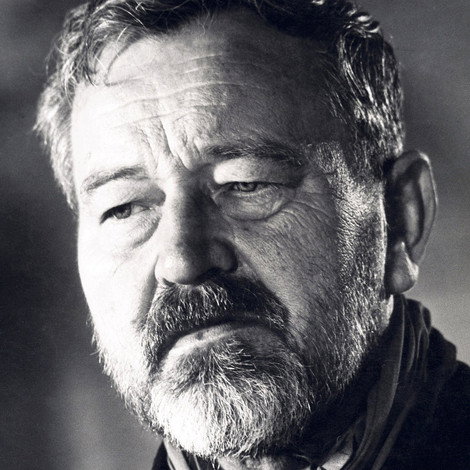
Jan Werich
Biography
Known for

Pan Tau
Pan Tau always had a gentle expression and a friendly smile, he was elegantly dressed in a stroller, with an umbrella and a white carnation in the lapel. Foremost, he was famous for his magic bowler hat. By tapping on his hat, Pan Tau was able to change his appearance into a puppet, to conjure up miscellaneous objects or to do other magic. His most characteristically behavior is that he would help children who were experiencing some sort of difficulties in-between their dreams and reality, like finding a place for skiing, settling family problems on Christmas, and even give a boy a good time at a fair when he is supposed to have piano lessons. To adults, he usually remained invisible.

Herecké Vánoce

Klapzubova jedenáctka
Tři strážníci

The Creation of the World
La Création du Monde is among the first animated feature films made in France. But to be exact, the film was animated in Czechia and directed by Eduard Hofman. It is adapted from a series of five books by Jean Effel, a French caricaturist and illustrator. The visual style is adapted from his drawings. The film is a comedy about the creation of the universe in six days, with the devil messing around and contributing in his own way.

The Emperor and the Golem
The Emperor's mismanagement of his country is provoking some in his court to plot to overthrow him. He feels successful, at least, when he discovers the legendary Golem, which he believes can protect him and even cure his imaginary illnesses but, when he disappears while on a bender, his kindly baker, who looks just like him, is mistaken for him, and begins to put things in order. However, the conspirators, not to be outdone, determine to bring the Golem back to life to do their bidding.

The 25th Hour
A Romanian peasant fights to get back to his family after he's imprisoned by the Nazis.The picture is based on real events. It includes Hungary's government in collaboration with the Nazis, the encroachment of Romania by Stalin's troopers, and other happenings.
Voskovec & Werich, paralelní osudy

Once Upon a Time, There Was a King...
A selfish self-centered widowed ruler, barely tolerated by his subjects and called appropriately enough, 'King Myself, First' asks his three daughters to name the measure of their love for him. When one of them says, "more than salt", he banishes her from the kingdom. Not understanding what she meant the King assumes love can only be measured by precious metals or one's own talent, the 'correct' answers from his other two daughters. The arrogance of the King leads him to gather all the salt in the kingdom and destroy it. Of course, this backfires as he slowly learns the universal value of the substance, and of course, the essence of his daughter's reply. With the help of the wise and magical old 'herb woman', the King also learns what it means to be a true and wise ruler.

The Fabulous Baron Munchausen
A 20th century man lands on the Moon and discovers that Baron Munchausen has beaten him to it, accompanied by Cyrano de Bergerac and the characters from Jules Verne's novels about the conquest of the satellite.

Mean Barbara
When the village school master discovers the body of a mean-spirited, miserly old woman, with whom he has had a disagreement, he decides to dispose of the body himself without alerting anyone else to it, but when the body is discovered by another villager the same cycle begins again, with the body eventually passing through the hands of half of the village.
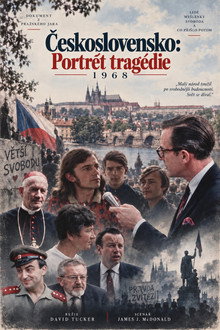
Czechoslovakia: Portrait of a Tragedy

Two Little Frosts
Two mischievous frost spirits make things chilly for a pair of travelers in this wintry comic folktale.

The World Belongs to Us
One of the few European films of the 30s to criticize the Nazis, even if they couldn't be directly named due to censorship: Gangsters with gray hats stir up trouble in what is obviously the Sudetenland.

The Good Soldier Svejk
Adapting Jaroslav Hasek's raucous satirical novel, and also bringing Josef Lada's equally famous illustrations to garrulous puppet life, posed Trnka one of his biggest creative challenges. Trnka himself felt that the final episode was the most artistically successful, but there's much to enjoy in all three, not least the way that the lackadaisical layabout Svejk's own self-serving anecdotes are realized through cut-out animation.