
Personal Info
Known For
Gender
Birthday
Place of Birth
Brigitte Poupart
Biography
Known for

Bonsoir bonsoir!
Each day, Jean-Philippe Wauthier welcomes guests on the show in warm, friendly setting. His interviews focus on their newsworthy achievements but also, and most importantly, on their passions, interests and opinions.

Tout le monde en parle
Host Guy A. Lepage brings together six to eight personalities from different milieus—sports, politics, stage productions and more—that are the subject of everyone’s conversations and/or are important figures in recent events. Participants are invited to speak freely, voicing their opinions on headline news or on a subject that is near and dear to them.

Dans les médias
Joined by contributors, and with a different guest each week, Marie-Louise Arsenault hosts this magazine that highlights the week’s top stories, casting a critical eye on the national and international media and the images that surround us in journalism, advertising and social networks.

Catherine
Catherine was a Quebec sitcom that aired on Radio-Canada from 1999 to 2003. It tells the story of Catherine, a sexy, epicurean, man-crazy Montrealer in her thirties working at the advertising agency Mirage-Image, as well as the story of her best friend and orderly flatmate Sophie, her landlord Rachel, her ex-boyfriend Pierre and other friends and co-workers.

Esprit critique

Monsieur Lazhar
During a harsh Montréal winter, an elementary-school class is left reeling after its teacher commits suicide. Bachir Lazhar, a charismatic Algerian immigrant, steps in as the substitute teacher for the classroom of traumatized children. All the while, he must keep his personal life tucked away: the fact that he is seeking political refuge in Québec – and that he, like the children, has suffered an appalling loss.
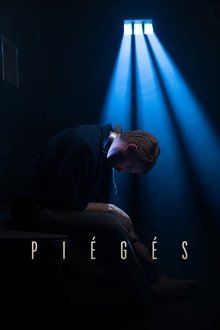
Piégés
In a building with multiple cells and control rooms, someone is playing puppet-master with a group of captives. These total strangers—who seem to have nothing in common—quickly realize they’re being watched and heard, and turned into pawns in a dangerous game. As they come to understand that they can’t count on outside help, they decide to start working together to survive and regain their freedom.
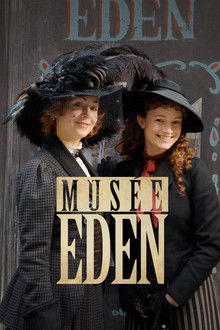
Musée Éden
The story takes place in 1910 in Montreal, Quebec, while a killer terrorized the city. In the same period, Florence and Camille Courval, two sisters originating in French Manitoba inherit the Eden Museum, where statues of wax in connection with criminal news are housed.

Ravenous
In an isolated rural community of Quebec, Canada, some inhabitants attack other people, hungry for human flesh. A few survivors gather and go deep into the forest to escape them.

Where Souls Go
Eighteen-year-old Anna has been diagnosed with an incurable terminal illness and has chosen to end her life on her own terms. With only fifteen days remaining, her final wish is to reconnect with her older half-sisters, Ève and Éléonore, from whom she has been estranged ever since their father went to prison. The three sisters must confront their painful past and rediscover the bond of sisterhood before time runs out.
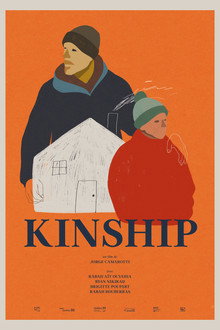
Kinship
Rabah is forced to take over custody of his son Cédrick. The boy has been mute since losing his mother. Despite the financial strain caused by his immigrant status and undeterred by his fraught relationship with his son, Rabah will manage to rebuild Cédrick’s trust so they can be a family again.

The Natural Sweetness of Skin
Revealing women, showing men Dermatology professor Marie-Claire is embarking on a new project linking skin cells and sexuality, when unexpected events disrupt her professional, family and intimate life.

Turtles
Henri and Thom live together in Brussels and have been in perfect love for 35 years, or so it seems. Since Henri retired as a policeman, nothing has gone right. His days are dull and endless, his feelings are fading and their home has become a battlefield. Still in love, Thom is ready to do anything to rekindle the flame and save their relationship, even if it means asking for a divorce himself.

Bootlegger
Mani, a master’s student, returns to the reserve in northern Quebec where she grew up. Her painful past resurfaces. Resolved to reintegrate into the community, she gets involved in the debate around a referendum on allowing the free sale of alcohol on the reserve. Laura, a bootlegger, pockets the profits she makes there under the protection of the band council and her partner Raymond. The latter is still angry with Mani, whom he holds responsible for the death of his daughter in a fire. Opposing forces quickly divide the community into two sides who face each other to determine the best path to independence.
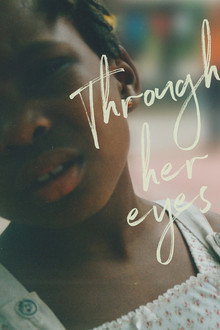
Through Your Eyes
In an effort to understand where she came from, Fabiola asked a question that became the central phrase of the film: what would my life have been like if I'd stayed in Haiti? Taking as her starting point her biological mother's precarious economic situation, she had no choice but to entrust her daughter to her care. Fabiola could have ended up restavek, or in a loving foster family, or on the streets abandoned to her fate, or adopted abroad.