
Personal Info
Known For
Gender
Birthday
Place of Birth
Alexander Papendiek
Known for

Polizeiruf 110
Polizeiruf 110 is a long-running German language detective television series. The first episode was broadcast 27 June 1971 in the German Democratic Republic, and after the dissolution of Fernsehen der DDR the series was picked up by ARD. It was originally created as a counterpart to the West German series Tatort, and quickly became a public favorite.

Five Cartridges
During the Spanish Civil War (1936-1939), five International Brigade soldiers of different nationalities are given a crucial assignment as their commander lies dying: they are to smuggle top-secret information across enemy lines.

Drei von der K

Blaulicht
Blaulicht is a German crime television drama series, whose 29 episodes were based on crime case files.

Verwandte und Bekannte
Using the example of three generations of a Hamburg working class family, the rise of the working class from the founding of the Wilhelmin Empire to the First World War, over the time of the Weimar Republic and National Socialism to the destruction of the Third Reich.

Daniel und der Weltmeister
Little Daniel is a huge fan of cycling. He constantly drives around on his three-wheeler, knowing that he wants to become a famous racing cyclist – just as fast and famous as the world champion Täve Schur. But until then he has to struggle with the difficulties of growing up. His mother, for example, wants him to drink milk – even though Daniel does not find this very suitable for world champions. To get affirmation, Daniel starts searching for his role model Täve. On the way, he has some interesting encounters and experiences many adventures. When he finally meets Täve at a race, Daniel is astonished to watch him pleasurably drink a bottle of milk after an outstanding victory.
Nachtasyl

Wo Du hin gehst...
Berlin, 1936. Athletes and visitors from all over the world have come to the city to take part in the Olympic Games. Anti-Fascists use the opportunity to tell the foreign guests about the situation in Germany by distributing leaflets. Being cornered by the Gestapo, the wounded resistance fighter Jakob manages to go into hiding with the help of the Swiss doctor Thea. They fall in love with each other and when Jakob joins the International Brigades in Spain to fight against Franco, Thea follows him and becomes a dedicated fighter against Fascism. The enduring battle, however, keeps preventing them from becoming a real couple.

Keine Scheu vor heiklen Fragen
Episodes from school, family and leisure time show how boys and girls build gender relationships, what influence school and home have on them, how their behavior changes and what conflicts can arise between parents and children. Fourth part of the "Relationships Between Boys And Girls" series.

The Sailor's Song
A film about the historical uprising of the seamen in Kiel: During the Russian October Revolution of 1917, German and Russian soldiers start to solidarize with each other. By disarming the officers, machinist Henne Lonke and stoker Jens Kasten prevent the attack on a Russian freighter. When German admiralty gives out orders for operation "Nibelungen", which would lead the German fleet into a suicidal attack against England and quell the revolutionary spirit, seamen and soldiers from different political backgrounds unite in protest.

Das Rabauken-Kabarett
Wolfgang is a bully, but overall he‘s not a bad guy. However, not everyone in Thuringia, where he goes to school, is sympathetic to him and his buddies. His daring adventures often go too far - up to and including stealing three bottles of liquor. Meanwhile, the new head of the boarding school knows how to use the undisputed skills of hooligans for the common good. Together with them he founds the "Cabaret of Debaucheries". With sharp jokes and music, they now pounce on slackers, slackers and drunks - and in the process slowly change for the better.

Minna von Barnhelm oder Das Soldatenglück
This film takes place during the Seven Years' War. The Prussian Major von Tellheim has become engaged to the Saxon noblewoman Minna von Barnhelm. After the war, the King - in an unwarranted move - deprives the major of his honor. Von Tellheim becomes impoverished and, filled with shame, breaks off his relationship to Minna. An innkeeper in Berlin, who is a police informer, makes the Major move to a shabby little attic because he cannot pay his debt. In the meantime, Minna has also arrived at the inn. She and her lady's maid Franziska are questioned and spied on by the nosy innkeeper. Minna has followed her beloved Tellheim and she now cunningly manages to elicit a new declaration of love from him...
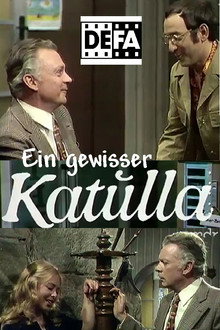
Ein gewisser Katulla
Late at night, a guest checks into the small hotel "Zum Spreewald-Idyll". The man seems suspicious. And he becomes even more suspicious over time. That's why they don't just call him "Katulla", he's "A certain Katulla". And he is not suspicious because he is suspected of evil, quite the opposite: he is suspicious because of his boundless helpfulness and kindness. Katulla is still kind even when he has to suffer disadvantages as a result. That's just not normal. So it is only normal that everything in the small hotel has been abnormal since this Katulla appeared.

An Unusual Day
This unusual day was preceded by little Maja's laziness. She didn't feel like doing any schoolwork. When she came to school the next day, the teacher didn't feel like teaching her. Everyone else she wants something from is not in the mood either. Maja begins to wonder whether this strange behavior could have something to do with her "listlessness" yesterday. And she comes to the conclusion that it is not right not to do your homework, as everyone has a duty to fulfill in their place.

Maria und der Paragraph
Maria is a record saleswoman by profession. She is lucky to have a job, because the year is 1930 and a major economic crisis has hit the world, accompanied by an army of unemployed people, especially in Germany. Maria is aware of her good fortune; in order to secure it, she has to do without many things. What business owner would employ an unmarried woman with a child in times like these? When Maria became pregnant, she, like many other women, had to become "active" and do something about this "misfortune". So she seeks "help" from a female doctor, trusting in her youth and hoping for better times when family happiness could come true for her.