Personal Info
Known For
Gender
Birthday
Place of Birth
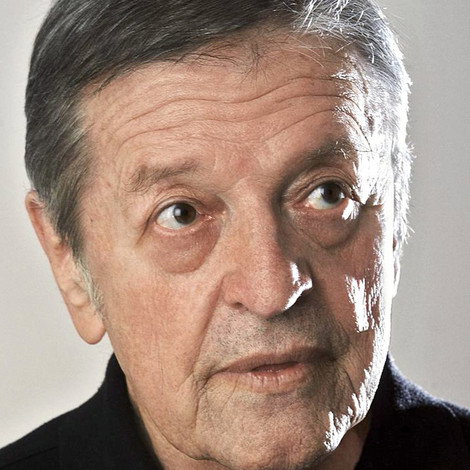
Marko Nikolić
Biography
Known for

Better Life
Trials and tribulations of the Popadic family, a typical family of five with everyday problems... BOLJI ŽIVOT is a Yugoslav TV series with mixed elements of soap opera, comedy and drama that aired from 1987 to 1991. Created by the Radiotelevision Belgrade it is considered to be the most successful TV show ever produced in Yugoslavia. Written by Siniša Pavić, most prolific Serbian screenwriter, the series helped jump start cinematic careers for many of its protagonists, most notably Dragan Bjelogrlić who went on to become successful actor, director, and producer.

Grey Home
A moving story about the residents of correctional facility, rejected by parents and environment. Going through a strict regimen of life in the home, they are constantly trying to reverse the fate in their favor. Although they were given a chance to change, their actions always return to the beginning. Constantly on the border between personal whims and once-in-a-lifetime opportunity to become humans, they remain as wolves who find hard to change their mood. What finally remains is a perpetual dilemma whether their fate is innate, or is it forced by the communities in which they grew up...

Vuk Karadžić
Vuk Karadžić, is а Yugoslavian historical drama television series which depicts the life and work of Vuk Stefanović Karadžić, a Serbian linguist and major reformer of the Serbo-Croatian language.

Budva, on the Foam of the Sea
A TV series which depicts the clash of different value systems and mentalities of two Montenegrin families, one from the old city of Budva, and the other from transitional Nikšić.


A Shot
In a village of heterogeneous ethnic composition (populated by Serbs and Croats), the local hunter gets wounded by an accidental shot which stirs up passion among the two communities.

The Train for Kraljevo
It is 1941 and the German occupying forces are taking over Yugoslavia, making a train ride to Kraljevo a dangerous game for a secret communist agent carrying important documents. Both the Germans and the police are looking for him on the train, and his safe arrival in Kraljevo seems like an impossibility. His determination to get the papers to the right people keeps him going, even through a gun battle after the train arrives - challenging him to find a way to complete his mission.

A New Year's Tale
What happens when you find documents and compromising feminine items belonging to an unknown young woman in a taxi on New Year's Day, and you forget to inform your wife about it?

Boiling
The action takes place in the period from 1930 to 1934. The main protagonist is a so-called “collective hero”, that is, the revolutionary movement of Yugoslavia during the 1930s, although, conditionally speaking, the main hero is Rodoljub Colakovic.

The Bite
Jovana lives alone with two young sons, while her husband is temporarily working in Germany. In addition to all the work in the fields and the kitchen, she is also building a new house. Handymen Relja and Milos show undisguised sympathy for her. Suddenly, the husband returns and brings new problems.
Inferiority
The drama that examines the universal relationship between a master and a servant.


The Poet of Revolution
A film made by Danilo Kis's poem "The Revolutionary Poet on the Presidential Ship" on the wreck of Tito's yacht “Seagull” in Rijeka's shipyard with two acting film legends, Radko Polic and Marko Nikolic. The film was edited by the late Marko Glusac.

Sixth Gear
Dealing with his customers with open heart, a car mechanic named Života goes through many adventures. Some are funny, some are sad, some reveal beauty and other human misery. In the end he gets tangled up himself, and not without bitterness he tries to change his ways, to become like his rival across the street which has adapted to modern times: strictly business. But, people who come to him need him just the way he is.

The Parade
The Parade, in a tragicomic way, tells the story about ongoing battle between two worlds in contemporary post-war Serbian society - the traditional, oppressive, homophobic majority and a liberal, modern and open-minded minority... The film, which deals with gay rights issues in Serbia, features footage of the 2010 Belgrade gay pride parade. The film introduces a group of gay activists, trying to organize a pride parade in Belgrade.