Personal Info
Known For
Gender
Birthday
Place of Birth
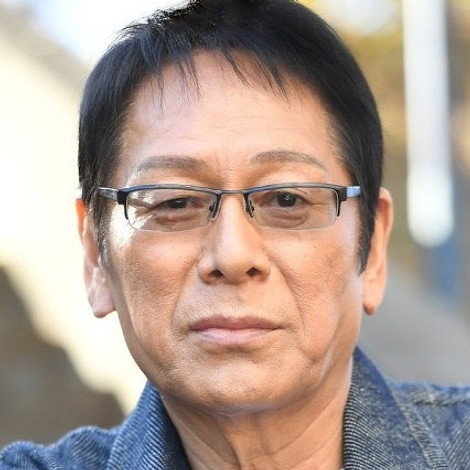
Ren Osugi
Biography
Known for

AIBOU: Tokyo Detective Duo
Detective Ukyo Sugishita confronts crime on the basis of his own convictions. He has a partner that works for him in the Special Task Unit. For the first 7 seasons, Ukyo’s first partner is Kaoru Kameyama. He is a good-natured, hot-tempered, straightforward and somewhat scattered detective. Beginning in Season 8, Takeru Kanbe replaces Kameyama. Contrary to his predecessor, Takeru is a lanky, cool, conceited and confident detective. From Season 11 to Season 13, Ukyo’s partner is a young detective Toru Kai. Toru is a son of Deputy Director-General of The National Police Agency. But he became a detective by his own effort. And starting with Season 14, Ukyo’s current partner is Wataru Kaburagi, an elite bureaucrat who came to the Metropolitan Police Department on temporary assignment. As the first partner without any career of a police officer, he will face challenging cases together with Ukyo.

My Husband is a Cartoonist
The 82nd NHK Asadora is Gegege no Nyobo. The story is based on a 2008 autobiography by Mura Nunoe, the wife of Gegege no Kitaro mangaka Mizuki Shigeru. The story revolves around the life of the married couple, told from the perspective of Mura. --Tokyograph

GARO
The Makai fight a secret war against the demon forces known as Horrors, evil creatures that manifest themselves through darkness to devour Humanity. On the frontlines are the Makai Knights, given the task of watching over a district and eliminating any Horrors that manifest there. GARO follows the tales of the Knights bearing the title of ‘Golden Knight Garo’, and their duty to vanquish the Horrors and protect Humanity from the darkness.

Yonimo Kimyou na Monogatari Tokubetsuhen

CSI: Crime Scene Talks
Satoshi Itomura is an assistant police investigator who belongs to the Metropolitan Police Department’s Scientific Investigation Team. Reenactments, fingerprint and voice data collections, profiling... His team collects scientific evidence and pieces together fragments of information in order to help build evidences. However, Itomura often does not care about the scientific approach and instead pays a great deal of attention to the things that the victims always carried with them or treasured. And he focuses on these things because they usually carry the victim’s dying wishes, understanding that last message not only helps solve the cases but also brings closure to the depressed family of victims.

Ninja Sentai Kakuranger
It's been a long time since the great war between the Three God Generals and the Youkais, an ancient race of monstrous spirits. Since then, imprisoned in a cave protected by the mystical Seal Door, their leader Daimaou and his Youkai army wait, planning for the day they can finally strike. That day has arrived and it is up to the Kakurangers, along with the Three God Generals, to defeat the Youkais, before Daimaou's villainy destroys Earth!

Emergency Interrogation Room
Yukiko Makabe works at the #3 Special Investigation Team of the Metropolitan Police Department. She has excellent negotiation skills. Yukiko then attempts to negotiate with a hijacker on a bus, but something unexpected happens and her mission fails. Yukiko takes full responsibility and takes a transfer to a special interrogation team "Kintori". Her boss is Katsutoshi Kajiyama and Yukiko has had a difficult working relationship with him in the past. Her other coworkers include Susumu Hishimoto, Zenjiro Nakata and Haruo Koishikawa.

Dondo Hare
Natsumi is the 23 years old daughter of a master baker in Yokohama and in training with her father to become a pastry chef. She lives with her parents and younger brother in Yokohama. One day she travels to Iwate Prefecture with her boyfriend Masaki for his grandmother Katsuno's 77th birthday. While they are there, Katsuno, head okami of a famous ryokan in Morioka City, becomes ill and asks Masaki to return to run the ryokan. Natsumi returns to Yokohama and later Masaki visits, asking her to disregard their earlier plans to get married because he will return to Morioka as requested by Katsuno. However, Natsumi surprises him with a vow to become the ryokan's okami. Is Natsumi in for clear skies as suggested by the series name?

Yoshitsune
Yoshitsune is a Japanese television drama series originally broadcast between 9 January and 11 December 2005, with a three-part special compilation being aired from 24 December to 25 December 2005. The 44th Taiga Drama, the original work is by Miyao Tomiko, screenplay by Kaneko Narito and starring Hideaki Takizawa.

Shin Godzilla
When a massive, gilled monster emerges from the deep and tears through the city, the government scrambles to save its citizens. A rag-tag team of volunteers cuts through a web of red tape to uncover the monster's weakness and its mysterious ties to a foreign superpower. But time is not on their side - the greatest catastrophe to ever befall the world is about to evolve right before their very eyes.

Hanasaki Mai Speaks Out
Hanasaki Mai is but an ordinary employee of a bank, with zero diplomacy. She doesn't think twice about pointing out her boss' mistakes. Her job is to investigate any wrongdoings in the bank branches. She is the voice of the suppressed staff who are unable to go against their bosses. Her partner is the veteran staff, Soma Ken, whose career with the bank had reached a dead end, no promotions in sight. Together, they resolve all the non-compliance issues at the bank.

Clouds Over the Hill
Saka no Ue no Kumo is an NHK 21st Century special drama which was aired over three years starting from November 29, 2009. The series runs 13 episodes at 90 minutes each. The first series, with 5 episodes, was broadcast in 2009, while series two and three, each with 4 episodes, were broadcast in late 2010 and 2011. While most episodes were shot in Japan, one of the episodes in series two was shot in Latvia. The TV series is based on the novel Saka no ue no kumo by Ryōtarō Shiba and adopted by Hisashi Nozawa. The theme song of the drama series is titled "Stand Alone". It was composed by Joe Hisaishi, written by Kundo Koyama and performed by British soprano singer Sarah Brightman.

Brother
A Japanese Yakuza gangster's deadly existence in his homeland gets him exiled to Los Angeles, where he is taken in by his little brother and his brother's gang.
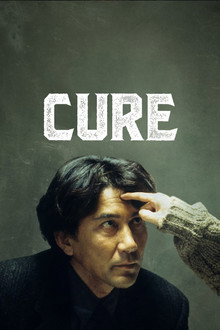
Cure
A frustrated detective deals with the case of several gruesome murders committed by people who have no recollection of what they've done.

The Twilight Samurai
Seibei Iguchi leads a difficult life as a low ranking samurai at the turn of the nineteenth century. A widower with a meager income, Seibei struggles to take care of his two daughters and senile mother. New prospects seem to open up when the beautiful Tomoe, a childhood friend, comes back into he and his daughters' life, but as the Japanese feudal system unravels, Seibei is still bound by the code of honor of the samurai and by his own sense of social precedence. How can he find a way to do what is best for those he loves?