Shoes

Personal Info

Known For

Acting

Gender

Male

Birthday

1916-11-19

Place of Birth

Preßburg, Austria-Hungary [now Bratislava, Slovakia]

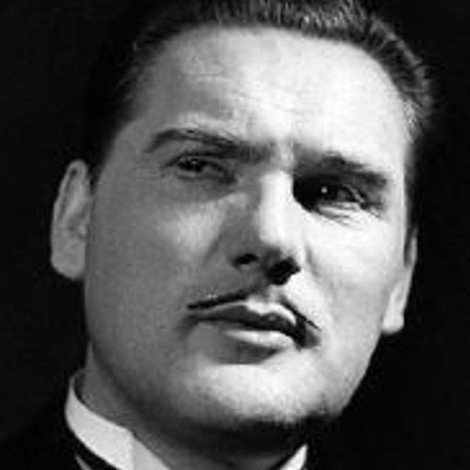
František Dibarbora

Biography

Slovak actor of Italian origin (father Giacomo Di Barbora) was born on November 19, 1916 in Bratislava. František was a great athlete in his youth, he played football for Slovan Bratislava, he was an attacker, he played hockey in the winter - he was a goalkeeper (he represented SLOVAKIA). His father suggested that he not want to be an actor. František listened to him and enrolled at the Academy of Music and Drama in Bratislava. He graduated in 1938. He became a member of the SND at school. In this theater he was not only in drama but also in opera! (1940-42) He performed about 210 theater characters in the play. František Dibarbora also made a name for himself on Slovak radio. He was especially popular in comic scenes, sketches and I remember that as a little boy I listened to his PIRAMID every Sunday morning. František Dibarbora appears in the film as early as 1938 in the film UNBEATED ARMY. After the war, he played in the famous BULKED BORDER. M. Frič also cast him in the film WAR! The "beautiful" 50s came. He mainly "builds" in the films and Dibarbora plays in these films. But even here he shows that he is a comedian. His comedian will appear in films (DAM, FRIDAY 13, ŠTVORYLKA, JOŽKO PÚČIK AND HIS CAREER, ZEMIANSČŤ, HOLIDAY WITH AN ANGEL). They are all comedies and Dibarbora is probably the best Slovak comedian these years. His best comedy of those years is Lack's film ROCK IN THE OFFER. Dibarbora also showed his acting in the characters of German SS men. His role as "Herman Thiele" in the film WOLF HOLES earned him the NATIONAL FILM AWARD (1949). He played a similar character in the film WHILE KOHÚT DOES NOT SING (1969). In the late 1950s, when television began broadcasting, it automatically began to appear in this medium as well. You played many serious but also comic characters here. I will mention a two-part tel. the film THE SOLDIER IN THE FIELD (1964), Ostrich Party (1967), later it was the US TRAGEDY (1976), ESCAPE FROM THE GOLDEN LANDSCAPE (1977) or the series SAFARI (1986), where he got his last major role. Unforgettable and famous is his "pastor Evans" in the production MERRY LADIES FROM WINDSOR. This actor from the capital H, he also taught at the Academy of Performing Arts, was awarded the title of "deserved artist" in 1986. He died as a result of a serious car accident on September 4, 1987 in Bratislava.

Known for

Bakaláři

Bakaláři

Vivat Beňovský!

Vivat Beňovský!

Cesta životom

Cesta životom

Der Ochsenkrieg

Der Ochsenkrieg

Miniseries based on a 1914 historical novel by the German writer Ludwig Ganghofer - The War of the Oxen - set against the backdrop of the War of the Oxen in the 1420s.

Moliére

Moliére

Neporažená armáda

Neporažená armáda

A young farmer, Jan Aleš, is drafted from his native Pošumaví to join the army. Since he likes his new environment, he stays with the army as a long-term serviceman. He even successfully passes the exams for the military academy. There he becomes friends with his Slovak colleague Milan Jurčík. He studies diligently, but thanks to Milan he sometimes finds time to go out into the city. That is how he meets the factory owner's daughter, Zdenka, with whom he falls in love. However, her father is not very happy about the promising relationship.

Frankenstein's Aunt

Frankenstein's Aunt

Frankenstein's Aunt is the protagonist of three novels - two by Allan Rune Pettersson and a seven-episode TV miniseries based on the first one. The story is a humorous homage to the Universal Horror Frankenstein films.

Milovaný Célimare

Milovaný Célimare

Červený muškát

Červený muškát

Stratená melódia

Stratená melódia

Útek zo zlatej krajiny

Útek zo zlatej krajiny

Rozprávky pätnástich sestier
Rozprávky pätnástich sestier

Safari

Safari

Jánošík

Jánošík

This film is one of the most popular pictures of Slovak cinema and relates the story about the legendary folk hero and brigand Juro Jánošík [1688-1713] and the social situation in Slovakia of the late 17th and early 18th centuries. The first part talks about Jánošík's childhood, studies and return to his native village. In the second part Jánošík leaves for the hills, where he organizes his band of brigands and starts an anti-feudal resistance. The film concludes with Jánošík's execution.

Štyri kolesá

Štyri kolesá
