
Personal Info
Known For
Gender
Birthday
Place of Birth
Eda-Ines Etti
Biography
Known for

Eurovision Song Contest
The Eurovision Song Contest is an international song competition, organised annually by the European Broadcasting Union (EBU) and featuring participants representing primarily European countries. Each participating country submits an original song to be performed on live television and radio, transmitted to national broadcasters via the EBU's Eurovision and Euroradio networks, with competing countries then casting votes for the other countries' songs to determine the winner.

Revenge Office
A group of women create an organization named "Kättemaksukontor" to fight for the rights of women and help solve murder mysteries for the police.

Su nägu kõlab tuttavalt
Well-known Estonians impersonate famous singers and compete to win money for their chosen charity in this Estonian version of the game show.

Eesti Laul
Eesti Laul is the national final in order to select the Estonian entry for the Eurovision Song Contest.

Sing my Song

Eurolaul
Eurolaul was an annual televised competition to select a song to represent Estonia in the Eurovision Song Contest made by the Estonian Public Television Service ETV. For many years the competition differed from the national selections of most other countries in that the outcome was solely determined by an international jury. The rules were changed to entrust the Estonian public with the choice by means of televoting in 2004 and 2005, but due to the disappointing results in the ESC in those years there was a return to the former system in 2006. Eurolaul also selected Tanel Padar and Dave Benton's song "Everybody" in 2001, which went on to win the contest for Estonia. In 2009, Eurolaul was discontinued after a long period of bad results for Estonia in the Eurovision Song Contest and was replaced with a new contest entitled Eesti Laul.

Estonia Dreams of Eurovision!
One of the traditions peculiar to Europe is the annual Eurovision Song Contest, in which hopeful singers from across the continent - from Slovenia to Sweden and Cyprus to Croatia - attempt to prove their nation's dominance in the field of pop music. Filmmaker Marina Zenovich took her cameras to host country Estonia - the winner in 2001 - to document preparations for the 2002 contest, and found a hotbed of jealous rivalries, national outrage and soap-opera-style scandals. Why did winning duo Tanel and Dave break up just weeks after their win? Why is handsome actor Mart Sander passed over for the presenter job? How does Tanel's sister react when she fails to make the cut for the 2002 contest? Through interviews and observation, Zenovich creates what the London Guardian described as "A Star is Born with extra snow."
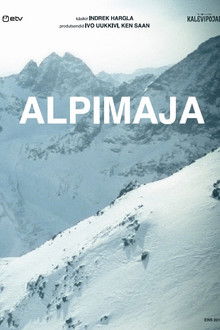
Alpine House
Estonia's women's swimming team is stripped of their Olympic medals because of doping, and a scandal begins. With the help of Martin Kütt, an internationally renowned crisis expert, the team aims to solve the disaster. However, as Martin investigates the doping, it emerges that even government officials are involved in the affair.
Esto TV
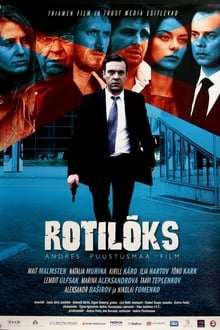
Rat Trap
During an election campaign, a large sum of money goes missing at an Estonian politician's home party. The story involves some party guests who have serious money problems and are trying to come to terms with past mistakes. However, the self-confident politician strangely does not turn to the police, but begins to demand his justice by force.