
Personal Info
Known For
Gender
Birthday
Place of Birth
Soumitra Chatterjee
Biography
Known for

An Enemy of the People
Ashoke Gupta is an idealistic doctor working in a town near Calcutta. He discovers that the water at a popular temple is the source of an outbreak of typhoid and hepatitis. In order to save lives, he risks his career to try and call attention to this polluted water source, while a local group of building contractors attempt to discredit him in various ways.

दीप 6
Mitul, a solitary young woman in In 2011, Calcutta finds her personal and political world deeply impacted by the new context. Additionally, she must confront the ghost of her deceased grandmother and deal with her ex-partner, who refuses to end their relationship or give up his political ambitions. Deep 6 had its world premiere at 26th Busan International Film Festival under the 'A Window on Asian Cinema' section on 7 October 2021. It was screened in 'Indian Cinema Now' section at 26th International Film Festival of Kerala held from 18 to 25 March 2022[9] and in 'Innovation in Moving Images' segment at 27th Kolkata international Film Festival.

Ahalya
Ahalya, set as a modern-day thriller, is an ode to a legend from Ramayana. The 14-minute-long film replays the deadly game of Gods, spinning a web of intrigue, seduction, desire and mystery between Gods and Apsaras. Ahalya is a deadly game you can’t escape.

The Branches of the Tree
When a wealthy patriarch falls ill on his 70th birthday, three of his sons rush in from Calcutta, leading to a reunion filled with painful ironies and lingering disillusionment. As the family—including an addled fourth son who lives with the old man—watches and waits, the static occasion brings out simmering tensions in their family dynamics, from the father’s moral rectitude to the business ambition of two sons and the withdrawal of their siblings.

Nishijapon
A family gets alienated in a mountain forest villa after an earthquake. After 3 days of starvation, the true nature of each character begins to reveal.

The Bengali Night
Allan is an engineer working in 1930s Calcutta. He is invited to stay with the family of his boss, Narendra Sen which includes his wife, Indira and daughter Gayatri. Gayatri and Allan become romantically involved leading to tragedy.
Aamader Janani

Kaalbela
The violence and upheaval of Calcutta in the 1970s is focalized through a young man coming to the city to study.
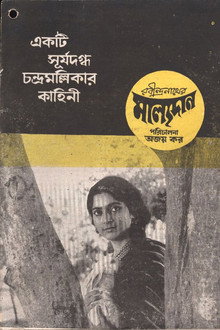
Malyadan
A young doctor is introduced to a girl by his cousin, but he rejects her as a potential bride and she disappears one day, leaving only a garland of dried flowers behind.

Paanch Adhyay
Whenever love leaves, it leaves traces. Those traces cling on to old times and familiar spaces.

Lathi
Atindranath Bannerjee, a retired teacher, faces harassment from his family members and decides to discipline them. Later, he shifts to a slum and starts teaching underprivileged children.

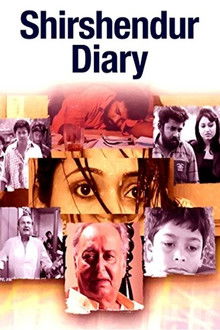
Shirshendur Diary
The movie, 'Shirshendur Diary', tells the story of a theatre director and filmmaker who goes missing one day. A controversial movie that takes a critical look at political violence in Bengal in the past decade.

Chowdhury Paribar
A man and his wife are frustrated with the responsibilities of taking care of their family. However, Borun tries to keep the family from falling apart.