
Personal Info
Known For
Gender
Birthday
Place of Birth
Gertrud Wolle
Known for
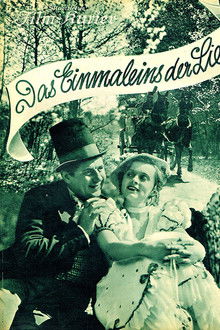
Love's Arithmetic
Identities are changed in the Austrian countryside. A simple woman does this to test the affections of a store manager, he too changes character several times and there are other locals who do this as well.
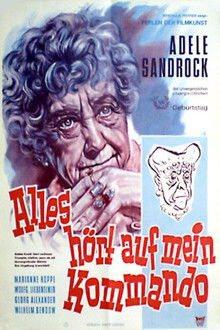
Everyone Obeys My Command
For more than 50 years, Pauline Neuber has directed the "Olympia" theatre, but lately, business has been bad. It appears that no one will be able to make it better either: the audience doesn't seem to like the plays; the press even less so; and the shareholders of the theatre want to sell their shares. In short, the "Olympia" has one foot in the grave. Erich, grandchild of Pauline and always underestimated by her, gets to know Hella Bergson, the daughter of the theatre critic Peter Bergson, and falls in love with her - but doesn't have an idea whose daughter she is. He plays her some melodies from the first operetta he's ever composed and Hella convinces him to have the operetta performed in the "Olympia". During rehearsal of the operetta, however, a fight breaks out between Erich and Hella over a stupid misunderstanding.
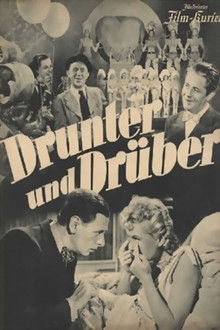
Drunter und drüber
Dr. Brunner spends the night with a childhood friend. Instead, he tells his wife he met a friend—who then shows up shortly afterwards, completely unsuspecting. A chaotic comedy of mistaken identity and jealousy.

Königskinder
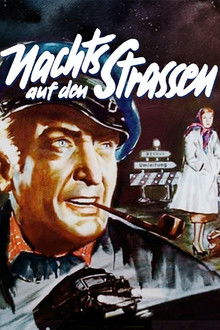
Nights on the Road
An aging truck driver finds smuggled money and becomes involved with a hijacking crowd.

The Little Escapade
A wife believes her husband has been deceiving her and decides to have some fun at his expense. After a bit of mischief, her husband, a lawyer who is preparing a divorce for a client, decides to start divorce proceedings himself. The wife then realises she has gone too far.

Vor Liebe wird gewarnt
Watchmaker Furchtegott Palme has three beautiful daughters. The two oldest are as good as engaged. Only Anna doesn’t seem to have a clue how to get acquainted with love. And who would be the right one for that? Her boss, Dr. Hartwig, who invited her to a party or perhaps Fink, the cousin of her friend Mona, whom Anna is supposed to pick up from the rail station? Anna, however, picks up the wrong guy at the rail station, but who seems perfect for her. But then, he disappears again. A pity, Anna thinks. And she ends up at Dr. Hartwig’s party, too. When she shows up all fancy and such for the party, he’s still with General Director Schroll working on an important contract. The next day, Anna meets the “wrong cousin” again. He’s Will Uders, a young and attractive lawyer. This time, Anna’s not letting him get away.
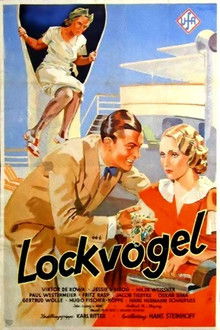
Decoy
Viktor Schott, daredevil and womanizer, is charged by his father, a jeweler, to go to Istanbul and purchase a valuable emerald necklace from a rich Persian and to bring it back by ship to Marseille. A pair of criminals are watching him and attractive Delia, with whom Viktor is in love, is used as bait. His boyhood friend Sibyl, who is in love with Viktor, warns him of the criminal ship owner and the captain, who intend to steal the jewel during a masked ball on board. Shortly before reaching the coast of France, an explosion causes the ship to capsize.
The King's Prisoner
A comedy loosely based on the life story of Johann Friedrich Böttger, the inventor of Meissen porcelain: In Berlin, the pharmacist Fritz Böttger gains a reputation for being able to make gold and is imprisoned on the orders of the Prussian king. Following in the footsteps of a young lady, he flees to Saxony, but is also imprisoned in Dresden and forced to make gold. Although he does not succeed in this, by chance he discovers how to make porcelain instead. Augustus the Strong appoints him baron and director of the royal porcelain manufactory.
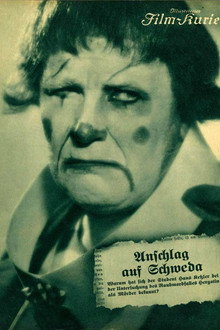
Anschlag auf Schweda
The student Hans Kessler is suspected of having murdered the banker Hergotin, who has been found dead in his hotel in Zurich. When a search is launched for an unknown woman, who was seen in the hotel at the time of the murder, Hans suddenly confesses to the deed. The prosecution is headed by Schweda and Hans is sentenced to fifteen years in prison. Only afterwards does Regine, Hans' sister, find out about the events. She is convinced that her brother is innocent and is covering for the actual murderer.
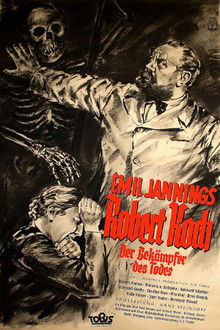
Robert Koch, der Bekämpfer des Todes
Country Dr. Robert Koch is desperate: a tuberculosis epidemic is decimating the children in his district and no one is able to do anything about it. Every fourth child is already sick and the parents must helplessly watch as their young ones die. Now Koch is undertaking to find the cause of the tuberculosis --- something he has already been working on for years --- which has been causing this plague of illness. His work is made more difficult by envy; for example, that of his teacher, who was wounded defending his honor. But his greatest obstacle is the famous Berliner scientist and Reichstag deputy, Privy Councilor Rudolf Virchow: He is extraordinarily skeptical of Koch's theory, that the cause for tuberculosis is a bacteria.
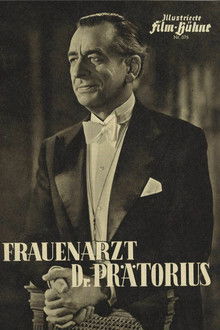
Frauenarzt Dr. Prätorius
In the face of two world wars, Professor Prätorius, a philanthropist and a surgeon, wants to exterminate the one danger to mankind, the microbe of stupidity, as he states in a spontaneous lecture to his male and female students. When he tries to help a pregnant girl he gets involved more and more in her life and is forced to marry her.
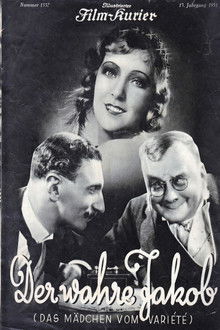
True Jacob
The village mayor is a bigoted man: when he sees a girl from the variety show, the morality no longer applies to him.

The Hound of the Baskervilles
Sherlock Holmes and Dr. Watson look into reports that a huge, vicious hound has killed Lord Charles Baskerville and that Lord Henry Baskerville is the next to be killed.
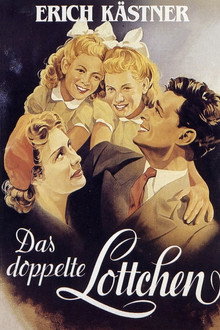
Two Times Lotte
Two nine-year-old girls—rude Luise Palfy and respectful shy Lotte Körner—meet on a summer camp. Apart from their different hair-do, they look alike. They have never seen each other before, but soon find out that they are identical twins. It turns out that their parents divorced, each keeping one of the girls. They decide to trade places at the end of the summer. Lottie curls her hair, Lisa braids hers, and both go off to where they have never been before. The adventure begins.