Personal Info
Known For
Gender
Birthday
Place of Birth
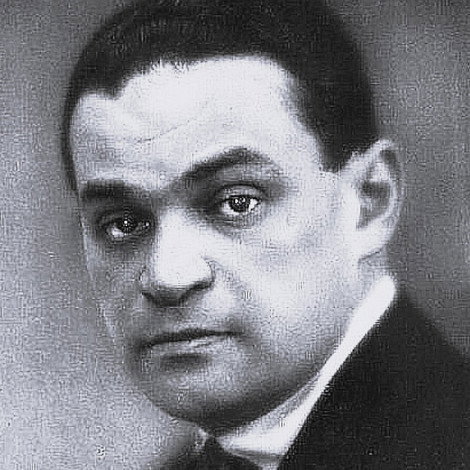
Fritz Kortner
Biography
Known for

German Film Award
Monitor
Monitor was a BBC arts programme that was launched on 2 February 1958 and ran until 1965. Huw Wheldon was the first editor from 1958 to 1965. He was also the principal interviewer and anchor. Wheldon set about moulding a team of talents, including John Schlesinger, Ken Russell, Patrick Garland, David Jones, Humphrey Burton, John Berger, Peter Newington, Melvyn Bragg, Nancy Thomas and Alan Tyrer. Monitor ranged in subject over all the arts. Wheldon's Monitor lasted until he had "interviewed everyone I am interested in interviewing", and he was succeeded by Jonathan Miller for the series' last season.

The Other
A psychological drama based on the popular Jekyll and Hyde theme involving a strict legal official. Based on the 1893 play "Der Andere" by Paul Lindau.

Danton
At the height of Reign of Terror Maximilien Robespierre orchestrates the trial and execution of several of his fellow leading French revolutionaries including Georges Danton.

Film Emigration from Nazi Germany
Based on extensive interviews, shot on 16mm in a series of static long takes, Filmemigration aus Nazideutschland, is one of the most fascinating examples of "Film history on film" ever produced. Straschek devoted years to researching the topic and accumulating both film and non-film materials. Apart from some radio features and articles, however, this 290-minute TV programme remains the only published trace of Straschek's lifelong work on the emigration of film personnel. He had intended to publish a three-volume book, encompassing all available data about 3,000 emigrants originating from the centre and peripheries of film production, but the book never materialised.

Pandora's Box
The rise and inevitable fall of an amoral but naive young woman whose insouciant eroticism inspires lust and violence in those around her.

The Eternal Jew
A Nazi propaganda film made to promote anti-Semitism among the German people. Newly-shot footage of Jewish neighborhoods in recently-conquered Poland is combined with preexisting film clips and stills to defame the religion and advance Hitler's slurs that its adherents were plotting to undermine European civilization.
Das Profil

Am Rande der Großstadt

The Razor's Edge
An adventurous young man goes off to find himself and loses his socialite fiancée in the process. But when he returns 10 years later, she will stop at nothing to get him back, even though she is already married.

Der Schädel der Pharaonentochter
A pharaonic tragedy to the content that spans six different eras. In the first episode, the emergence and dramatic end of the love story between the pharaoh's daughter Princess Amnertis and her beloved Tirhaka is told until the latter comes to a violent death. From this drama arises a curse, which in the following episodes has had far-reaching effects over the centuries. Everyone who possesses the skull of the long-lost pharaoh's daughter must die violently until the day the skull is sunk in the sea.

The Hands of Orlac
A world-famous pianist loses both hands in an accident. When new hands are grafted on, he is horrified to learn they once belonged to a murderer.

Frau Sorge
Young peasant Paul's life is one of poverty and hardship from an early age. His lifelong struggle as he is forced to take on the responsibility of caring for his dysfunctional relatives prevents him from experiencing personal happiness, love, or a life for himself.
Dr. Wislizenus
Deep in the forest lives the bitter Dr. Wislizenus, whose childhood sweetheart Maria committed suicide ten years ago. The visit of a childhood friend, he who wrote a poem about Mary, triggers a tragedy.

Atlantik
German-language version. "Atlantic" is a drama film based on the sinking of the RMS "Titanic" and set aboard a fictional ship, called the "Atlantic". The main plotline revolves around a man who has a shipboard affair with a fellow passenger, which is eventually discovered by his wife. The ship also has aboard an elderly couple, Heinrich and Anna Thomas, who are on their anniversary cruise. Midway across the Atlantic Ocean, the "Atlantic" strikes an iceberg and is damaged to the point where it is sinking into the Atlantic. The German version was filmed at the same time as the British version, with each scene first being filmed in English for the British version, then the same scene being filmed in German by a German cast, using the same sets.