Personal Info
Known For
Gender
Birthday
Place of Birth
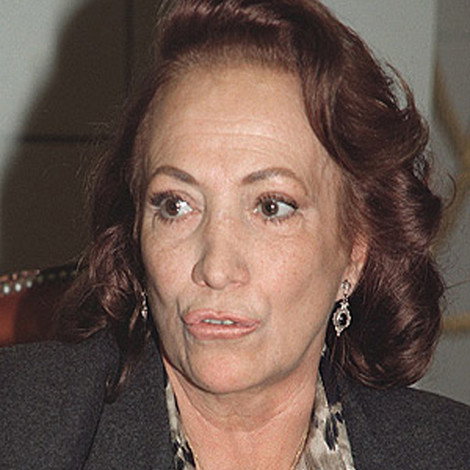
Carmen Rossi
Known for

Manos a la obra

Paco y Veva

La Forja de un Rebelde
An autobiographical account that is also the history of Spain during the dark years of the first half of the twentieth century. Spanish writer Arturo Barea (1897-1957) narrates his childhood in Madrid, his harsh experiences in Morocco during the Rif War and his political commitment to the Republican side during the Spanish Civil War.

Manolo y Benito Corporeision

Segunda Enseñanza

Hoy es fiesta

Los hombres siempre mienten
When Martin is about to be expelled from some literature courses, an unexpected event gives a turn to his uncertain future as a writer. Taking advantage of the absence of his neighbor, a consecrated novelist who entrusts him with the care of his cat, Martín steals his identity and some pages of his latest novel, presented in the school as a result of his own work. As a result of this, the teacher congratulates him publicly and the girl he is in love begins to look at him with different eyes.
Todos eran mis hijos

Y del seguro… líbranos, Señor!

Crossing Borders
In 1960, Martín and Marcos are forced by their difficult personal circumstances to travel to Switzerland in search of work, leaving their families in the Madrid of Franco's Spain. But they undertake more than a simple journey; they begin the road to a new life.

La viuda del capitán Estrada
Adaptation of a novel by Pedro García Montalvo that tells a story of destructive passion conditioned by social components that takes place during the 1940s.

La vuelta del Coyote
In the mid-19th century, California, a Mexican territory, became part of the United States. Faced with the possibility of being dispossessed of his land by the new authorities, Don César de Echagüe, a Spanish nobleman, asks his son César, a capricious and insufferable fop, for help.

The Powerful Influence Of The Moon
The film is an image of the Spanish society in form of various anecdotes which happen to the inhabitants and their neighbours of a finca in Madrid.

La muerte de un viajante
