Personal Info
Known For
Gender
Birthday
Place of Birth
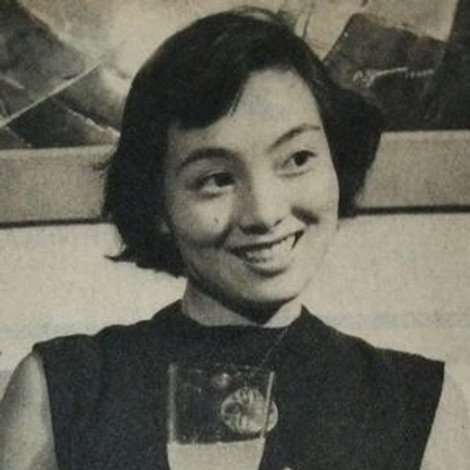
Sachiko Hidari
Biography
Known for

Kita no kazoku
The 13th NHK Asadora. Starring Youko Takahashi in a story about a brother and sister coming of age in Hakodate and Kanazawa.

Ryoma ga Yuku
The chronicles of Sakamoto Ryoma, a pre-revolutionary who helped shape the face of modern Japan. In order to study swordsmanship, Ryoma heads for Edo where he meets many people who influence his thinking. He becomes close friends with men like Katsu Kaishu and Saigo Takamori and later establishes a naval training school in Kobe. Ryoma's controversial political views make him a target for shogunate assassins but his fervent belief in a classless society helps forge the Choshu-Satsuma alliance which ultimately brings about the Meiji Restoration.

Mishima: A Life in Four Chapters
A fictional account of the life of Japanese author Yukio Mishima, combining dramatizations of three of his novels and a depiction of the events of November 25th, 1970.
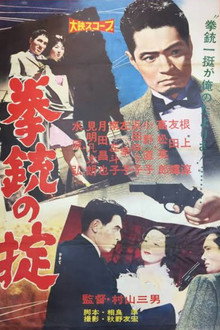
Kenjū no okite
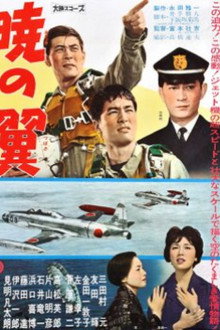
Wings of Dawn
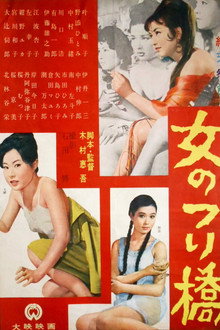
Adorable Schemers

The Insect Woman
A woman, Tome, is born to a lower class family in Japan in 1918. The title refers to an insect, repeating its mistakes, as in an infinite circle. Imamura, with this metaphor, introduces the life of Tome, who keeps trying to change her poor life.

犯罪心理分析官

A Fugitive from the Past
Three robbers escape with loot from a heist before one of them kills the others. Their corpses wash up near the aftermath of a maritime calamity, provoking a policeman's interest.

Under the Flag of the Rising Sun
A war widow determined to clear the name of her disgraced husband, who was court-martialed for desertion and executed. Official records have been destroyed, and the ministry that distributes benefits continues to deny her a pension. Twenty-six years after the war, she seeks out four survivors of her husband's garrison. Each tells a dramatically different story about her husband's conduct, but she is determined to learn the truth.

Double Suicide of Sonezaki
Suicide has long been used as a form of social protest in Japan. In this film, set in 1703, samurai culture is being transformed by the emergence of a new merchant class. Elements of the social contract are beginning to unravel, and some unscrupulous people took undue advantage of these changes before the social order was re-created. In this story, a rich merchant gives his clerk an I.O.U. instead of wages. When the impoverished clerk presents the paper to the merchant at the agreed upon time asking for payment, the man flies into a rage and pretends he never wrote it and claims the clerk is trying to defraud him. Then he sets his henchmen on the clerk to administer a beating.

A Sun-Tribe Myth from the Bakumatsu Era
Saheji, a man-about-town, gets stuck at a high-class brothel when he can’t pay the bill. He makes the best of his situation by performing various tasks amidst the tumult of the end of the shogunate—but always by making sure to get a “commission” for his troubles.

An Inn at Osaka
Follows the story of an insurance company executive from Tokyo, Mr. Mito, who is demoted to the Osaka office. He takes a room at a small inn and tries to rebuild his life.

Ofukuro
Shizuka, Eiichiro, and Mineko, their father and son, live modestly in a certain suburb, leading a dreary but happy life. Eiichiro is troubled by Shizuka's desire to live together in familiar Tokyo. Mineko is the exact opposite of Eiichiro. A literary masterpiece depicting the fateful sorrow and humor of a mother and child

Hishakaku and Kiratsune: A Tale of Two Yakuza
With his penultimate film, Uchida revisited one of his popular prewar titles, 1936’s Theatre of Life, an adaptation of Shiro Ozaki’s eponymous novel. Three-time Seijun Suzuki collaborator Goro Tanada wrote a gangsterized adaptation of Ozaki’s story for Uchida at a time when the yakuza had eclipsed the samurai genre as Toei's main cash crop. Protagonist Hishakaku murders a man in a quarrel over a barmaid and goes to jail. In his temporary absence, his girlfriend Otoyo, a former geisha, falls for Hishakaku’s brother, inciting a dangerous love triangle that, in typical yakuza fashion, ends tragically.