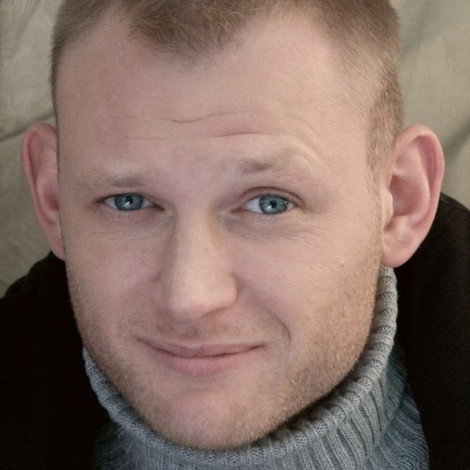
Personal Info
Known For
Gender
Birthday
Place of Birth
Andrey Frolov
Known for

Fear of the Neva
The year is 1967. A series of mysterious murders of women are taking place in Leningrad. An experienced KGB major, Chuzhbin, and a police captain, Fedorov, are assigned to catch a maniac who leaves mysterious signs next to the victims.

Gorky 53
The year is 1953. Due to the mass amnesty, the criminal situation in the USSR is tense. At the same time, Ivan Astafyev, a former commander of a reconnaissance platoon, who was released from prison, returns to his hometown of Gorky. And immediately becomes a victim of an attack by bandits, and then a false accusation of beating the attackers. Ivan's pre—war acquaintance, Captain Shvedov, helps out of trouble, who gets him a job at the Dynamo sports society to train policemen in hand-to-hand combat.

Я буду помнить

Ключ от всех дверей

Mission «Sky»
In the center of the story are three main characters - Lieutenant Colonel Soshnikov, Captain Muravyov and Major Zakharov. Three ages, three different characters, three different destinies, which are destined to meet at the Khmeimim military base.

Russian Translation
Russian Translation (Русский перевод) is a 2007 Russian miniseries based on Andrey Konstantinov's 1996 novel about Soviet military advisors and translators in the 1980s, specifically in Arab countries like Yemen and Libya.

Москва. Три вокзала

St Andrew's Flag

The Ferryman

The State Counsellor
A special train from St. Petersburg to Moscow. General Khrapov is stabbed in his compartment. A mysterious "BG" mark was found on the handle of the bloody blade - the sign of an elusive terrorist group. Only Fandorin can neutralize it. Prince Pozharsky, who is also investigating the case, stands in his way. A deadly duel begins.
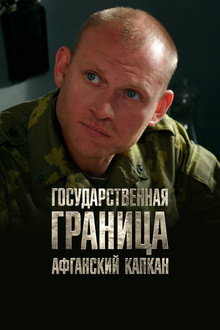
State Border: Vol. 10. The Afghan Trap
When the Soviet Union ceased to exist, the young country faced the task of protecting its borders using its own resources. To address particularly challenging tasks related to combating smuggling, illegal emigration, and carrying out many other dangerous operations, a separate active measures service was established — OSAM. It will be headed by Anton Pekarsky, a veteran of the Afghan war.


Научи меня жить

Потерянный ключ
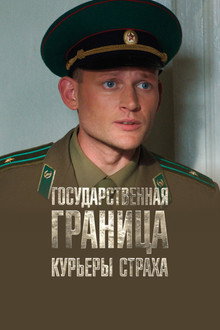
State Border: Vol 9. Couriers of Fear
Border guard officer Anton Pekarsky, after serving for ten years on the border in Central Asia, decides to return to his native Belarus. He is repelled by the attitudes that began to prevail at his former place of service after the collapse of the Soviet Union — corruption and complicity with illegal border violators. Therefore, at first, he turns down an offer to head one of the border outposts on the Belarusian‑Lithuanian border. However, when he arrives at his native border town with his daughter, Anton Pekarsky realizes that his integrity and experience in border affairs are very much needed there...