Personal Info
Known For
Gender
Birthday
Place of Birth
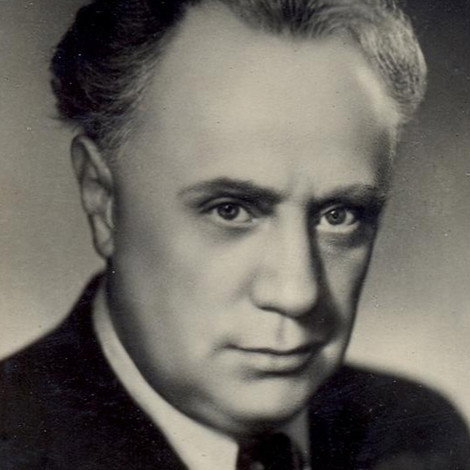
Mikhail Zharov
Biography
Known for

Ivan the Terrible, Part I
Set during the early part of his reign, Ivan faces betrayal from the aristocracy and even his closest friends as he seeks to unite the Russian people. Sergei Eisenstein's final film, this is the first part of a three-part biopic of Tsar Ivan IV of Russia, which was never completed due to the producer's dissatisfaction with Eisenstein's attempts to use forbidden experimental filming techniques and excessive cost overruns. The second part was completed but not released for a decade after Eisenstein's death and a change of heart in the USSR government toward his work; the third part was only in its earliest stage of filming when shooting was stopped altogether.

For Those Who Are at Sea
The film is about the sailors who fought on torpedo boats in the Great Patriotic war.


A Girl with Guitar
A romantic story about the girl working in the musical instruments store.

Michurin
About the life of the Russian biologist Ivan Michurin. 1912 year. Having rejected American offers to work abroad, Michurin continues his research in the Russian Empire, despite the fact that his ideas are not perceived by the tsarist government, the church and idealistic science. Michurin is supported by prominent scientists of the country and he continues to work hard. After the October Revolution, a small Michurin garden in the city of Kozlov (the biologist's homeland) becomes a large state nursery.

That's How It Will Be
Based on the play of the same name by K. Simonov, in the production of the State Academic Maly Theatre of the USSR. The events of September 1944 are described, when military engineer Saveliev arrives in Moscow for a few days. In his apartment, he finds new tenants—the Vorontsov family. A mutual love sparks between him and Olya…

Aelita: Queen of Mars
A young man travels to Mars in a rocket ship, where he leads a popular uprising against the ruling group with the support of Queen Aelita, who has fallen in love with him after watching him through a telescope.

Involuntary auditors
Two business travelers, Laptev and Rusakov, staying at a small town hotel, were surprised by the care that the service staff showed them. It turns out that the hotel administrators, lazy and bureaucratic, accepted the new guests as capital auditors. But it soon turns out that the real auditor has been living in one of the rooms for three days and has already started working as a hotel staff member.

The District Secretary
A story about a Secretary of the Communist Party District Committee who is leading partisans in their fight with the Nazis during WWII.

Ivan the Terrible, Part II: The Boyars' Plot
This is the second part of a projected three-part epic biopic of Russian Czar Ivan Grozny, undertaken by Soviet film-maker Sergei Eisenstein at the behest of Josef Stalin. Production of the epic was stopped before the third part could be filmed, due to producer dissatisfaction with Eisenstein's introducing forbidden experimental filming techniques into the material, more evident in this part than the first part. As it was, this second part was banned from showings until after the deaths of both Eisenstein and Stalin, and a change of attitude by the subsequent heads of the Soviet government. In this part, as Ivan the Terrible attempts to consolidate his power by establishing a personal army, his political rivals, the Russian boyars, plot to assassinate him.

The Ostrovsky House
A production of the State Academic Maly Theater. The film, dedicated to the memory of Alexander Nikolayevich Ostrovsky, includes fragments of plays based on the playwright's plays: "We'll settle accounts with our own people", "Thunderstorm", "Wolves and Sheep", "The Abyss", "The Snow Maiden", "The Heart is not a Stone", "It Shines but Doesn't Warm", "Mad Money", "The Truth is Good, but Happiness is Better", and "It's not all for naught".

A Narym Divorce
About the district officer Fyodor Ivanovich Aniskin, who maintains order and legality in his native collective farm.

The Vyborg Side
The final part of trilogy about the life of a young factory worker, Maxim. Following the Russian Revolution, Maksim is appointed state commissar in charge of the national bank. With great efforts, he learns the complexies of the banking trade and begins to fight off sabotaging underlings. Dymba, now a violent enemy of the Republic, tries to rob a wine store but is arrested with Maksim's help. Maksim also exposes a conspiracy of a group of tsarist officers who prepare an attempt against Lenin. He then joins the Red Army in its fight against the German occupation.

Twins
A funny comedy about a lost twins and a lot of good people who are involved in a search for twins' parents.
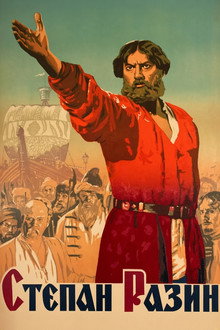
Stepan Razin
Don Cossack Stepan Razin vowed to take revenge on the boyars for his tortured friends. Having led the rebellious peasants, he becomes the leader of an entire army. Humiliated and insulted people flock to him from all over the Russian land.