
Personal Info
Known For
Gender
Birthday
Place of Birth
Léonce Corne
Known for
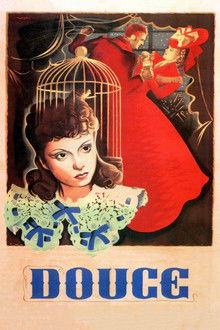
Douce
In Paris in 1887, Irène works as a governess to Douce, the grand-daughter of the dowager Countess de Bonafé. Douce believes she is in love with Fabien, the handsome manager of the estate. However she cannot hope to marry him because of their class difference. Douce's widowed father, the Count de Bonafé, has a wooden leg, and is infatuated with Irène. Douce discovers that Fabien is planning to flee to Quebec with Irène, and also finds out that the Count has asked Irène to marry him. So Douce tells Fabien this and convinces him to run away with her, causing consternation in the family.

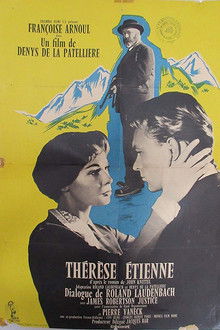
Thérèse Étienne
Her father having served a prison sentence, there is unending gossiping about Therese's family. Unable to put up with it any longer, the young woman leaves her native village for the canton of Bern where she manages to be hired by Anton Muller, a wealthy, authoritarian farmer. Under the young woman's spell, Anton wants to make his servant his mistress but Thérèse refuses energetically.. Later on, she nevertheless accepts to marry Anton. On the wedding day, she meets Gottfried, her bridegroom's son, and they instantly fall passionately in love with each other.
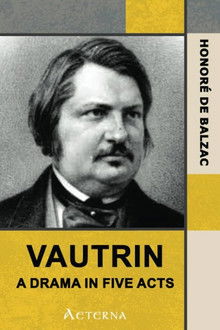
Vautrin

Plaisir du théâtre

L'Espagnol
A survivor of the Spanish Civil War who had been in French internment camps takes refuge with a family of winegrowers in the Jura. He becomes attached to this land that is not his own.
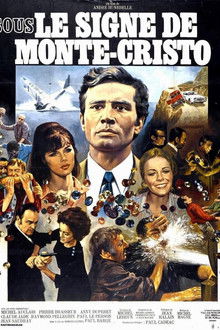
Sous le signe de Monte-Cristo
Edmond Dantès, who was active in the resistance against the Nazis, is accused for being a Nazi collaborator and is imprisoned in the fortress of Sisteron.

Paris in August
A man is alone in Paris during the month of August while his woman and children go on vacation. He meets a young English girl posing as a model who came to Paris for a shoot.
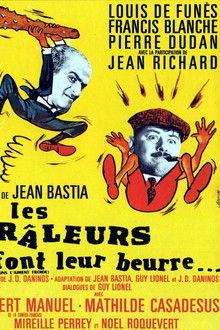
Some Like It... Cold
The old Valmorin died 200 years ago. The notary tells the family about the inheritance: the one who is terminally ill will receive the money. They all try their luck with getting ill before the other so one family member pretends to be deaf, another pretends to have a terrible back ache and so on...

The Traveler Without Luggage
Having lost his memory due to serving in World War I, Gaston has spent the past 15 years in a psychiatric hospital. Due to his large disability pension fund, several families claim him as their missing son. Gaston is introduced to the Renaud family by the Duchess Dupont-Dufort and her lawyer. The Renaud family attempt to revive Gaston's memory with stories of his past, but he is apalled by some of the things he hears and dislikes the man he is supposed to be.

We Are All Murderers
Originally titled Nous Sommes Tout des Assassins, We Are All Murderers was directed by Andre Cayette, a former lawyer who detested France's execution system. Charles Spaak's screenplay makes no attempt to launder the four principal characters (Marcel Mouloudji, Raymond Pellegrin, Antoinine Balpetre, Julien Verdeir): never mind the motivations, these are all hardened murderers. Still, the film condemns the sadistic ritual through which these four men are brought to the guillotine. In France, the policy is to never tell the condemned man when the execution will occur--and then to show up without warning and drag the victim kicking and screaming to his doom, without any opportunity to make peace with himself or his Maker. By the end of this harrowing film, the audience feels as dehumanized as the four "protagonists." We Are All Murderers was roundly roasted by the French law enforcement establishment, but it won a special jury prize at the 1952 Cannes Film Festival.

Fièvres
Despite a perfect marriage and a superb career as a singer, Jean Dupray cheats on his wife. She dies while listening to the song he dedicated to her, "Maria". He then retired to the south where he led a life in complete anonymity. But his best friend's fiancé recognizes him and seduces him. Following a fight with his best friend, he decides to return to order by becoming a monk.

Luck
A beautiful widow gambles away her fortune at baccarat and is forced her to sell her jewels and ask Victor for hospitality. Victor tries to seduce her but she loves the shy Gaston.
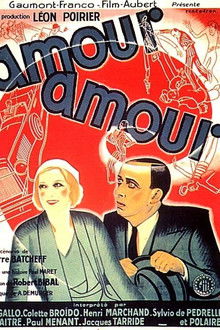
Love... Love...
The adventures of a pompous jeweler who refuses to listen to the advice of his level-headed employees. In due time, the jeweler is robbed, but his sharp-eyed subordinate manages to prevent the villains from getting very far. Wising up in a hurry, the jeweler finally proves himself worthy of the love of the heroine.
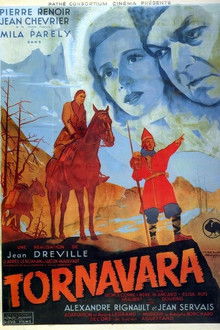
Tornavara
In a lost village in Lapland, Gérard comes to the aid of his friend Anders, in conflict with his father, a rich owner of gold mines.