Personal Info
Known For
Gender
Birthday
Place of Birth
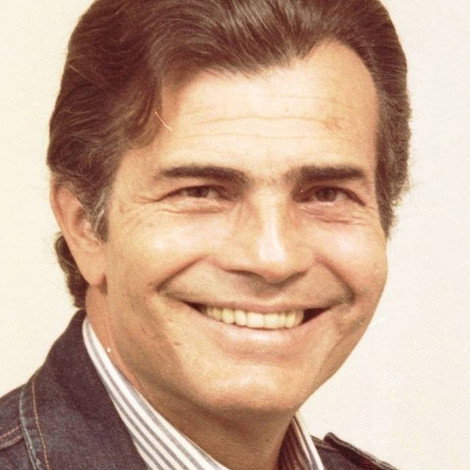
Tarcísio Meira
Biography
Known for

The Trapalhões
Os Trapalhões was a Brazilian comedy group and also a Brazilian television series created by Wilton Franco. Its members were Dedé Santana, Zacarias, Mussum and their leader Didi Mocó, that was played by Renato Aragão. The name Trapalhões is derived from the Portuguese verb atrapalhar, which means the opposite of helping, to do something the wrong way or to Those that confuse. The name is translated "Tramps" in English DVD subtitles. It was aired by Rede Globo from 1977 to 1999. On March 18, 1990, Zacarias died due to respiratory failure, but the group and the series didn't come to an end until July 29, 1994, when Mussum died due to an unsuccessful heart transplant.

Irmãos Coragem
The fight for freedom and against oppression is the central theme of this soap opera that tells the story of the Coragem brothers: João, Jerônimo and Duda, in the city of Coroado.

Pages of Life
Nanda must rethink her plansof studying in Amsterdam when she discovers she is pregnant. After losing the support of her boyfriend Léo, the young girl decides to return home, where she suffers a serious accident and dies.However, Helena, her doctor, is able to save her new-born twins: Francisco and Clara. Unfortunately, Clara suffers from Downs Syndrome. Helena feels a strong emotional tie to Clara and adopts her.Years later, the twins’father Léo, a young and wealthy businessman, returns to the scene, wanting to gain custody of the children.However, Helena and Alex fight to the end to retain guardianship of the twins, whom they have raised with such love.
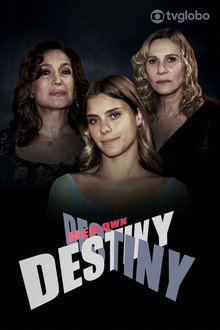
Her Own Destiny
A story about people who succeed in life thanks to nothing but their own efforts. Maria do Carmo is the main character of the telenovela; a mother of five who struggle to be successful in life, but whose most important will be recovering the love of her daughter who was kidnapped when she was just months old.

A Favorita
Flora and Donatella were two friends bonded by their love of music, but whose passion for the same man separated them forever. Donatella was Marcelo’s wife; Flora, his lover and murderer — a crime which cost her freedom and the custody of her daughter Lara, born out of that relationship and raised by Donatella. Now, history repeats itself, only this time their quarrel is not only over the same man but for Lara’s love. Torn between two mothers, the girl doesn’t know that Flora’s dirty, scheming ambition is not to draw her closer, but to keep her away from her longtime rival – plus snatch the inheritance of her former lover. The theme of rivalry — Flora’s bitter jealousy of the prettier and more talented Donatella permeates this provocative story and makes vengeance a ruleless game.

Fera Ferida
Marked by tragedy, Feliciano Júnior returns to Tubiacanga as Raimundo Flamel, driven by the desire to avenge the death of his parents.

Tieta
Inspired on Jorge Amado's romance "Tieta do Agreste", the plot is set on the fictional city of Santana do Agreste, at Brazil's northwest, and has as main theme Tieta's life turnarounds. Twenty-five years after being chased out of town by her father Zé Esteves, she returns to her home town seeking revenge against everyone who mistreated her and laugh at her face in the past.

Pátria Minha
Four stories intertwine, revolving around moral dilemmas of life in society. A secret unites student Alice and mega-businessman Raul Pelegrini, who are major ideological opponents.

Bang Bang
Twenty years after seeing his family decimated by gunmen, Ben Silver returns to Albuquerque to take revenge on the person responsible for the massacre, but falls in love with his rival's daughter.

O Homem Que Deve Morrer

Hilda Hurricane
After breaking off her engagement on her wedding day and going directly to a prostitution house, a young model becomes the city's most famous harlot, known as "Hilda Hurricane", in the 50's Brazil. She could do fine if it wasn't for Malthus, a young novice said to be a saint, for whom she falls in love. However, the boy is kept under the strict, severe doctrine of Father Nelson, a conservative priest intolerant even to every minor sin. Things start getting harder when Roberto, Malthus' old friend and a communist reporter (the actual author of the story), tries to interview Hilda and disclosure the real reasons behind her radical change of mind. In the meantime, the middle-classes are terrified by the "leftist threat" in Brazilian politics.

The King of The Cattle
In the struggle for land a vicious feud erupts between two men, who commit their families to a war without truce. Over two generations they are moved by love and by hatred in this epic saga of love for the land.

Rosa Rebelde

Old River
A great love story, a family rivalry that spans generations: the telenovela narrates the love for the São Francisco River, which is revealed in the feelings between Maria Tereza and Santo.