
Personal Info
Known For
Gender
Birthday
Place of Birth
Jorge Martínez de Hoyos
Biography
Known for

Pueblo chico, infierno grande
Pueblo chico, infierno grande is a Mexican historical telenovela produced by José Alberto Castro for Televisa and originally broadcast on Canal de las Estrellas from January 6 to August 1, 1997. Created by Javier Ruán and adapted by Javier Ruán, Mario Hernández, and Sergio Schmucler, the telenovela is based on a true story about Leonarda Ruán. It stars Verónica Castro, Juan Soler, and Guillermo Capetillo. The story is set in the late 19th century and follows Leonarda Ruán, a wealthy widow from the town of Nahuatzen who falls in love with Genaro Onchi, a young man from a humble background. Their relationship faces strong opposition from society, family conflicts, jealousy, and the return of people from Leonarda's past who try to separate them. As secrets and rivalries emerge, Leonarda and Genaro fight to protect their love against the judgment and traditions of their small town.

The Magnificent Seven
An oppressed Mexican peasant village hires seven gunfighters to help defend their homes.

El pecado de Oyuki
El Pecado de Oyuki is a Mexican telenovela produced by Televisa in 1988. It was based on an original story by Yolanda Vargas Dulché, who also adapted the screenplay for television. The original comic book series was in the style of the foto-novela. For the role of Oyuki, the photographer selected the Mexican Japanese Sachiko Tsuchiya. Born in Tepic, Nayarit, she became the most recognizable Asian Mexican of her time. The telenovela was shown in the United States in 1988 through Univision. Dulché's story was also adapted for Brazilian television in 1967 and as a comic published starting April 11, 1975 by Grupo Editorial Vid. The Brazilian version was called "Yoshiko, um poema de amor" and starred actors Luis Gustavo and Rosa Miake.

Vovô e Eu
Young Daniel, who lives with his dog Anselmo, first meets Don Joaquín—an elderly concert pianist who has become a grumpy recluse. Daniel believes the two could be great companions, never suspecting that the man is actually his grandfather. Later, he meets Alejandra, and together they begin to explore new, fun-filled worlds—all thanks to the grandfather, who becomes their guide and teaches them the true meaning of friendship and how to hold onto their childhood.

Cronos
Faced with his own mortality, an ingenious alchemist tried to perfect an invention that would provide him with the key to eternal life. It was called the Cronos device. When he died more than 400 years later, he took the secrets of this remarkable device to the grave with him. Now, an elderly antiques dealer has found the hellish machine hidden in a statue and learns about its incredible powers. The more he uses the device, the younger he becomes...but nothing comes without a price. Life after death is just the beginning as this nerve-shattering thriller unfolds and the fountain of youth turns bloody.

Gabriel y Gabriela
Gabriel y Gabriela is a Mexican telenovela made by Televisa and produced by Patricia Lozano in 1982. The series was based on an original story by Yolanda Vargas Dulche, who also wrote the adaptation for television. The series featured an original song "Dulce Amor", written by Bebu Silvetti and performed by Ana Martín, who also starred in the main role. The series was directed by Carlos Téllez with cinematography by Carlos Velazquez.
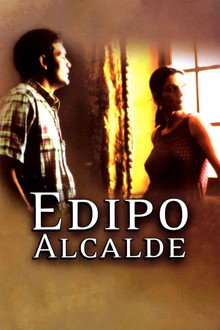
Oedipus Mayor
Edipo, is appointed mayor of a town plunged in misery and violence. His first mission is to discover and punish the murderers of Layo, a well-known potentate of the region. His investigation is directed towards all the armed factions that exist in Colombia.

The Professionals
An arrogant Texas millionaire hires four adventurers to rescue his kidnapped wife from a notorious Mexican bandit.


Café Colón
Expensively-kept woman unexpectedly falls for a Zapatista general. She sells her jewels to help finance the revolution and ends up fighting on the front lines. Yeah, right.


La trinchera

Get Off at the Next Corner!
Driver Gregorio del Prado and fare collector Regalito were suspended for deviating from their route to impress a young woman named Cholita.
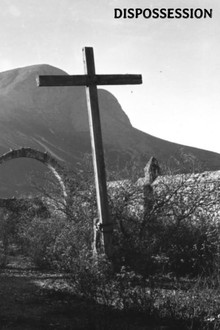
Dispossession
An experimental film in which time breaks again and again at the moment of death, where the seconds become whole lives condemned.

Difficult Days
Two shareholder brothers close several factories due to economic problems, except for their chemical plants.