Personal Info
Known For
Gender
Birthday
Place of Birth
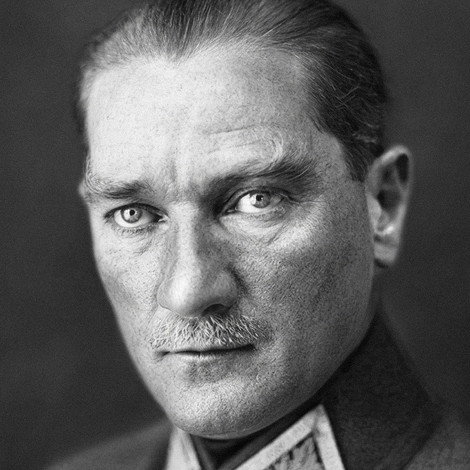
Mustafa Kemal Atatürk
Biography
Known for

Atatürk
Designed primarily for non-Turkish viewers, Tolda Örnek's documentary has a portentous narration by Sir Donald Sinden, focusing mostly on Atatürk's qualities as a leader as well as an inspiration to others. His shortcomings (drinking and smoking too much, as well as an inability to relate to his wife) are not overlooked, but Örnek suggests that they were chiefly due to his obsession with work. He had a lot to do in a very short time and achieved it.
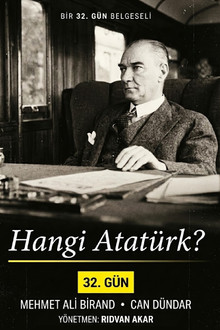
Which Atatürk?
No matter what he did, no matter how selflessly he served his country, and even if he were to be remembered for founding or saving that nation, history would be the one to pass the final judgment. He would either become a name gradually fading into the forgetful memory of history, or he would shine like a precious jewel engraved in history’s steel vault. History would be the ultimate judge. Years passed, and Turkey came to know pluralistic democracy, military coups, economic upheavals, technology, the world, and modernization. But it never gave up on him.

Demirkirat
A documentary of Turkish political history about multi-party period, Democrat Party government and the coup d’État of May 27th.

How to Stage a Coup
A guide to human history through its most audacious power grabs. From Julius Caesar to Napoleon; from Mussolini to the strongmen of the present day - we see how the world we know has been shaped by those who dream big.

Mustafa Kemal Atatürk - From Revolutionary to Statesman.
Mustafa Kemal Atatürk was an Ottoman and Turkish army officer, revolutionary statesman, writer, and the first President of Turkey. He is credited with being the founder of the Republic of Turkey. His surname, Atatürk (meaning "Father of the Turks"), was granted to him in 1934 and forbidden to any other person by the Turkish parliament.
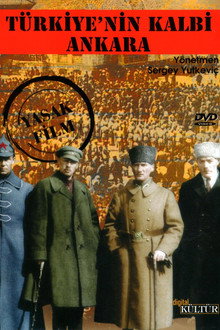
Ankara - Heart of Turkey
A Soviet documentary made for the 10th anniversary of the new Turkish Republic in the year 1934.
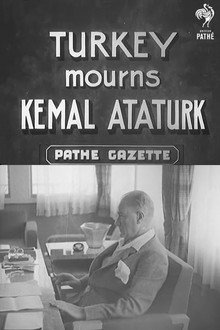
Turkey Mourns Kemal Ataturk
Various shots of Kemal Ataturk sat around a table with other politicians, he speaks, M/S profile of him. C/U of his successor General Ismet Inonu. L/S of Istanbul, various shots of the city, a truck drives down the street. M/S of Turkish women sat around threading leaves onto spikes. M/S of ladies being fitted for clothes. M/S of two oxen pulling a plough, M/S of a tractor pulling a plough. L/S of workers in a factory. A substance is poured into a big vat.

Gölgedekiler

Aurora's Sunrise
The story of how Aurora Mardiganian (1901-94), a survivor of the Armenian genocide perpetrated by the Ottoman Empire (1915-17), became a Hollywood silent film star.

Bir Millet Uyanıyor
The events begin on March 15, 1920. The captain Davut, who belongs to the Kuvva-i Milliye in Anatolia, and the commander Tilki join the alliance that first presses the Akbas Ammunition and transfers the ammunition to the Kuvva-i Milliye on a received code.
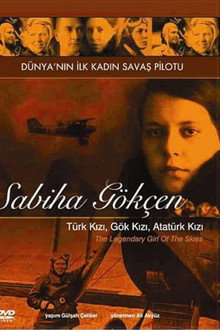
Göklerin Efsane Kızı: Sabiha Gökçen

Atatürk: Father of the Turks
In the documentary, the life of Mustafa Kemal Atatürk, the last period of the Ottoman Empire, the War of Independence and the developments in the first years of the Republic of Turkey are told in parallel. The documentary prepared by Michael Adams consists of recordings made by the BBC in 1970 in Çanakkale, Samsun, Amasya, Sivas and Ankara, as well as historical footage.

Atatürk, Father of Modern Turkey
Mustafa Kemal Atatürk (1881-1938) was a Turkish field marshal, revolutionary statesman, author, and the founding father of the Republic of Turkey, serving as its first president from 1923 until his death in 1938.

The Incredible Turk
This film is about Mustafa Kemal Ataturk and the modernization of the Turkish Republic.

Atatürk: Founder of Modern Turkey
The rise of modern Turkey under the leadership of Mustafa Kemal, later known as Atatürk. He established peace on the borders of Turkey for the first time in centuries, secularized the country, emancipated women, guaranteed certain minorities equal rights, and replaced Arabic script with the Latin alphabet. Along with rare archival footage is commentary from academic experts and interviews with his adopted daughter Ulku; Suleyman Demirel, President of the Turkish Republic; and the Patriarch of the Orthodox church.