
Personal Info
Known For
Gender
Birthday
Place of Birth
Ronnie Von
Biography
Known for

The Trapalhões
Os Trapalhões was a Brazilian comedy group and also a Brazilian television series created by Wilton Franco. Its members were Dedé Santana, Zacarias, Mussum and their leader Didi Mocó, that was played by Renato Aragão. The name Trapalhões is derived from the Portuguese verb atrapalhar, which means the opposite of helping, to do something the wrong way or to Those that confuse. The name is translated "Tramps" in English DVD subtitles. It was aired by Rede Globo from 1977 to 1999. On March 18, 1990, Zacarias died due to respiratory failure, but the group and the series didn't come to an end until July 29, 1994, when Mussum died due to an unsuccessful heart transplant.

A Menina do Veleiro Azul

A Gata Comeu
After getting lost on a sea excursion, Jô Penteado and Fábio Coutinho develop mutual feelings during the two months they spend stranded on a deserted island.

O Amor é Nosso!
The telenovela tells the story of Pedro, a young singer seeking recognition and success. The son of Celso and Anita leaves his parents' home when he discovers that his brother Claudio has become involved with his girlfriend Selma. The singer then goes to live in a student community, where he meets the siblings Bruno, a composer, and Nina. Pedro and Bruno begin a professional partnership. Nina ends up falling in love with the singer, but is torn between him and the former seminarian Chico.

Cinderela 77

Programa da Maisa

Mazzaropi
A documentary on the life and work of Amácio Mazzaropi, a phenomenon of popularity and profitability of Brazilian cinema.
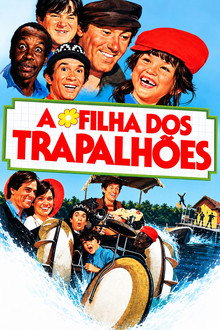
A Filha dos Trapalhões
The Trapalhões live in a floating boat and have a miserable life. When they find an abandoned baby, they decide to raise it as if it were their own daughter. Later, when they begin to work in a circus, they discover that the child is in fact the daughter of the trapeze artist and that she was forced to surrender her daughter to a gang that negotiates children abroad. This gang finds them and tries to recover the girl who now, however, has the help of the Trapalhões to protect her.

O Descarte
After Cláudia, haunted by her husband’s death on a car crash, starts a romance with another man, she starts receiving threatening letters.

BIS Docs

Ghost Killers vs. Bloody Mary
A group of three youtubers who call themselves experts in supernatural beings decide to win public recognition once and for all. For this they plot a plan to capture a being known to all. It is the spirit of a light-haired woman who died in an unknown way and who haunts the bathrooms of schools across the country: the blonde in the bathroom.

Los taxistas del humor
Three stories in which one of the protagonists is a metered car driver.
Janaína - A Virgem Proibida
Ricky is a pop idol among young people. During an impulse of hate, he tries to kill his elder brother. Upset after a show in Salvador, he looks for help in a voodoo adept, who shows him all his previous life in flashback and his brother's wickedness.

The Girl from Ipanema
Chronicles the life of a 17 year-old girl living in the upper-class Rio de Janeiro neighbourhood of Ipanema. Márcia lives a life of parties and spend her days among bohemians, musicians and intellectuals. While seeming happy in the outside, she's extremely anguished inside. Based on the famous song by Antonio Carlos Jobim and Vinicius de Moraes.