Personal Info
Known For
Gender
Birthday
Place of Birth
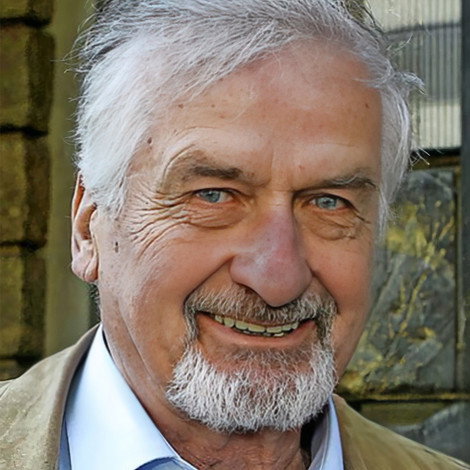
Manfred Zetzsche
Known for

Polizeiruf 110
Polizeiruf 110 is a long-running German language detective television series. The first episode was broadcast 27 June 1971 in the German Democratic Republic, and after the dissolution of Fernsehen der DDR the series was picked up by ARD. It was originally created as a counterpart to the West German series Tatort, and quickly became a public favorite.

Der Staatsanwalt hat das Wort
Der Staatsanwalt hat das Wort was an East German television series.

Zollfahndung

Karl Marx. Early Years
As a student at the University of Berlin, Karl Marx joins the "Doctoral Club," a refuge for young free thinkers. Karl Marx decides to devote himself to philosophy, defends his thesis, becomes a Doctor of Philosophy, but hopes to teach at the University of Bonn. When this plan falls through, Marx accepts an offer to work as editor of a Rhine newspaper...

Der Regimentskommandeur
Major Bert Harkus takes over the artillery regiment in Jesnack after graduating from the military academy. The troop proudly presents itself during an exercise. But apart from some good results in shooting, Harkus soon realizes that there are a few problems. As he does not believe that constant combat readiness is guaranteed, he orders far-reaching changes and does not only make friends. Only gradually do the troops pull themselves together.

Alarm am See
University ice-sailing trainees face a hostel fire when caretaker Krenzel rescues Captain Klaus’s swapped suitcase, barring him from travel due to a stolen Hogarth print inside. X-rays reveal a hidden engraving; detectives Hübner and Lindt expose forger Sander and Krenzel. After Krenzel’s sabotage fails and both are arrested, Klaus is exonerated and rejoins his team for the international regatta.

Zwischen Nacht und Tag
Episodes from the life of German poet and communist Erich Weiner: his stay in Paris, participation in the Spanish Civil War, years of exile in Russia. Moscow, May 1941. Children play in the sun, young people fall in love, make plans for their future. German emigrants, including 50-year-old Erich, are concerned about events in their homeland and sense impending disaster...

Angebot aus Schenectady
Dr. Grunert, electronics specialist from the GDR, gets a visit from an old acquaintance from war times. Both worked back then on navy torpedoes. His former colleague wants to poach Grunert – to Schenectady, the headquarters of the largest American electronics company. With alleged war crimes, he tries to blackmail Grunert, but quickly it becomes clear where the true criminals are sitting: In influential positions of the American industry. Grunert underestimates the scrupulousness of his opponent and invites him to a remotely located country home to clarify things. The Ministry for State Security is already on the trail of the matter and saves the engineer from a dangerous solo action.

Despite It All!
October 1918: Karl Liebknecht is released from prison and Berlin workers celebrate his release. Although WWI is almost over, the German Kaiserreich in vain sends its last reserves to the slaughter. The working class is in a rebellious mood; the uprising of Kiel’s sailors against war and militarism sets off a call for revolution led by Liebknecht. On November 9, Liebknecht declares the Free Socialist Republic of Germany. But pro-Kaiser military and right wing Social Democrats oppose him.

Der Mann von der Cap Arcona
1982: East German actor Erwin Gregorek travels to Hamburg to shoot screen tests for a film about the sinking of the ocean-liner Cap Arcona in 1945 - a catastrophe he himself survived as a concentration camp prisoner.

The Light of Love
804, Thuringia. An orphan boy, called Bengel, lives in a monastery and is teased by the nuns because of his ugliness. He nurses a black rider, who is shunned by everyone and is said to have the plague, back to health. The rider tells him about the missing Bogumil, son of the Slavic king Slavomir, who was to marry Reglindis, the daughter of the Margrave of Thuringia, by order of Charlemagne. And he asks Bengel about his origins. Bengel now believes he is Bogumil. He goes to the castle and meets a beautiful girl who also thinks he is beautiful. It is Reglindis, she is blind. The girl senses the boy's inner beauty and is very fond of him. Her father, however, wants to kill him. Bengel narrowly escapes death twice, the Black Rider impressively proves his identity with Bogumil and finally there is a happy ending.

Im Spannungsfeld
Electronic data processing is an absolute must in the Information Age. Karl Hoppe, the director of a large plant, is aware of this need for modernization and hires mathematician Dr. Jochen Bernhardt to install computerized systems which are supposed to calculate ways in which the plant could be run more effectively. Dr. Bernhardt is so focused on efficiency that he forgets about the human side of work, causing his girlfriend to leave him and several dissatisfied employees to quit their jobs.

Jadup and Boel
In a small town, everyone has tried to forget what happened shortly after WWII. That is, until a stranger finds a book that Jadup (Kurt Böwe) gave to the young refugee Boel (Katrin Knappe), who resettled in the town over 30 years ago. Painful memories about Boel and the post-war period begin to surface and shake up the whole town. Boel vanished back then and nobody knew why. Word spread about a rape and some tried to blame a Russian soldier. Jadup, the town's respected and popular mayor, remembers, though, how he mistrusted Boel and did not help her through this difficult time; HE didn't even notice THAT Boel loved him. Jadup's confrontation with the past gives him a new, critical view of his current situation and surroundings.

The Scout
1877, the tribe of the Nez Percés Indians are driven into the reservation by a white cavalry force. So that they can not escape, their horses are requisitioned. Sub-chief "White Feather" has no choice but to make a scout with the cavalry and retrieve the stolen horses through his life.

Startfieber
The three athletes Holger, Jens, and Ralf are fighting in the Nordic combined for a place in the junior national team. What has begun as fruitful team work in the children and youth sport schools, develops into a strong rivalry among the young men. Each of them excels at only one of the sports - Jens is a brilliant cross-country skier, but a bad ski jumper, and with Holger it is the other way around - thus, they need each other, yet they still fight against each other.