Personal Info
Known For
Gender
Birthday
Place of Birth
Aarón Hernán
Biography
Known for
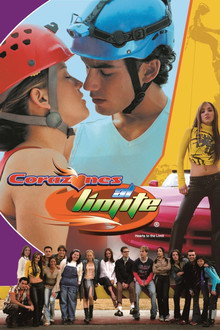
Hearts to the Limit
Corazones al límite is a Mexican telenovela about a teenage girl named Diana who was emotionally neglected from her parents, and felt unwanted. After being expelled from her boarding school in Switzerland, Diana goes back to live with her parents.

Head over Heels
A man's budding romance with a beautiful woman is sabotaged by his evil twin, but they get another chance at love when they're reunited years later.

Salomé
Fernanda Quiñones, whose stage name is Salomé, is a dancer who works at the D'Rubí cabaret in Mexico City with her friend Karicia. One day, Salomé meets Julio, son of the millionaire Montesino family, who is married to Ángela, a sickly woman who cannot have children. Lucrecia, Julio's mother, who is obsessed with the idea of having a grandson who will inherit the family fortune, proposes to Salomé that she be the mother of that grandson. But, when she finds out that Julio, even though he loves her, will not only not leave Angela, but that she will be the one to raise the child as if it were her own, she flees far away with her son and two other babies abandoned by a neighbor. Twenty years later, Salomé becomes a wealthy business woman who lives with her three children. When he returns to Mexico, Julio and his mother will try to find out who Salomé and Julio's son is.

Extraño en su pueblo
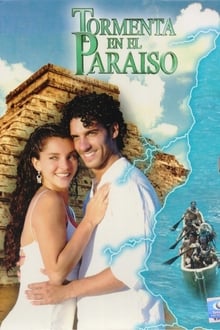
Storm Over Paradise
Tormenta en el Paraíso is a telenovela that was made by Televisa. This telenovela has a blend of new talents and with figures of extense experience in the television, and it began filming scenes in locations in the states of Quintana Roo and Veracruz on September 20, 2007. The telenovela is a production of Juan Osorio, premiered November 12 of 2007 in El Canal de las Estrellas.
Paloma
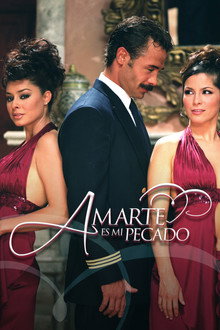
My Love, My Sin
Amarte es mi pecado is a Mexican telenovela produced by Ernesto Alonso for Televisa and originally broadcast on Canal de las Estrellas from January 5 to May 14, 2004. Created by Liliana Abud, with adaptation by Jaime García Estrada and Orlando Merino, the story follows Leonora Madrigal, a young woman whose life is marked by betrayal, sacrifice, and forbidden love. After being accused of a crime she did not commit, Leonora faces the consequences of a painful past while trying to rebuild her life and find happiness. The telenovela explores themes of love, revenge, ambition, and redemption.

Sortilegio
María José is a simple small-town woman eagerly awaiting her wedding day to Alejandro Lombardo, unaware that her “Alejandro” is actually Bruno—the half-brother of the real Alejandro—who has inherited a vast fortune.
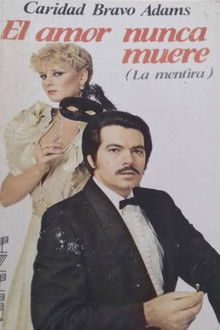
El amor nunca muere

Killer Women
Mujeres Asesinas is a series that shows the dark side of women who have been mistreated or abused and become cruel murderers. The series shows how violence and death can overcome the feminine mind.
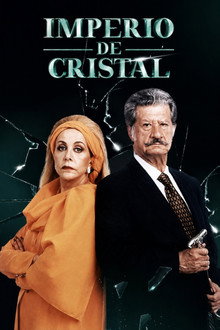
Crystal Empire
Imperio de Cristal is a Mexican telenovela that aired on Televisa in 1994 with 124-episode from the plot to the main cast it was officially first launched on Monday, 29 August 1994 & ceased transmission on Friday, 17 February 1995 was aired runtime of 45-minutes with commercial on weekday at 21:00 to 22:00 CST/22:00 to 23:00 MST/23:00 to 00:00 PST.
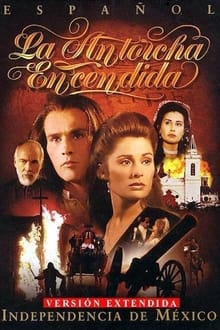
La antorcha encendida
A Mexican telenovela produced in 1996. It was the last historical telenovela produced by Televisa. The plot tells the Independence of Mexico, with an emphasis on historical accuracy.
Ven conmigo

Al rojo vivo

Marisol
Mexican telenovela starring Erika Buenfil and Eduardo Santamarina with the antagonic role of the star actress Claudia Islas. It was produced by Televisa. This telenovela contained 145 episodes and is a remake of Marcha nupcial.