
Personal Info
Known For
Gender
Birthday
Place of Birth
Terence Soall
Known for

The Avengers
A quirky spy show of the adventures of eccentrically suave British Agent John Steed and his predominantly female partners. Jonathan Steed - an urbane, proper gentleman spy - teams with various assistants throughout the series' run, including Dr. David Keel, Cathy Gale, Emma Peel and Tara King, to repeatedly save the world from diabolical schemes plotted by equally diabolical evil-doers (among them robots and man-eating monsters).

New Scotland Yard
New Scotland Yard is a police drama series produced by London Weekend Television for ITV from 1972 and 1974. It features the activities of two officers from the Criminal Investigations Department in the Metropolitan Police force headquarters at New Scotland Yard, as they dealt with the assorted villains of the day.

Theatre 625
Theatre 625 is a British television drama anthology series, produced by the BBC and transmitted on BBC2 from 1964 to 1968. It was one of the first regular programmes in the line-up of the channel, and the title referred to its production and transmission being in the higher-definition 625-line format, which only BBC2 used at the time.

Bleak House
The generous John Jarndyce, struggling with his own past, and his two young wards Richard and Ada, are all caught up, like Lady Dedlock, in the infamous case of Jarndyce vs Jarndyce, which will make one of them rich beyond imagination if it can ever be brought to a conclusion. As Tulkinghorn digs deeper into Lady Dedlock's past, he unearths a secret that will change their lives forever, and which is almost as astounding as the final outcome of the Jarndyce case.

Porridge
Porridge is a British situation comedy broadcast on BBC1 from 1974 to 1977, running for three series, two Christmas specials and a feature film also titled Porridge. Written by Dick Clement and Ian La Frenais, it stars Ronnie Barker and Richard Beckinsale as two inmates at the fictional HMP Slade in Cumberland. "Doing porridge" is British slang for serving a prison sentence, porridge once being the traditional breakfast in UK prisons. The series was followed by a 1978 sequel, Going Straight, which established that Fletcher would not be going back to prison again. Porridge was voted number seven in a 2004 BBC poll of the 100 greatest British sitcoms.

Sergeant Cork
Sergeant Cork is a British detective television series which first aired between 1963 and 1968 on ITV. It was a police procedural show that followed the efforts of two police officers and their battle against crime in Victorian London. In all 66 hour-long episodes were aired during the five-year run, although the last episode was not broadcast until January 1968, 16 months after the others. Journalist Tom Sutcliffe has credited it as a first example of the use of the Victorian-era policeman in a television crime series. A 1969 review in The Age opined that rather than suspense, the strengths of the series were its "excellent period settings and wonderfully thick pea-soupers" which "add up to splendid evocative stuff", as well as the performance of star John Barrie. At no time during the whole series is Sergeant Cork's first name given.

Lady Killers
Compelling crime anthology looks at some of Britain's most notorious murder trials, in which both male and female defendants stood accused of the murder of women. Presented by Robert Morley, seven hour-long dramas reconstruct sensational trials which shocked Britain, offering in-depth analyses of individuals' motives and methods.

No, Honestly
Clara and Charles Danby are a newlywed couple living in London. Clara is a ditzy dreamer who hoped to write books for children; by contrast, Charles is a struggling actor with a more serious streak.

Raffles
Raffles was a 1977 television adaptation of the A. J. Raffles stories by Ernest William Hornung. The series was produced by Yorkshire Television and written by Philip Mackie. The episodes were largely faithful adaptations of the stories in the books, though occasionally two stories would be merged to create one. In Victorian-era London, gentleman thief A. J. Raffles, a renowned cricketer, and his friend, the eager but naive Bunny Manders, test their skills in relieving the wealthy of their valuables whilst avoiding detection, especially from the persistent Inspector Mackenzie.
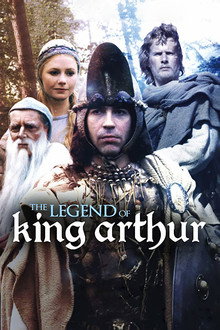
The Legend of King Arthur
Dark Ages wizard Merlin, weary of the barbarism around him, creates a new order of enlightenment and justice with a youthful Arthur at its head. Merlin gifts Arthur with the magic legendary sword Excalibur to help him defeat the nobles who oppose his rule. But Arthur must also beware his half-sister Morgan, a sorceress who has sworn to kill him to avenge her father's death. As Morgan intensifies her plans for revenge, she uses magic to draw Lancelot and Guinevere into a passionate affair. However, it is the still more traitorous Mordred who will ultimately determine the fate of Arthur's rule.

Oliver Twist
An orphan endures a harsh life in a workhouse before fleeing to London, where he falls in with a gang of juvenile pickpockets led by the criminal Fagin, and eventually finds a better life, exposing the cruelties of poverty and child labor in Victorian England.

Our Miss Pemberton
Our Miss Pemberton is a British television programme which aired on the BBC from 1957 to 1958. A drama, it was about life in a small town. All 56 episodes were broadcast live and no telerecordings appear to have survived, leaving them lost.

Orlando
England, 1600. Queen Elizabeth I promises Orlando, a young nobleman obsessed with poetry, that she will grant him land and fortune if he agrees to satisfy a very particular request.
Plays for Pleasure
A series of six plays about relationships, examining themes including love, friendship, family dynamics, and personal growth, often highlighting the complexities and humour in human connections.