Personal Info
Known For
Gender
Birthday
Place of Birth
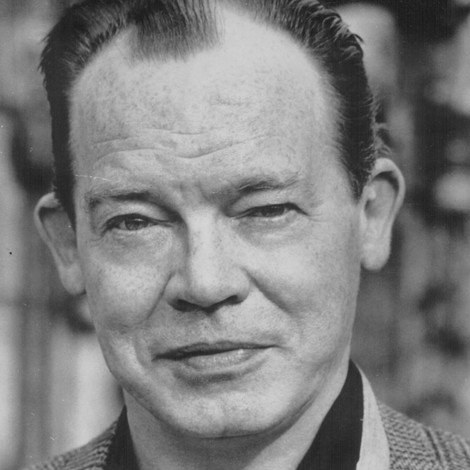
Myron McCormick
Biography
Known for

Alfred Hitchcock Presents
A television anthology series hosted by Alfred Hitchcock featuring dramas, thrillers, and mysteries.
Alfred Hitchcock Presents
A television anthology series hosted by Alfred Hitchcock featuring dramas, thrillers, and mysteries.

Checkmate
Checkmate is an American detective television series starring Anthony George, Sebastian Cabot, and Doug McClure. The show aired on CBS Television from 1960 to 1962 for a total of 70 episodes and was produced by Jack Benny's production company, "JaMco Productions" in co-operation with Revue Studios. Guest stars included Charles Laughton, Peter Lorre, and Lee Marvin, among many other commensurately prominent performers.

Play of the Week
This syndicated anthology series staged a different play every week covering all genres, dramas, comedies, musicals, fantasies, mysteries, et al, utilizing some of the best talent appearing on Broadway.

China Girl
Two-fisted newsreel photographer Johnny Williams is stationed in Burma and China in the early stage of WW II. Captured by the Japanese, he escapes from a concentration camp with the aid of beautiful, enigmatic 'China Girl' Miss Young. The two arduously make their way back to friendly lines so that Johnny can deliver the vital military information he's managed to glean from his captors.

The Hustler
Fast Eddie Felson is a small-time pool hustler with a lot of talent but a self-destructive attitude. His bravado causes him to challenge the legendary Minnesota Fats to a high-stakes match.

Armchair Theatre
Armchair Theatre is a British television drama anthology series of single plays that ran on the ITV network from 1956 to 1974. It was originally produced by Associated British Corporation, and later by Thames Television from mid-1968.

The Town
The Town was a short propaganda film produced by the Office of War Information in 1945. It presents an idealized vision of American life, shown in microcosm by Madison, Indiana. It was created primarily for exhibition abroad, to provide international audiences a more well-rounded view of America, and was therefore produced in more than 20 translations. Preserved by the Academy Film Archive in 2012.

The Iceman Cometh
Theodore Hickman, a hardware salesman, makes by-yearly visits to Harry Hope's 1910-era waterfront bar for his periodical drinking binges. But on this visit he has decided to try to save the bar's patrons from their "lying pipe dreams."

Not as a Stranger
Lucas Marsh, an intern bent upon becoming a first-class doctor, not merely a successful one. He courts and marries the warm-hearted Kristina, not out of love but because she is highly knowledgeable in the skills of the operating room and because she has frugally put aside her savings through the years. She will be, as he shrewdly knows, a supportive wife in every way. She helps make him the success he wants to be and cheerfully moves with him to the small town in which he starts his practice. But as much as he tries to be a good husband to the undemanding Kristina, Marsh easily falls into the arms of a local siren and the patience of the long-sorrowing Kristina wears thin.

No Time for Sergeants
Georgia farm boy Will Stockdale is about to bust with pride. He’s been drafted. Will’s ready. But is Uncle Sam ready for Will?

Three for the Show
This musical reworking of Too Many Husbands (1940), features Grable as a top singer and dancer who's been widowed by WW II. She marries her late husband's songwriting partner, Gower Champion, but the new marriage is thrown for a loop when Lemmon, her first husband, turns up very much alive and eager to see Grable.

One Third of a Nation
The negligent owner of a tenement slum becomes romantically involved with one of the building's residents.

The Fight for Life
The Fight for Life was documentary filmmaker Pare Lorentz' first "dramatic" film, utilizing the talents of several top New York stage actors. A tribute to the Chicago Maternity Center and its efforts to provide the best possible care for destitute mothers, the film is based on the book of the same name by Paul de Kruif. Myron McCormick plays the largest role as a dedicated intern, while others in the cast include such theatrical heavywrights as Will Geer, Dudley Digges and Dorothy Adams. The film's many vignettes range from the tragic (a mother dying in childbirth in the opening scene) to the exultant (another mother rescued from the brink of death in a disease-ridden tenement). Filmed in Chicago, Detroit and Cleveland, Fight for Life is a worthwhile effort, though Lorentz seems more comfortable with the "actuality" scenes than with the dramatized passages.

The Man Who Understood Women
A film director turns his actress wife into a star, leading to marital problems.