Personal Info
Known For
Gender
Birthday
Place of Birth
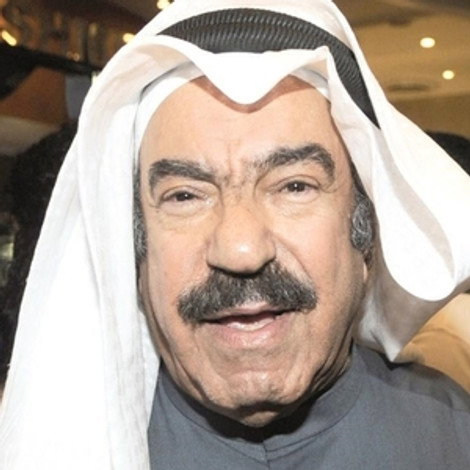
Khalid Al-Obaid
Biography
Known for

City Of The Winds
The elder spreads ruin everywhere, and asks his sons Alqam and Hazbona to work to change Ajaj to become a liar, a deceitful and a spiteful so that he can fulfill his old prophecy of spreading destruction in the world through the ruler of the city of the winds

Juha’s Diaries
A traditional comedy series, which deals with the memoirs of Juha and his son, the poet Ajib, their adventures in trade, and their passage in funny situations that expose them to embarrassment, their determination and their efforts to earn the sustenance of their day and to satisfy Juha's wife, the greedy.

Sherbaka
In a comedy framework, the series deals with the story of a shreb who works as an employee and arises between him and Al-Aidrousi funny situations and conflict within work.

Al Shareeb Bazza
The events of the work revolve around a comedic framework around the Bazza family, who belong to the poor class and are unlucky enough to move to Abu Khaled's house to work as a maid for his family, but with Bazza's cleverness and intelligence, Abu Khaled falls in love with her and marries her, and she begins her plans to obtain Abu Khaled's property.

Keep trying
The Kuwaiti comedy series حاور زاور, produced in 1972, features a series of humorous and socially reflective scenarios centered around everyday challenges and misunderstandings in Kuwaiti society. Each episode presents a standalone comedic plot that draws on interactions among neighbors, friends, and family, using humor to highlight social issues and relationship creating an engaging viewing experience that resonated with audiences of the time.

Fates
"Al-Aqdar" (Fate) is a 1978 Kuwaiti drama that follows Khalifa, a man torn between tradition and change as he considers a second marriage to fulfill his dream of fatherhood. Set amid Kuwait's transformation following the oil boom, the series explores family conflicts and the impact of modernization on personal and generational values.

Aladdin
Aladdin achieves some of his goals with the power of the genie and the lamp, and when he lost them and was forced to use the abilities God gave him, such as intelligence, patience, and willpower, he was able to achieve his goals, and it is a call to man not to rely on anything except his abilities that God has given him, which are a blessing that he must appreciate.

Khamsa Wa Khmisa

The Bullies
In this social comedy set in a lively neighborhood, a principled legal assistant named Ateej becomes entangled in community struggles and political intrigue when he helps a young woman escape the control of her domineering uncle. As Ateej gains public attention, he finds himself drawn into a local election campaign, challenging corruption and standing up for ordinary people.

Party on the Impalement
A Kuwaiti play taken from the tales of One Thousand and One Nights, where it is rumored that at a time when there was a ruler who chose his assistants from incompetent men, they undertook looting, cruelty, and injustice to preserve their positions, so they began to fabricate the charges of the innocent, imprison them and form dangerous centers of power within the state, and the sultan over Unaware of what is going on around him, the play clarifies the real reality that we live in at the present time and because of the corruption that some Arab regimes suffer from corruption practiced by the people chosen by the ruler as assistants who are not qualified to do so.

Dunya al Dananir
Nafi is a simple man, who enjoys good manners in his work, and his skill at work, but after receiving a promotion at work, his colleague Ibrahim is jealous of him and causes him to be accused of embezzlement from the company, and Nafa tries to prove his innocence.

Go Ahead


Demons of the Friday night
Demons of the Friday night, written by Saqr Al-Rashoud and Abdul Aziz Al-Sorayai, which was presented in 1973 by the production of the Arab Gulf Theater in Kuwait, a play with satirical critical positions that highlights many negatives in society in the form of critical paintings and these positions are the right man, the government routine, and what is going on in Some government ministries and the Kuwaiti employee who works and who do not work, spoke about Article 206, which prohibits the sale of alcohol and the reality of what is happening in hotels, as well as spoke about democracy and the National Assembly elections, Kuwait's political position on Arab and international issues and the shortcomings of the local press.