Personal Info
Known For
Gender
Birthday
Place of Birth
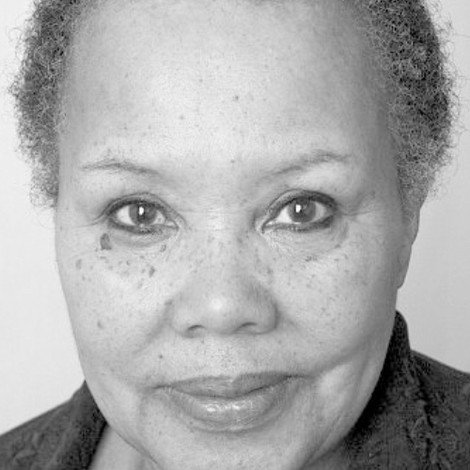
Cleo Sylvestre
Biography
Known for

Coronation Street
The residents of Coronation Street are ordinary, working-class people, and the show follows them through regular social and family interactions at home, in the workplace, and in their local pub, the Rovers Return Inn. Britain's longest-running soap.

Doctor Who
The adventures of The Doctor, a time-traveling humanoid alien known as a Time Lord. He explores the universe in his TARDIS, a sentient time-traveling spaceship. Its exterior appears as a blue British police box, which was a common sight in Britain in 1963 when the series first aired. Along with a succession of companions, The Doctor faces a variety of foes while working to save civilizations, help ordinary people, and right many wrongs.

Silent Witness
A team of exceptional forensic pathologists and scientists investigate heinous crimes and use their skills to catch the people responsible.

Grange Hill
Children's drama series following the lives of students and teachers at Grange Hill comprehensive school.

The Wednesday Play
An anthology series of television plays which aired on BBC1 from October 1964 to May 1970. The plays were usually written for television, although adaptations from other sources also featured.
The Wednesday Play
An anthology series of television plays which aired on BBC1 from October 1964 to May 1970. The plays were usually written for television, although adaptations from other sources also featured.
The Wednesday Play
An anthology series of television plays which aired on BBC1 from October 1964 to May 1970. The plays were usually written for television, although adaptations from other sources also featured.
The Wednesday Play
An anthology series of television plays which aired on BBC1 from October 1964 to May 1970. The plays were usually written for television, although adaptations from other sources also featured.


All Creatures Great & Small
The heartwarming and humorous adventures of a young country vet in the Yorkshire Dales in the 1930s. A remake of the 1978 series.

New Tricks
New Tricks is a British comedy-drama that follows the work of the fictional Unsolved Crime and Open Case Squad of the Metropolitan Police Service. Originally led by Detective Superintendent Sandra Pullman, it is made up of retired police officers who have been recruited to reinvestigate unsolved crimes.

The Troubleshooters
The Troubleshooters is a British television series made by the BBC between 1965 and 1972, created by John Elliot. During its run, the series made the transition from black and white to colour transmissions. The series was based around an international oil company – the "Mogul" of the title. The first series was mostly concerned with the internal politics within the Mogul organisation, with episodes revolving around industrial espionage, internal fraud and negligence almost leading to an accident on a North Sea oil rig.

Public Eye
Public Eye is a British television drama broadcast from 1965 to 1975 on ITV1. Produced by ABC Television for three series, and Thames Television for a further four, the programme follows the investigations and cases handled by the unglamourous enquiry agent Frank Marker.

The Expert
The Expert is a British television series produced by the BBC between 1968 and 1976. The series starred Marius Goring as Dr. John Hardy, a pathologist working for the Home Office and was essentially a police procedural drama, with Hardy bringing his forensic knowledge to solve various cases. The Expert was created and produced by Gerard Glaister. The series was also one of the first BBC dramas to be made in colour, and throughout its four series had numerous high quality guest appearances by actors such as John Carson, Peter Copley, Rachel Kempson, Peter Vaughan, Clive Swift, Geoffrey Palmer, Peter Barkworth, Jean Marsh, Ray Brooks, George Sewell, Anthony Valentine, Bernard Lee, Lee Montague, Geoffrey Bayldon, Mike Pratt, Edward Fox, André Morell, Brian Blessed, Nigel Stock, Philip Madoc and Warren Clarke.