Personal Info
Known For
Gender
Birthday
Place of Birth
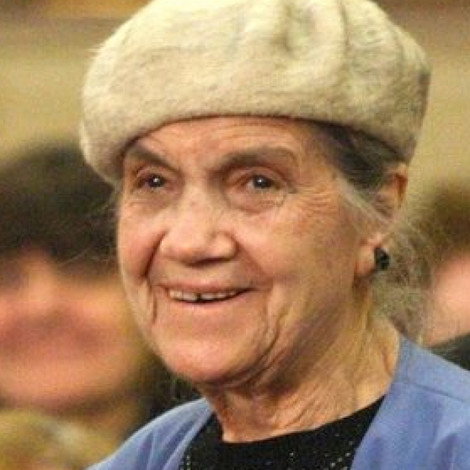
Eugenia Bosânceanu
Known for

Blood Brothers
In 1864, American soldiers massacre a Cheyenne village at Sand Creek. Disgusted by the massacre, Harmonika, one of the soldiers, deserts the army and is captured by the Indians. At first, the Cheyenne hold him responsible for the murder of the wife and the son of their chief Grauer Esel, but soon Harmonika obtains the tribe′s confidence.

4 Months, 3 Weeks and 2 Days
Two college roommates have 24 hours to make the ultimate choice as they finalize arrangements for a black market abortion.

Expediția
A history professor decides to take kids from his class in a trek across the country so they can experience various places and people.
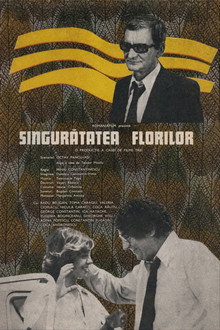
The Loneliness of Flowers
A lonely, selfish and proud doctor receives a bouquet of flowers one day that sets him on fire. An unassuming cab driver, a family man and devoted colleague, helps him to identify the sender and find himself.

Codine
An ex-convict struggles to survive by brute force alone in a turn-of-the-century slum in Bucharest. Codine is the thug who served 10 years for murdering a friend. He returns home to his miserly mother, whose penny-pinching ways infuriate her son. A young boy looks up to Codine, and through the man's eyes he sees the economic and social injustices from an adult perspective. When Codine kills another man who violated his trust, his mother becomes more unhinged and paranoid. Thinking her son will steal her hoarded money, she plots to kill her only son. The impressionable child watches in horror and amazement at the cruel machinations of the adult work that surrounds him.

The Uprising
After years of deplorable conditions of poverty and injustice, peasants revolt against the landowners, the social elite, and police in this routine social drama. A peasant woman is raped by a lecherous wealthy lesbian, and chaos breaks out in the rural areas where the poor suffer the most from the oppressive social and economic conditions.

September
After he fails to be accepted in college, Vali is questioned by police for participating in various thefts. He needs an alibi and he thinks the best one would be his father in Bucharest. To get there, he steals a motorcycle. In Bucharest he meets store clerk Anișoara, and he invites her to a seaside escapade. Their one day of love and future optimism is ended abruptly by a tragic motorcycle accident.

The Oak
A description of Romania before Ceausescu's downfall, through the story of Nela. Daughter of a former colonel of the Securitate, the romanian political police. She refused to become like her sister, an agent of this Securitate, and lives with her father. After he died, she leaves Bucharest, and ends up in a little town, where she meets Mitica, a surgeon, another herself, laughing at everything.

The Snowstorm
The struggle to convince the peasants to join the collective farm in Romania 60s.

Sieranevada
Back from a professional trip to Paris, a neurologist at the pinnacle of his career has to pick up his wife so that they can attend a family meal to commemorate his father, who died a year before. At his mother's flat, the guests are waiting for the priest to arrive while arguing about all kinds of things connected and unconnected with the world’s events and wars.

Păcală
Pacala is an important hero in Romanian popular tradition. He is always making fun of everything wrong with the human behaviour such as stupidity, greed or vanity. His attitude and actions always bring damages to the mean, evil and materialistic people. So beside the jokes, the movie has this philosophical layer, undoubtedly because Pacala's independent way of being, free spirit and his love for the nature creates a way of seeing life, bringing joy. Filmed in a very beautiful part of Romania in 1974, the movie had an important success at that time and it is considered one of the most loved movies in Romania ever. Like the hero, found in many stories and jokes, the movie forwards the spirit of true freedom and pure link with the nature, forgetting about times and governments.

Sunday at Six
Romania, 1940. A boy meets a girl. They fall in love without suspecting anything about their real identities. They chose an eventful, tense and dangerous life as underground anti-fascists fighters. The significance of their activity is manifest in the consequences it has on the tormented progress of their love. Reality is against it. Two parallel lines which meet for a second, only to drift apart for ever.

Tales from the Golden Age
Composed of six unconventional vignettes, each one dealing with the late communist period in Romania, a narrative is told through its urban myths from the perspective of ordinary people. The title refers to the alluded "Golden Age" of the last 15 years of Ceaușescu's regime.
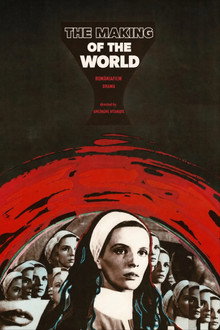
The Making of the World
Around the nationalization in 1948, a worker's daughter, as a student, is attracted by the social life offered by a breed horse owner. The relationship will sour by the cruelty with which he kills the horses, rather then give them away.

Snowfall Season
Pavel has to confron his father in law, who is decided to compromise him in front of the village.