
Personal Info
Known For
Gender
Birthday
Place of Birth
Frank Duncan
Known for

The Bill
The daily lives of the men and women at Sun Hill Police Station as they fight crime on the streets of London. From bomb threats to armed robbery and drug raids to the routine demands of policing this ground-breaking series focuses as much on crime as it does on the personal lives of its characters.
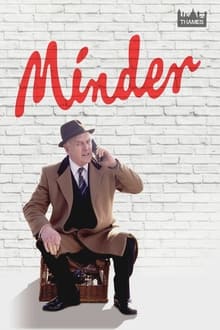

Omnibus
Omnibus was an arts-based BBC television documentary series, broadcast mainly on BBC1 in the United Kingdom. The programme was the successor to the long-running arts-based series 'Monitor'. It ran from 1967 until 2003, usually being transmitted on Sunday evenings. During its 35-year history, the programme won 12 Bafta awards. Among the series' best remembered documentaries are Cracked Actor, a profile of David Bowie, and Rene Magritte, a graduate film by David Wheatley, 'Madonna: Behind the American dream', a film produced by Nadia Hagger, and a profile of the British film director Ridley Scott. For a season in 1982, the series was in a magazine format presented by Barry Norman. The series was replaced by 'Imagine' hosted by Alan Yentob.

Sunday Night Theatre
Sunday Night Theatre was a long-running series of televised live television plays screened by BBC Television from early 1950 until 1959. The productions for the first five years or so of the run were re-staged live the following Thursday, partly because of technical limitations in this era, and the theatrical basis of early television drama. Some of the earliest collaborations between Rudolph Cartier and Nigel Neale were produced for this series, including Arrow to the Heart and Nineteen Eighty-Four. The Sunday night drama slot was subsequently renamed The Sunday-Night Play which ran for four seasons between 1960 and 1963. ITV transmitted its own unrelated run of Sunday Night Theatre between 1971 and 1974.

Playhouse
A one-hour anthology television series of one-off contemporary and classic dramas produced by the BBC.
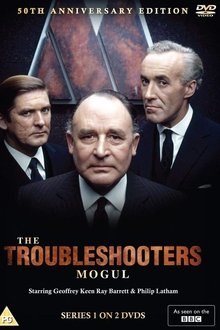
The Troubleshooters
The Troubleshooters is a British television series made by the BBC between 1965 and 1972, created by John Elliot. During its run, the series made the transition from black and white to colour transmissions. The series was based around an international oil company – the "Mogul" of the title. The first series was mostly concerned with the internal politics within the Mogul organisation, with episodes revolving around industrial espionage, internal fraud and negligence almost leading to an accident on a North Sea oil rig.
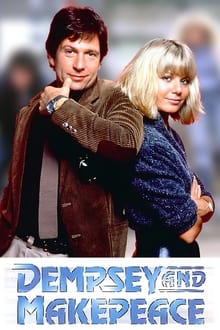
Dempsey and Makepeace
Dempsey and Makepeace is a British television crime drama made by London Weekend Television for ITV, created and produced by Ranald Graham. The leading roles were played by Michael Brandon and Glynis Barber, who later married each other on 18 November 1989. The series combined elements of previous series such as the mis-matching of British and American crime-fighters from different classes as seen in The Persuaders! and the action of The Professionals.
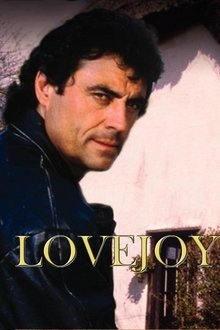
Lovejoy
The adventures of the eponymous Lovejoy, a likeable but roguish antiques dealer based in East Anglia. Within the trade, he has a reputation as a “divvie”, a person with an almost supernatural powers for recognising exceptional items as well as distinguishing genuine antique from clever fakes or forgeries.

Sunday-Night Play
BBC anthology drama series that ran over four seasons and replaced the previous BBC Sunday Night Theatre series.
Churchill's People
Churchill's People is a British anthology series based on A History of the English-Speaking Peoples, Winston Churchill's four-volume history of Britain and its former colonies. 26 episodes were produced by the BBC and initially broadcast from 30 December 1974 to 23 June 1975.
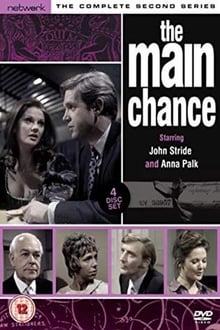
The Main Chance
The Main Chance was a British television series which first aired on ITV between 1969,1970,1972 and 1975. A drama, it depicts the sudden transformation in the life of solicitor David Main who relocates from London to Leeds.
The Main Chance
The Main Chance was a British television series which first aired on ITV between 1969,1970,1972 and 1975. A drama, it depicts the sudden transformation in the life of solicitor David Main who relocates from London to Leeds.
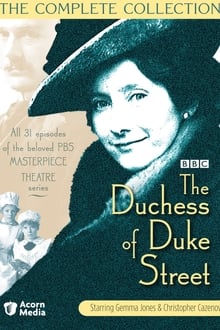
The Duchess of Duke Street
In Victorian London, Louisa Leyton works her way up from servant to renowned cook to proprietress of the upper-class Bentinck Hotel in Duke Street, St James's.