Personal Info
Known For
Gender
Birthday
Place of Birth
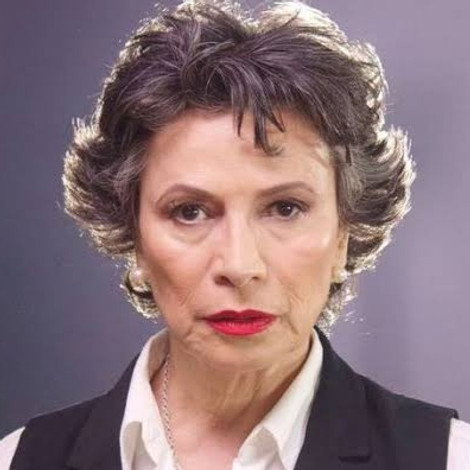
Patricia Reyes Spíndola
Biography
Known for

Fear the Walking Dead
What did the world look like as it was transforming into the horrifying apocalypse depicted in "The Walking Dead"? This spin-off set in Los Angeles, following new characters as they face the beginning of the end of the world, will answer that question.

La rosa de Guadalupe
Stories about people who get into problems who use the help of Virgin Mary and where a rose appears and their problems are solved.

La fea más bella
Leticia Padilla Solís, “Leti”, is an intelligent but unattractive girl, rather ugly. She graduated with honors in economics, speaks several languages, is fluent in computers, and is a financial genius. Only, because of his physique, she can't find work. Desperate to find a job, “Lety” decides to accept being hired below her level and takes a job as a secretary at Conceptos, a famous video production company, where ugliness is taboo. The production company “Conceptos” was founded by two good friends: Don Humberto Mendiola, and Julián Villaroel. Unfortunately, shortly after, the Villaroels die in an accident and Don Humberto and his wife Teresita take care of the Villaroels' orphaned children: Ariel, Marcia and Ana Leticia and the successful company.
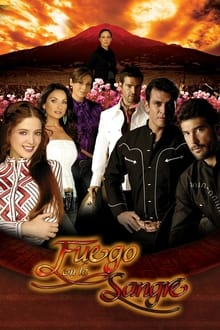
Burning for Revenge
Fuego en la sangre is a telenovela that began transmissions on January 21, 2008, through Mexico's Canal de las Estrellas network. Starring Adela Noriega, Eduardo Yáñez, Diana Bracho, and Guillermo García Cantú. It is the Mexican remake of the Colombian soap operas Las Aguas Mansas and Pasion de Gavilanes. The theme song called "Para Siempre" is sung by Vicente Fernández. The telenovela received TVyNovelas Award for Best Telenovela, in 2009.

The Color of Passion
Rebeca murders her sister Adriana to end up with the man she loved, and becomes the step mother of her niece Lucía. Nora, Lucía's half sister and daughter of Rebeca, resents Lucía for the same reasons Rebeca hated Adriana, as history repeats itself.
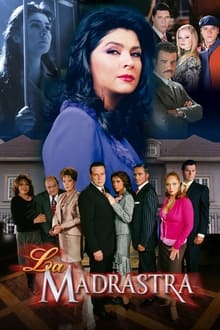
La Madrastra
After twenty years, María obtains her freedom and returns to Mexico to find Patricia's real murderer. She marries Esteban, her husband, again to regain the affection of her children, who reject her for being their stepmother.
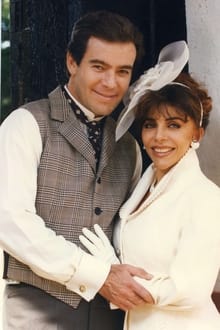
Pueblo chico, infierno grande
Pueblo chico, infierno grande is a Mexican historical telenovela produced by José Alberto Castro for Televisa and originally broadcast on Canal de las Estrellas from January 6 to August 1, 1997. Created by Javier Ruán and adapted by Javier Ruán, Mario Hernández, and Sergio Schmucler, the telenovela is based on a true story about Leonarda Ruán. It stars Verónica Castro, Juan Soler, and Guillermo Capetillo. The story is set in the late 19th century and follows Leonarda Ruán, a wealthy widow from the town of Nahuatzen who falls in love with Genaro Onchi, a young man from a humble background. Their relationship faces strong opposition from society, family conflicts, jealousy, and the return of people from Leonarda's past who try to separate them. As secrets and rivalries emerge, Leonarda and Genaro fight to protect their love against the judgment and traditions of their small town.
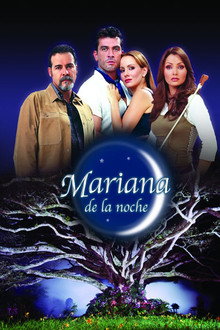
Dark Fate
Mariana lives with her father, Atílio, and is motherless. He is a very powerful man, and he keeps a big secret: Mariana is not his biological daughter, Atílio has two sisters: Isabel, the oldest, a good and caring woman, who raised Mariana and loves her as if she were her own daughter; Márcia, the youngest, arrogant and very vain, has a cold heart, has never fallen in love with anyone and always mistreated Mariana, until a boy called Inácio Lugo Navarro arrives in the city, very attractive, who uses a false name and is looking for his roots and revenge.
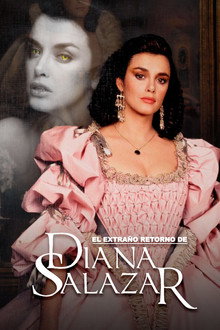
El extraño retorno de Diana Salazar
El extraño retorno de Diana Salazar is a 1988 Mexican telenovela starring Lucía Méndez and Jorge Martinez. It is an unusual example of a telenovela which addresses supernatural topics.

Salomé
Fernanda Quiñones, whose stage name is Salomé, is a dancer who works at the D'Rubí cabaret in Mexico City with her friend Karicia. One day, Salomé meets Julio, son of the millionaire Montesino family, who is married to Ángela, a sickly woman who cannot have children. Lucrecia, Julio's mother, who is obsessed with the idea of having a grandson who will inherit the family fortune, proposes to Salomé that she be the mother of that grandson. But, when she finds out that Julio, even though he loves her, will not only not leave Angela, but that she will be the one to raise the child as if it were her own, she flees far away with her son and two other babies abandoned by a neighbor. Twenty years later, Salomé becomes a wealthy business woman who lives with her three children. When he returns to Mexico, Julio and his mother will try to find out who Salomé and Julio's son is.

Road to Destiny
Luisa Fernanda Pérez, a beautiful, 18-year-old student, has two passions: mastering the violin and gardening, a skill she learned from her father, Pedro, the former groundskeeper of the wealthy Altamirano family’s estate. A chance encounter with destiny alters her life after she is injured in a car accident caused by Luis (her biological father), a playboy lawyer and falls for his stepson, Carlos, an attractive, young doctor treating her at the local hospital.

María Isabel
Native American girl Maria Isabel makes friends with Graciela, a rich white girl, despite Graciela's father's opposition; their friendship lasts into their adulthood.

Rafaela
Rafaela is a Mexican telenovela produced by Nathalie Lartilleux for Televisa. It is based on the Venezuelan telenovela of the same name produced in 1977. Scarlet Ortiz and Jorge Poza star as the main protagonists, while Chantal Andere, Diana Bracho and Arturo Carmona star as the main antagonists. Though Rafaela was nominated for best female antagonist, best first actor, and best first actress, it did not win any awards. Canal de las Estrellas originally broadcast Rafaela at 5pm MDT from January 31 to March 11, 2011. From March 14 to July 15, 2011, it was moved to 4PM MDT. From June 20 to August 5, 2011, Univision transmitted Rafaela weekdays at 1pm central for 2 hours, replacing Niña de mi Corazón. From August 8, 2011 to October 14, 2011, one episode was shown weekdays at 1pm central.
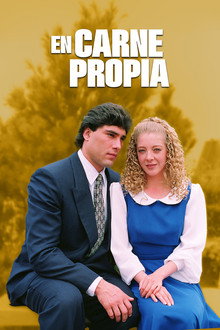
En carne propia
The year is 1972: Magdalena Dumont and Octávio Muriel are celebrating the birthday of their daughter, little Estefanía, at a party in the family mansion. However, this party is merely a backdrop and an opportunity to commit a crime.

Killer Women
Mujeres Asesinas is a series that shows the dark side of women who have been mistreated or abused and become cruel murderers. The series shows how violence and death can overcome the feminine mind.