
Personal Info
Known For
Gender
Birthday
Place of Birth
Nelly Borgeaud
Biography
Known for
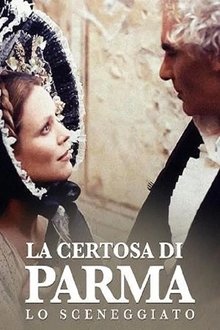
The Charterhouse of Parma
Stendhal's epic tale of a young French officer in the Napoleonic wars, and his aunt - a duchess of legendary beauty and resourcefulness.

The Man Who Loved Women
At Bertrand Morane's burial there are many of the women that the 40-year-old engineer loved. In flashback Bertrand's life and love affairs are told by himself while writing an autobiographical novel.

Mississippi Mermaid
A tobacco planter on Réunion island in the Indian Ocean becomes engaged through correspondence to a French woman he does not know. The woman that arrives does not look like the picture he received, but he marries her anyway.

Muriel, or the Time of Return
In the seacoast town of Boulogne, antique furniture saleswoman Hélène lives with her stepson, Bernard, who's back from military duty in Algiers. An old lover of Hélène's comes to visit, Alphonse, with his niece Françoise; he too is back from Algiers, where he ran a café. Bernard speaks of his fiancée, Muriel, whom Hélène has not met. The past is obscured by guilt, misperceptions, and missed possibilities. Appearances deceive, things change. As Hélène and Alphonse try to sort out a renewal, everyone seems off-kilter just enough to hint that all cannot end well.

Ballades
Anna lives with Philippe. Their couple has been formed since "belle lurette", and Anna is starting to get bored…
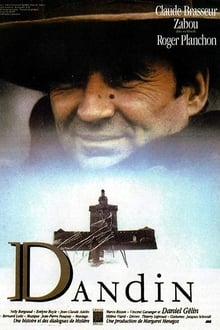
Dandin
Claude Brasseur stars in this cinemadaptation of the Moliere play Georges Dandin, ou le mari confondu. Written in 1668, the play has been somewhat dwarfed by such like-vintage Moliere classics as The Imaginary Invalid. Still, it was popular enough in its time to inspire imitation, most notably Betterton's Don Juan and The Amorous Widow. The plot, involving a wealthy man's avoidance of marriage until he is trapped by a crafty widow, is but a peg upon which to hang any number of comic complications and character vignettes. Brasseur's leading lady is the toothsome Zabou.

A Lesson of Hope
The teacher Odile Langlois starts her new job in the elementary school of a small French town. She is elegant and mysterious - but most of all, she is very friendly to her new students, whose confidence she gains so quickly. On the contrary, however, Odile's unconventional, alternative way of teaching does not appeal to some colleagues and parents who do everything to get rid of the young teacher ...

My American Uncle
Professor Henri Laborit uses three people's stories to discuss behaviourist theories of survival, combat, rewards and punishment, and anxiety: René is a technical manager at a textile factory and must face the anxiety caused by corporate downsizing; Janine is a self-educated actress/stylist who learns that the wife of her lover is dying and must decide to let them reunite; and Jean is a controversial career-climbing writer/politician at a crossroads in life.

Codine
An ex-convict struggles to survive by brute force alone in a turn-of-the-century slum in Bucharest. Codine is the thug who served 10 years for murdering a friend. He returns home to his miserly mother, whose penny-pinching ways infuriate her son. A young boy looks up to Codine, and through the man's eyes he sees the economic and social injustices from an adult perspective. When Codine kills another man who violated his trust, his mother becomes more unhinged and paranoid. Thinking her son will steal her hoarded money, she plots to kill her only son. The impressionable child watches in horror and amazement at the cruel machinations of the adult work that surrounds him.
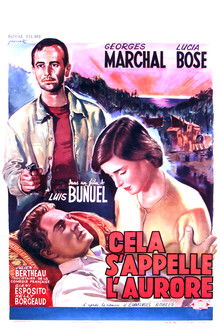
That Is the Dawn
A generous doctor is aghast that the population of a small island is being oppressed and mistreated, but is seemingly unable to do anything about it, until the arrival of a young woman and the death of one of his friends prompts him into action.

Une page d'amour
In Passy, Paris, 1895. The young widow Hélène calls the doctor Henri Deberle during the night, when her daughter Jeanne suddenly gets breathless. Together they spend the night at the bedside, and it develops from a trusting encounter a love relationship. When the doctor Hélène one day confesses his love, the daughter comes from jealousy in another, life-threatening crisis. A film adaptation of the eponymous novel by Émile Zola, which addresses the social milieu of the bourgeois family in the "Second Empire".

Jeanne and the Perfect Guy
Jeanne, a receptionist at a travel agency, is looking for the love of her life. She thinks she has finally found it with Olivier. However, Olivier reveals he has AIDS and disappears from her life after her profession of love and confession of infidelity.
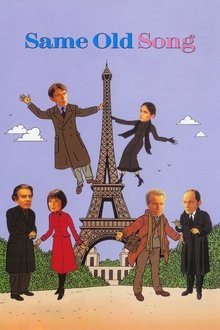
Same Old Song
Business executive Odile seeks a new, larger apartment. Her younger sister Camille, having completed her doctoral thesis in history, is a Paris tour guide. Simon is a regular on Camille's tours as he's attracted to her. However, Camille has fallen for Marc, and they begin an affair. Nicolas is also looking for an apartment, since he hopes to eventually have his family join him in Paris.
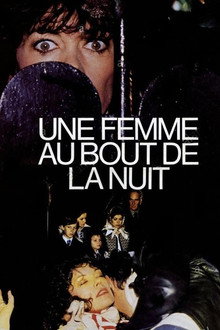
Une femme au bout de la nuit
Her mother had advised her to marry to acquire respectability and material comfort, the obedient little girl married a successful Catholic writer a few years later, giving her two beautiful children, a spacious house, a few servants, and glittering social evenings. But in her thirties, Rose can no longer fall asleep at the side of her husband, who is imperturbably indifferent to her charms and neglects her, to develop, with more attentive ears, endless considerations on divine values in this world. So, in the evening, the young woman lets herself be drawn into pleasantly equivocal reveries. And if the day finds her repentant at the feet of her confessor, the night lurks again with its temptations and the virile torso of a handsome groom straight out of "Lady Chatterley's Lover", one of her clandestine reads.
Nuit de Chine
The short film tells the story of a night (written with Indian ink) with characters who intersect.