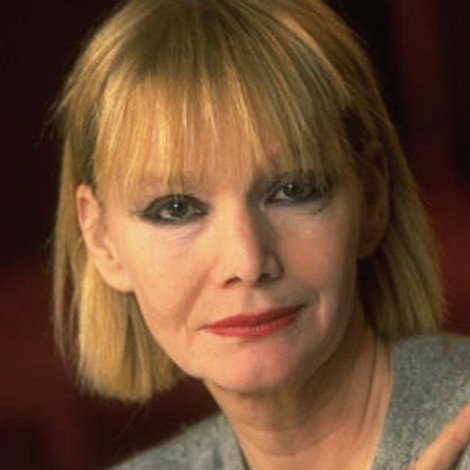
Personal Info
Known For
Gender
Birthday
Place of Birth
Anna Prucnal
Biography
Known for


Le Grand Échiquier
Le Grand Échiquier is a French variety television program created and presented by Jacques Chancel. It aired at 8:30 pm on the first channel of the ORTF from January 12, 1972 to July 12, 1972, then on the second color channel of the ORTF from September 1972 to December 1974, and finally on Antenne 2 from January 1975 to December 21, 1989. The program returned to France 2 on December 20, 2018 and is hosted by Anne-Sophie Lapix.


Ciné regards

Dracula and Son
With angry villagers driving them away from their castle in Transylvania, Dracula and his son Ferdinand head abroad. Dracula ends up in London, England where he becomes a horror movie star exploiting his vampire status. His son, meanwhile, is ashamed of his roots and ends up a night watchman in Paris, France where he falls for a girl. Naturally, tensions arise when father and son are reunited and both take a liking to the same girl.

Snow
Anita is a barmaid at the center of a community of street preachers, prostitutes, dealers and users. When a beloved friend (and young drug dealer) is caught by narcotics agents, Anita takes it upon herself to score for his struggling clients.

Crows
In a quiet, lonesome Polish city, a neglected ten year old girl kidnaps a pampered toddler and pretends to be her mother.

Nick Verlaine ou Comment voler la tour Eiffel

City of Women
The charismatic Snaporaz encounters an alluring woman on a train and pursues her through a forest. He ends up at a hotel populated by women gathered for a feminist conference, where he is an unwanted presence. Snaporaz soon discovers he’s entered a phantasmagoric world where women have taken power.

Images of Women of the Social Corset
A man asks himself about the image of women who are offered for his gaze. A documentary about the image of women in fashion, film, and life.

Sweet Movie
The winner of the Miss World Virginity contest marries, escapes from her masochistic husband and ends up involved in a world of debauchery.

Ways across the Country
East German TV miniseries about the young maid Gertrud Habersaat, who marries, moves from Mecklenburg to Poland in the early 1940s, has to come back to Mecklenburg as a refugee during World War II and finally finds her place during the 1950s.

Bastien, Bastienne
Catherine (Juliet Berto) is the temporary head of the family while her husband, whom she loathes, is away fighting in the war. Her widowed sister-in-law Suzanne (Anna Prucnal) lives with her, and after awhile it becomes apparent that Catherine loathes her as well. The children in the house are all boys -- Catherine has two sons, twelve and thirteen, and Suzanne also has a twelve-year old. While the relationship between Suzanne and Catherine is coming to a head, Catherine is having an affair with an army officer, and the boys in the family are planning a musical performance for everyone. The crescendo may be barely audible at the beginning, but it builds up to a tragedy at the end.

Reise ins Ehebett
The captain of a ship of the merchant navy is always on the move because of his job – and has a different girlfriend in every harbour. But his friends think that he should change his way of life. Thus, they take the lovely reporter Eva on board for a trip to Leningrad. But at first, Eva′s presence causes a lot of upheaval on board.