Personal Info
Known For
Gender
Birthday
Place of Birth
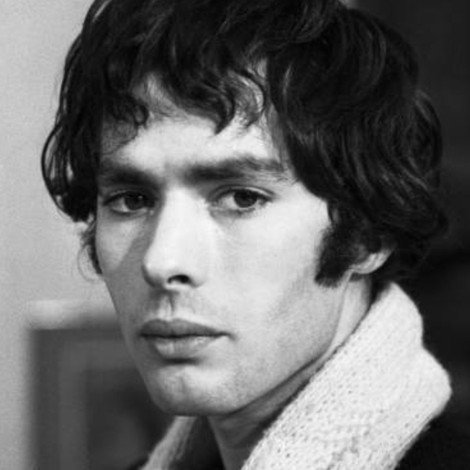
Pierre Clémenti
Biography
Known for


Midi trente

Little Lips
A writer returns home to his estate after service in World War I. He has developed a very bad case of depression due to a war wound concerning his genitalia. He contemplates suicide, but recovers after becoming interested in his caretaker's 12 year-old war orphan niece, who now lives in the manor.

Pour le plaisir

Belle de Jour
Beautiful young housewife Séverine Serizy cannot reconcile her masochistic fantasies with her everyday life alongside dutiful husband Pierre. When her lovestruck friend Henri mentions a secretive high-class brothel run by Madame Anais, Séverine begins to work there during the day under the name Belle de Jour. But when one of her clients grows possessive, she must try to go back to her normal life.

The Leopard
As Garibaldi's troops begin the unification of Italy in the 1860s, an aristocratic Sicilian family grudgingly adapts to the sweeping social changes undermining their way of life.

The Idols
This satire concerns three French singing idols and their attempt to stay in the public eye. A press conference, backstage hedonism, psychedelia, manipulative managers and disc jockeys are portrayed as the pop culture is thoroughly and effectively lampooned in this independent feature.

The Conformist
A weak-willed Italian man becomes a fascist flunky who goes abroad to arrange the assassination of his old teacher, now a political dissident.

Patrik Pacard
Patrik Pacard was the sixth ZDF-Weihnachtsserie, and aired in 1984. The series was broadcast in Germany on ZDF, and consisted of 6 episodes. Broadcasting in Germany began on December 25, 1984. The series was also broadcast in Switzerland, and constisted of 12 episodes. Broadcasting in Switzerland began on December 4, 1984. An English-language version of this series was shown by the BBC in the United Kingdom in 1992, and repeated in 1995, though with a revised plot to reflect the end of the Cold War. A French-language version of this series was broadcast as well. The shows titular character and theme song are incorporated in an internet meme on YTMND in relation to an alter-ego of Star Trek's Jean-Luc Picard.

Exposed
Wisconsin farm girl Elizabeth Carlson leaves family and her English teacher lover behind and escapes to New York. There she soon makes a career for herself as a fashion model. During a vernissage she's approached by a mysterious man whose motives are unclear...

Lamiel
Lamiel is a poor orphan girl who climbs to the social elite in this 19th-century costume drama. Sansfin, provincial doctor, lives vicariously through her, as he oversees the progress of his female protégé. Defiant and rebellious, Lamiel goes to Paris to escape boredom and to know love.

Edith's Diary
When Edith Howland's husband abandons her for a younger woman, leaving her with their alcoholic son and his senile uncle, she begins recording details of an imaginary, much more successful life where she has friends and grandchildren. However, this diversion soon grows unhealthy when she becomes slowly convinced that the fantasies are real.

New Old
"Chronicles of the Present Times" - An experimental trilogy. New Old flows together footage from more than a decade of his wandering between scenes, sets, and drugs, an accelerated world tour through various iterations of the counterculture.

Homeo
Homeo is a mental construction made from visual reality, just as music is made from auditive reality. I put in this film no personal intentions. All my intentions are personal. I’ve made this film thinking of what the audience would have liked to see, not something specific that I wanted to say: what the film depicts is above all reality, not fiction. Homeo is, for me, the search for an autonomous cinematographic language, which doesn't owe anything to traditional narrative, or maybe everything. Cinema is, above all, part of a way of life which will become more and more self-assured in the years and century to come. We are part of this change, and that’s why I tried in Homeo to establish a series of perpetual changes, in constant evolution or regress, which tries, above all, to focus on things.