Personal Info
Known For
Gender
Birthday
Place of Birth
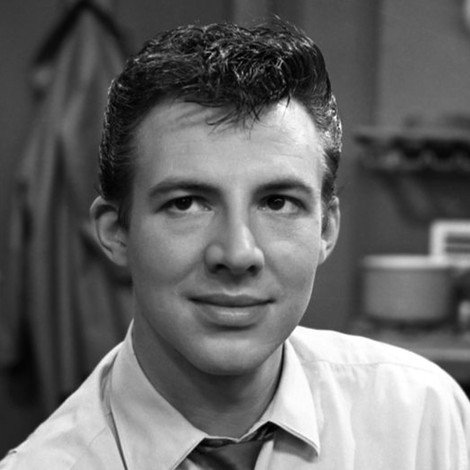
Philip Lowrie
Biography
Known for

Casualty
Drama series about the staff and patients at Holby City Hospital's emergency department, charting the ups and downs in their personal and professional lives.

Tycoon
Tycoon is a British television drama created by John Sichel, broadcast from 18 September to 11 December 1978. Instead of taking on her late husband Sydney's job, Diana Clark loyally turns her talents to writing his biography, dredging up plenty of twists and turns along the way.

Home Fires
The story of a group of inspirational women in a rural Cheshire community with the shadow of World War II casting a dark cloud over their lives. As the conflict takes hold and separates the women from their husbands, fathers, sons and brothers, the characters find themselves under increasing and extraordinary pressures in a rapidly fragmenting world. By banding together as the Great Paxford Women’s Institute, they help maintain the nation’s fabric in its darkest hour, and discover inner resources that will change their lives forever.
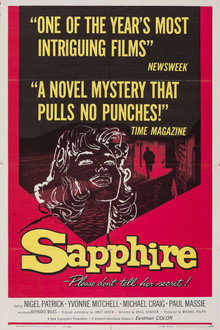
Sapphire
Two Scotland Yard detectives investigate the murder of a young woman of mixed race who had been passing for white. As they interview a spate of suspects -- including the girl's white boyfriend and his disapproving parents -- the detectives wade through a stubbornly entrenched sludge of racism and bigotry.

Victoria Wood
Victoria Wood was a series of six one-off situation comedies written by and starring Victoria Wood in 1989, who took a break from sketches, two years after her very successful and award winning series Victoria Wood As Seen on TV. Wood appeared as "Victoria", a fictionalised version of herself, in all six episodes - in The Library it was said that she "worked in TV" and in Over To Pam characters appeared to recognise her celebrity and in the final episode, Staying In, she was taken to a party to perform as a comedienne and was expected to go through her stand-up 'routine'. Her character often broke the 'fourth wall' of TV and spoke directly to the camera, but not in every episode. Bored with the sketch format and with a yearning to recapture previous success as a playwright, Wood came up with six individual sitcoms as a compromise. She admitted to finding the writing difficult. Though Wood was written as the central character, other lead parts were written with specific actresses in mind, like Julie Walters and Una Stubbs. "I want people to like me and the people who play my friends, and not everybody else" she said. Screenonline says of the shows "Modest in ambition and scale but rich in wit and acuity, the six playlets showcase Wood's eye for human foibles and her distinctively eccentric characters.".

Rita Rudner
Singer, actress, dancer, comedienne: these are just some of the words the popular American comic can spell. Rita Rudner's first British series features stand-up comedy, sketches and songs.

Rules of Engagement
Political intrigue and murder occurs when the English town of Portsmouth is sealed off by the military during the eve of World War III.

Andy Capp
Andy Capp is a British sitcom based on the cartoon Andy Capp. It starred James Bolam and ran for one series in 1988. It was written by Keith Waterhouse. Unusually, for a sitcom, there was no studio audience during the filming of Andy Capp. It was made for the ITV network by Thames Television. Andy Capp is a slothful man from Hartlepool, whose life consists of drinking, sleeping, watching TV, betting, going to the pub and occasionally playing football. His wife, Flo, is constantly annoyed by her lazy husband and frequently uses a rolling pin as a weapon.

Company and Co
Sister and brother Samantha and Simon Company open a night club, sing their own songs and find themselves solving problems and mysteries for their customers.

Death Has a Bad Reputation
A British agent is chasing after famous terrorist Carlos when he resurfaces in Europe.

Pat and Margaret
Unexpected events occur when Pat, a glamorous British-born star of American soaps, returns home to plug her auto-biography on television and meets, for the first time since they were teenagers, Margaret her plain and frumpy younger sister. The meeting is painful for both women highlighting the vast differences in their lives and resurrecting painful memories of their unhappy childhood with an uncaring, errant mother. The tabloid press smell a juicy story and a race ensues to trace the whereabouts of the long lost parent.

Victoria Wood's All Day Breakfast
A television comedy special broadcast on BBC One on Christmas Day 1992. Sketches, stand-up comedy and songs combine to create the latest daytime show to be hosted by a popular husband-and-wife team. There are tips on female problems like seriously split ends, calorie reports, keep-fit with Jolly Polly, Agony Uncle Gerard's phone-in and Britain's first four times daily soap, set in a cosy corner of a shopping mall.

Serious Charge
Howard Phillips, a vicar who's new in the town of Bellington, wants to reach out to youth. The previous vicar's daughter, Hester Peters, who fears being a spinster, wants to be his wife. He tells her he's not interested. When he confronts a tough kid about something the youth has done, the lad sets out to frame the vicar. Hester, who's walked in on the confrontation, backs the youth's story. The town sides with her and the lad, turning against Phillips. He has a crisis of faith. What options does he have; can no one help him, his reputation, or his calling?