
Personal Info
Known For
Gender
Birthday
Place of Birth
Rudolf Christoph
Known for

Polizeiruf 110
Polizeiruf 110 is a long-running German language detective television series. The first episode was broadcast 27 June 1971 in the German Democratic Republic, and after the dissolution of Fernsehen der DDR the series was picked up by ARD. It was originally created as a counterpart to the West German series Tatort, and quickly became a public favorite.
Der Staatsanwalt hat das Wort
Der Staatsanwalt hat das Wort was an East German television series.
Der Staatsanwalt hat das Wort
Der Staatsanwalt hat das Wort was an East German television series.
Der Staatsanwalt hat das Wort
Der Staatsanwalt hat das Wort was an East German television series.
Karl Marx. Early Years
As a student at the University of Berlin, Karl Marx joins the "Doctoral Club," a refuge for young free thinkers. Karl Marx decides to devote himself to philosophy, defends his thesis, becomes a Doctor of Philosophy, but hopes to teach at the University of Bonn. When this plan falls through, Marx accepts an offer to work as editor of a Rhine newspaper...
Blaulicht
Blaulicht is a German crime television drama series, whose 29 episodes were based on crime case files.
Sheriff Teddy
A story about thirteen years old Kalle who is moving with the family from West Berlin to East.
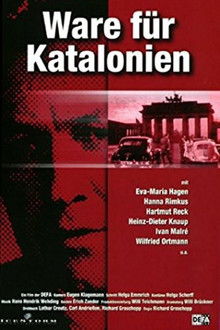
Ware für Katalonien
At the end of the 1950s, the production of optics in the German Democratic Republic has reached top quality and instigates interest in the West. When national demand rises strongly and at the same time the export to South America heavily decreases, the Volkspolizei - the GDR police force - starts to look into the case. Two seemingly unrelated cases are the starting point for the investigation by second lieutenant Schellenberg of the department for optics racketeering: An old woman who was arrested in the Berlin city railway for trying to smuggle a pair of binoculars to West Berlin, and a dead person in an area of allotments who was involved in obscure dealings with optical devices.
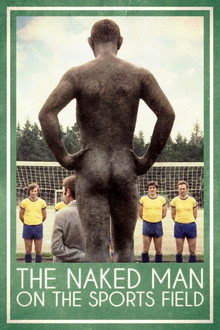
The Naked Man on the Sports Field
Kemmel, a sculptor with a troubled nature, wonders, as he approaches his fortieth birthday, whether he has created any truly significant work.
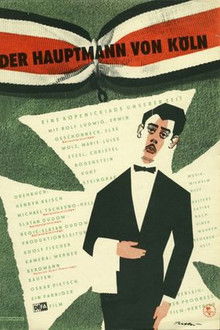
The Captain from Cologne
Albert Hauptmann is an out of work waiter in Cologne who is often confused with a former Captain of the Nazi Army. Albert uses this to his advantage and becomes the Director of the Montan Corporation, and a member of the West German Parliament. Herr Karjanke, the real Captain, learns of Albert’s ruse, and wants to claim his "rightful" position in Parliament. But Karjanke cannot come forward until his politicking "Doppelganger" succeeds in passing an amnesty law for war criminals. When Albert is finally brought before a judge on charges of fraud, he learns that this own amnesty law does not apply to him.
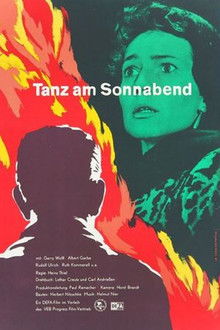
Tanz am Sonnabend-Mord?
A Saturday evening dance in the village pub is interrupted when the barn of local farmer Paul Gäbler catches on fire. The farmer himself is soon found – hanged. Sawmill owner Züllich claims that Gäbler committed suicide because he was forced to join an agricultural production cooperative, but others are convinced Gäbler was murdered. Officers Schneider and Anders must navigate their way through a complex maze of personal and political motivations in order to reconstruct the crime.
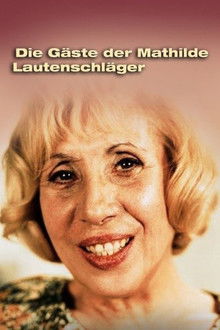
Die Gäste der Mathilde Lautenschläger
Katrin and Dieter really want a new car, but don't have enough money. They therefore decide to host Aunt Mathilde's 60th birthday party and invite all their relatives, including those they haven't been in contact with for years. Because some of them are said to be swimming in money. So Katrin and Dieter hope for some support, but some of it turns out to be just a sham.
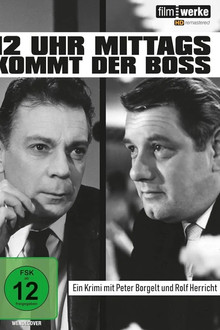
The Boss Will Be Here at Noon
A dead body is found in a burning car on the Berlin-Leipzig highway. The police investigate: Murder. Objects found in the car point to gold smuggling. At the funeral of the murdered man, his circle of acquaintances is scrutinized. They are all suspects. The trail leads detective Lindner to a bar.
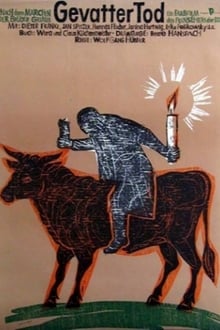
Godfather Death
Once upon a time, there was a poor farmer who had thirteen children. Since the farmer was so poor, there was never anything left for the youngest of the family. Therefore, the farmer chose Death as the godfather of his son, Jörg, because all people are equal in the eyes of Death. The Grim Reaper is happy to look after the boy and turns Jörg into a skilled doctor who earns wealth and fame.