
Personal Info
Known For
Gender
Birthday
Place of Birth
Roman Silberstein
Known for

Polizeiruf 110
Polizeiruf 110 is a long-running German language detective television series. The first episode was broadcast 27 June 1971 in the German Democratic Republic, and after the dissolution of Fernsehen der DDR the series was picked up by ARD. It was originally created as a counterpart to the West German series Tatort, and quickly became a public favorite.
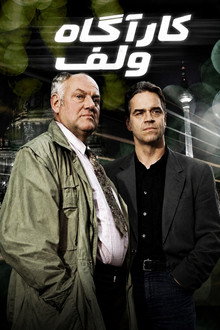

Der Staatsanwalt hat das Wort
Der Staatsanwalt hat das Wort was an East German television series.

Zollfahndung

Die Weber
The emaciated weavers deliver their homework to the factory owner Dreißiger and receive their wages, on which they cannot live and cannot die. Driven by hunger, they ask for more money, but to no avail. Only the young baker and the reservist Jäger put up a fight, and both manage to encourage a large group of weavers to revolt against the factory owner. They break into his house and destroy it, whereupon he flees. The revolt continues, the weavers move through the surrounding villages, where more people join them. A little later, the military arrives to intervene against the angry crowd and restore the old order...

Trace of Stones
Bad planning and shortages prevail on an East German construction site. Foreman Hannes Balla uses unconventional methods to overcome the problems. New Socialist Unity Party secretary Werner Horrath is charged with bringing the rough-and-ready builder crew into line. The task seems doomed to fail as the two men compete for the affections of young engineer Kati Klee. But when she gets pregnant by married man Horrath, he is in danger of being expelled from the party, and Balla takes his side...



Silent Country
A young, naive and enthusiastic theater director named Kai comes to a grim provincial town to put on Beckett's Waiting for Godot. Although the lethargic theater company shows no interest in the play, his spirit remains undaunted.Meanwhile, it is fall 1989. The world is changing and somewhere, far away in the capital, a revolution is taking place and it seems that wishes might come true. Great hopes emerge in the little town and unexpected events overtake Kai's mutating production.


Der Streit um den Sergeanten Grischa
Russian soldier Grisha escapes from a German prisoner-of-war camp in the spring of 1917. He is caught and is to be shot as a spy. This decision is controversial. The dispute continues. Grisha is executed on the orders of the army high command.

Ich war in Honolulu – wetten?
Uwe is a chemistry student and works as an excavator driver on various construction sites at weekends. One weekend, he meets the nursery nurse Gabi. As it turns out later, they owe their encounter to the daughter of the construction site brigadier Trunzer. But it doesn't stop at this one encounter and the resulting flirtation, as the two fall in love within a very short time. On another weekend, Uwe accompanies Gabi to visit her family. When construction site brigadier Trunzer returns from vacation a few days later, he first asks Uwe where he has been during his absence, to which Uwe replies: "I was in Honolulu - bet?".