
Personal Info
Known For
Gender
Birthday
Place of Birth
Erdmute Schmidt-Christian
Known for

Polizeiruf 110
Polizeiruf 110 is a long-running German language detective television series. The first episode was broadcast 27 June 1971 in the German Democratic Republic, and after the dissolution of Fernsehen der DDR the series was picked up by ARD. It was originally created as a counterpart to the West German series Tatort, and quickly became a public favorite.
Der Staatsanwalt hat das Wort
Der Staatsanwalt hat das Wort was an East German television series.
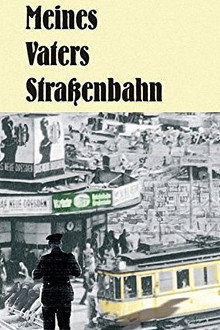
Meines Vaters Straßenbahn
Ralph grows up in pre-war Dresden as the eldest son of a principled and orderly streetcar conductor. With the rise to power of the Nazis, the war, the collapse and the hesitant new beginning, his firmly established middle-class world is also thrown off course. His father is one of the first to be called up to the front. His mother is left alone with the responsibility for Ralph and his younger brother Achim. In the air-raid shelter, during the nights of bombing and later in the daily struggle against misery and hunger, the mother quickly abandons all moral baggage and develops a pragmatic will to survive, for which she admires Ralph. At the same time, the boy is frightened by his mother's desperate claim to happiness because he perceives her affairs as a betrayal of his father, who has gradually faded into a symbol of a happy, carefree childhood.
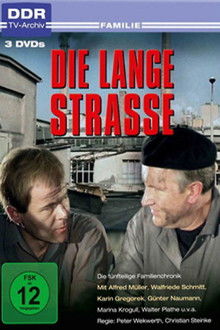
Die Lange Strasse
1949. Grafenberg in Brandenburg shortly before the foundation of the GDR. Here lives Michel Hollmann and works in roadmaking. His purpose in life are his wife Lotte and the two children Gerda and Heinz, for whom he is reconstructing a summerhouse into a “nest”. In Grafenberg, his siblings are living as well: His brother Karl, the mayor, and sister-in-law Edith, who works in a textile factory, with their son Jürgen. Edeltraut, his sister, has married the lamp fabricant Berthold Bennert and leads a well-off life. They as well have a son: Harald. Part of the family are further sister Hanna and brother-in-law Hermann, who is a fisherman on one of the local lakes and conducts a tenacious private war against old Stegewald and his presumptive prince-electoral rights. They are living their lives with their large and small conflicts, with different intentions, and yet remain connected always.
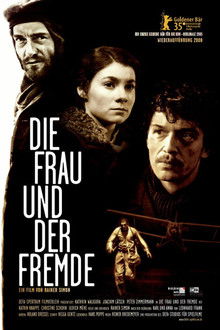
The Woman and the Stranger
Based on a switched identity, in circumstances that are found in real life as well as fiction, this drama tells the story of two soldiers fighting together in World War I. Karl (Joachim Latsch) and Richard (Hans-Use Bauer) become close friends while serving time in a German POW camp. One day Karl manages a successful escape and goes to Richard's home where he seeks refuge posing as Richard. But Richard's wife Anna (Kathrin Waligura) has never given up hope that her husband is still alive -- a possibility that would shatter Karl's proposed new life. In fact, Richard did not die in the POW camp. This film shared the Grand Prix award at the 1985 Berlin Film Festival.
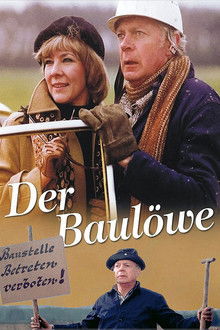
Der Baulöwe
The successful entertainment artist Ralf Keul must develop his land on the Baltic Sea or else ultimately give it up. Inexperienced yet courageous, he hurls himself into the undertaking, which spares him no unpleasantness. He battles over the transportation and procurement of materials, constantly on the verge of a nervous breakdown, while his craftsmen offer little additional assistance.
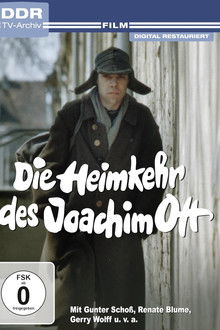
Die Heimkehr des Joachim Ott
After a long period as a prisoner of war, Joachim Ott returns home to find that his wife is now living with another man.
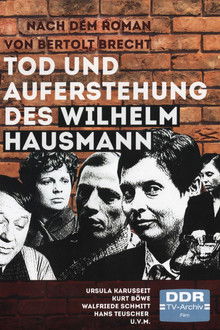
Tod und Auferstehung des Wilhelm Hausmann
In the crisis-ridden Germany of the 1920s, the desperate Frieda Hausmann pretends to be her deceased husband Wilhelm so that she can support her family by employing him as a porter.
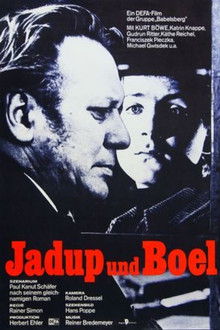
Jadup and Boel
In a small town, everyone has tried to forget what happened shortly after WWII. That is, until a stranger finds a book that Jadup (Kurt Böwe) gave to the young refugee Boel (Katrin Knappe), who resettled in the town over 30 years ago. Painful memories about Boel and the post-war period begin to surface and shake up the whole town. Boel vanished back then and nobody knew why. Word spread about a rape and some tried to blame a Russian soldier. Jadup, the town's respected and popular mayor, remembers, though, how he mistrusted Boel and did not help her through this difficult time; HE didn't even notice THAT Boel loved him. Jadup's confrontation with the past gives him a new, critical view of his current situation and surroundings.
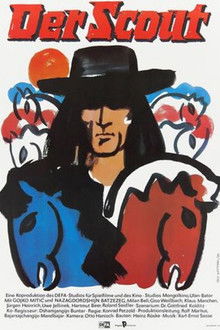
The Scout
1877, the tribe of the Nez Percés Indians are driven into the reservation by a white cavalry force. So that they can not escape, their horses are requisitioned. Sub-chief "White Feather" has no choice but to make a scout with the cavalry and retrieve the stolen horses through his life.
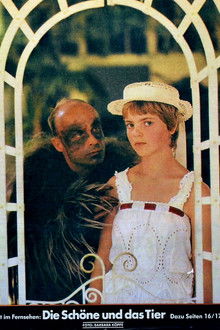
Die Schöne und das Tier
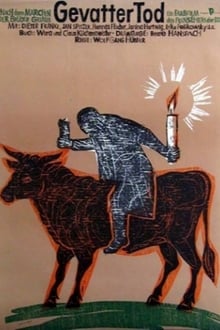
Godfather Death
Once upon a time, there was a poor farmer who had thirteen children. Since the farmer was so poor, there was never anything left for the youngest of the family. Therefore, the farmer chose Death as the godfather of his son, Jörg, because all people are equal in the eyes of Death. The Grim Reaper is happy to look after the boy and turns Jörg into a skilled doctor who earns wealth and fame.
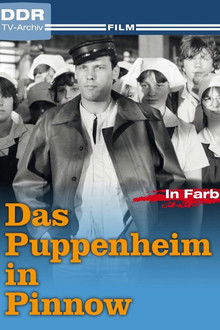
Das Puppenheim in Pinnow
On the way to the holiday camp, 16-year-old Steffi falls in love with Norbert, whom she has known for a long time from visiting grandfather in Pinnow. She made a quick decision to change her future plans and decided to become a milker, because Norbert is the newly appointed apprentice trainer for livestock farming in Pinnow. The grandfather, who is very happy about Steffi's visit, cannot prevent his granddaughter from making up her mind. Norbert himself was an apprentice in Pinnow and often suffered from the teaching methods of his predecessor. That's why he wants to do it differently.
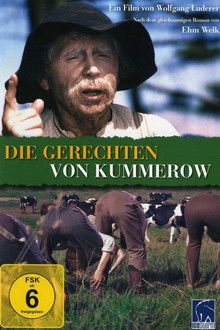
The Just People of Kummerow
In a remote Prussian village, the shepherd Krischan with his fantastic stories is the attraction point for the children. One day they experience together how the Müller Düker beats his horse to death and intervene. Düker sues her for body injury at the district court, and because the main accused, Krischan, lives illegally in the village without papers, the village community decides to deport him before the trial. Krischan disappears. The children feel the loss painfully, are outraged by the adults. The boys Martin and John search for Krischan on an adventurous ride and are put by the police. Krischan remains gone.