Personal Info
Known For
Gender
Birthday
Place of Birth
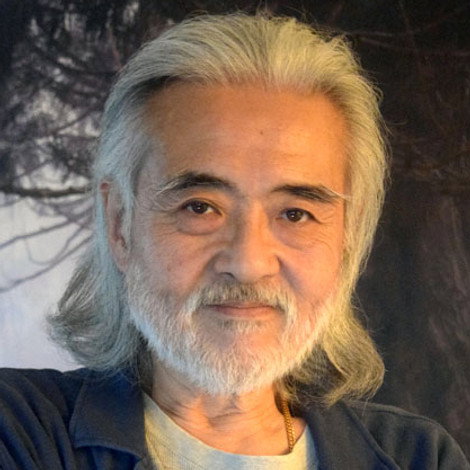
Masayuki Yui
Biography
Known for

Ran
Shakespeare's King Lear is reimagined as a singular historical epic set in sixteenth-century Japan where an aging warlord divides his kingdom between his three sons.

Kagemusha
A feudal epic presenting the tale of a petty thief who is recruited to impersonate Shingen, an aging warlord, in order to avoid attacks by competing clans. The impostor becomes comfortable living his life among nobility, but his responsibilities to his station grow more demanding the longer he occupies it.

Princess Go
Princess Go was the youngest of the most famous three sisters in Japanese history, who each led a remarkable life in an age of turmoil and civil war. Go loses her parents in the war, marries three times, and feuds with her own sister in competing for power. Go's husband becomes the second Tokugawa Shogun and she ensures her prominence as she gives birth to a son who later becomes the third Shogun and a daughter, a wife of the Emperor. The drama describes the age of the civil war through the eyes of Princess Go, who plays a significant part in establishing the age of peace that lasts over 200 years in Japan.

Dreams
Eight visually rich vignettes drawn from Kurosawa’s own dreams—fox weddings and vanished orchards, a soldier’s ghosts, a walk through Van Gogh’s canvases, nuclear nightmares, and a water-mill utopia—meditate on childhood, art, mortality, and humanity’s uneasy bond with nature.

To End All Wars
Based on a real-life story, this drama focuses on a small group of Allied soldiers in Burma who are held captive by the Japanese. Capt. Ernest Gordon, Lt. Jim Reardon and Maj. Ian Campbell are among the military officers kept imprisoned and routinely beaten and deprived of food. While Campbell wants to rebel and attempt an escape, Gordon tries to take a more stoic approach, an attitude that proves to be surprisingly resonant.

Madadayo
In postwar Tokyo, beloved writer-professor Hyakken Uchida retires and is buoyed through hardship by the fierce devotion of his former students, who honor him each year with a raucous “Not yet!” birthday toast. Told in warm, gently comic vignettes, Kurosawa’s farewell celebrates aging, friendship, and the sustaining ritual of teacher and pupils refusing to say goodbye.

Cicada
Cicada is the story of Jumpei-- a man who loses sight of his progeny when he finds out he is infertile, but then is given the gift of clairvoyance and begins to see glimpses of the future. These glimpses lead him to a series of cicada shells, which become symbolic of his desire to shed his old self. Though his lineage ends with himself, Jumpei starts anew as a father-figure to his sister's young son.

Sword of Desperation
A talented but troubled Edo Period swordsman, Kanemi Sanzaemon. Three years earlier, Kanemi killed a woman, Renko, the corrupt mistress of the powerful daimyo Tabu Ukyou. Unexpectedly, Kanemi received a lenient sentence for his crime and is allowed to return to his clan after only one year of imprisonment. Following his return, Kanemi is faced with the death of his wife, Mutsue. Thereafter, Kanemi lives with and cares for his wife's niece, Satoo, who has secret affections for Kanemi and expresses them by helping change his bleak outlook on life. Meanwhile, Kanemi's develops his unique "bird-catching" sword technique which he will soon put to test in battle for the first time against the fearsome swordsman, Hayatonosho Obiya.

Final Take: The Golden Age of Movies
Director Ogata discovers a new female star in Koharu Tanaka, who works selling candy at a studio theater and she is given a part as a bit player. After the studio's top leading lady is embroiled in a scandal, Koharu is suddenly thrust into the limelight when she replaces her in a film and gains instant fame and fortune. But the going is not always easy, and she soon seeks help from unexpected quarters.

Through the Night
When poverty-stricken Korean-Japanese (Zainichi) discover there is valuable iron ore in the rubble of a destroyed shantytown they plan to haul it out for profit. Amidst this plan there is discrimination, war and an infatuation between a man and a woman, but like everything around them there and owing to the forces around them, there is as much chance that these may burn to ashes and be destroyed or be the beginning of something new.

Tora-san Goes North
When his travels take him to rural Hokkaido, Tora-san helps a cantankerous old veterinarian (Mifune) in his relationships with his estranged daughter, and a woman in whom he is secretly interested.

Casting Blossoms to the Sky
In the aftermath of the 2011 Tōhoku earthquake and tsunami, a journalist arrives in Nagaoka, a city decimated during a WWII air raid and by the 2004 Chūetsu earthquakes, to report on the disaster; there, she learns about the experiences of its inhabitants and stumbles upon a stage play written by an enigmatic student of her ex-boyfriend.

A Class to Remember II
The story follows the teacher and students of the Ryubetsu Handicapped High School.
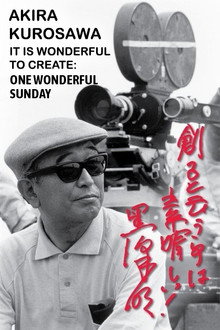
Akira Kurosawa: It Is Wonderful to Create: ‘One Wonderful Sunday’
Documentary made by Toho for the Masterworks reissue of all of its Kurosawa films. This one focuses on "One Wonderful Sunday" (1947).

Akira Kurosawa: It Is Wonderful to Create: 'High and Low'
Documentary made by Toho for the Masterworks reissue of all of its Kurosawa films. This one focuses on "High and Low" (1963).