Personal Info
Known For
Gender
Birthday
Place of Birth
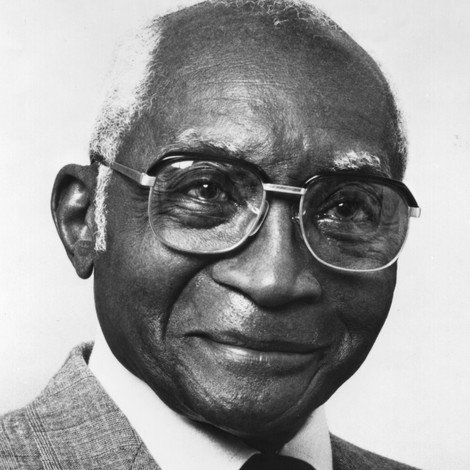
Jester Hairston
Biography
Known for

The Tonight Show Starring Johnny Carson
The Tonight Show Starring Johnny Carson is a talk show hosted by Johnny Carson under The Tonight Show franchise from 1962 to 1992. It originally aired during late-night. For its first ten years, Carson's Tonight Show was based in New York City with occasional trips to Burbank, California; in May 1972, the show moved permanently to Burbank, California. In 2002, The Tonight Show Starring Johnny Carson was ranked #12 on TV Guide's 50 Greatest TV Shows of All Time.
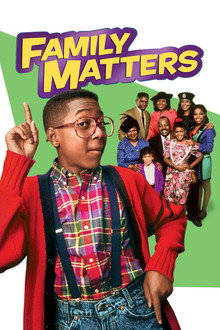
Family Matters
A long-running dramedy centering on the Winslow family, a middle-class African American family living in Chicago, and their pesky next-door neighbor, ultra-nerd Steve Urkel. A spin-off of Perfect Strangers.

Thriller
Thriller is an American anthology television series that aired during the 1960–61 and 1961–62 seasons on NBC. The show featured host Boris Karloff introducing a mix of self-contained, macabre weird-horror and morbid, hitchockian crime stories, in some of which he also starred.

Rawhide
The tale of trail boss Gil Favor and his trusty foreman Rowdy Yates as they drives cattle across the old west. Along the way they meet up with adventure and drama.

Gunsmoke
Gunsmoke is an American radio and television Western drama series created by director Norman MacDonnell and writer John Meston. The stories take place in and around Dodge City, Kansas, during the settlement of the American West. The central character is lawman Marshal Matt Dillon, played by William Conrad on radio and James Arness on television.

Studio 57
Studio 57 is an American anthology series that was broadcast on the now-defunct DuMont Television Network from September 1954 to September 1955, and in syndication from 1955 to 1956.

Amen
Amen is an American television sitcom produced by Carson Productions that ran from September 27, 1986 to May 11, 1991 on NBC. Set in Sherman Hemsley's real-life hometown of Philadelphia, Amen stars Hemsley as the deacon of a church and was part of a wave of successful sitcoms on NBC in the 1980s which featured entirely or almost-entirely black casts. Others included The Cosby Show, A Different World, and 227.

The 20th Century Fox Hour
The 20th Century Fox Hour is an American drama anthology series televised in the United States on CBS from 1955 to 1957. Some of the shows in this series were restored, remastered and shown on the Fox Movie Channel in 2002 under the title Hour of Stars. The season one episode Overnight Haul, starring Richard Conte and Lizabeth Scott, was released in Australia as a feature film.

Harry O
After being shot in the line of duty, Harry Orwell was forced to retire from the San Diego Police Department. To supplement his police pension, Harry runs a private detective agency out of his beach house... The series starred David Janssen and was executive produced by Jerry Thorpe.

To Kill a Mockingbird
Scout Finch, 6, and her older brother Jem live in sleepy Maycomb, Alabama, spending much of their time with their friend Dill and spying on their reclusive and mysterious neighbor, Boo Radley. When Atticus, their widowed father and a respected lawyer, defends a black man named Tom Robinson against fabricated rape charges, the trial and tangent events expose the children to evils of racism and stereotyping.

Nichols
Nichols is an American Western television series starring James Garner broadcast in the United States on NBC during the 1971-72 season. Set the fictional town of Nichols, Arizona, in 1914, Nichols differed from traditional Western series of the era. The main character, a sheriff, rode on a motorcycle and in an automobile rather than on the traditional horse. The hero did not carry a firearm and was generally opposed to the use of violence to solve problems, preferring other means. Margot Kidder portrayed Ruth, the love interest/barmaid of Nichols.

That's My Mama
Clifton Curtis has got it made—he runs a successful business he inherited from his late father and he's lucky with the the ladies—but he still lives with his Mama. She rules the roost and dispenses advice to everyone who'll listen—no one at Oscar's Barbershop is spared from Mama's wisdom. And they wouldn't have it any other way.

Amos 'n' Andy
A pair of friends in Harlem find themselves caught up in a series of misadventures, business schemes, and everyday problems, often relying on their neighbors and community to help them out of trouble.

Lilies of the Field
An unemployed construction worker heading out west stops at a remote farm in the desert to get water when his car overheats. The farm is being worked by a group of East European Catholic nuns, headed by the strict mother superior, who believes the man has been sent by God to build a much needed church in the desert.

In the Heat of the Night
African-American Philadelphia police detective Virgil Tibbs is arrested on suspicion of murder by Bill Gillespie, the racist police chief of tiny Sparta, Mississippi. After Tibbs proves not only his own innocence but that of another man, he joins forces with Gillespie to track down the real killer. Their investigation takes them through every social level of the town, with Tibbs making enemies as well as unlikely friends as he hunts for the truth.