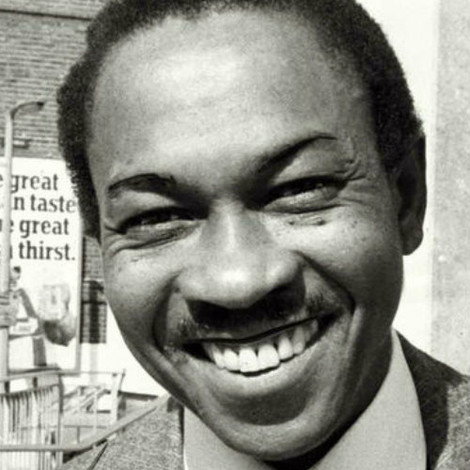
Personal Info
Known For
Gender
Birthday
Place of Birth
Norman Beaton
Biography
Known for

The Cosby Show
The Cosby Show is an American television situation comedy starring Bill Cosby, which aired for eight seasons on NBC from September 20, 1984 until April 30, 1992. The show focuses on the Huxtable family, an upper middle-class African-American family living in Brooklyn, New York.


Playhouse
A one-hour anthology television series of one-off contemporary and classic dramas produced by the BBC.

Dispatches
An in-depth look at news stories. Documentaries that take you behind the scenes giving an insight into people's lives or institutions.

Sykes
Classic sitcom starring Eric Sykes and Hattie Jacques as brother and sister twins who have to tackle the trials and tribulations of suburban life.

The Troubleshooters
The Troubleshooters is a British television series made by the BBC between 1965 and 1972, created by John Elliot. During its run, the series made the transition from black and white to colour transmissions. The series was based around an international oil company – the "Mogul" of the title. The first series was mostly concerned with the internal politics within the Mogul organisation, with episodes revolving around industrial espionage, internal fraud and negligence almost leading to an accident on a North Sea oil rig.

The Protectors
The Protectors is a British television series, an action thriller created by Gerry Anderson. It was Anderson's second TV series using live actors as opposed to electronic marionettes, and also his second to be firmly set in contemporary times. It was also the only Gerry Anderson produced television series that was not of the fantasy or science fiction genres. It was produced by Lew Grade's ITC Entertainment production company. Despite not featuring marionettes or any real science fiction elements, The Protectors became one of Anderson's most popular productions, easily winning a renewal for a second season. A third season was in the planning stages when the show's major sponsor pulled out, forcing its cancellation. The Protectors first aired in 1972 and 1973, and ran to 52 episodes over two series, each 25 minutes long - making it one of the last series of this type to be produced in a half-hour format. It starred Robert Vaughn as Harry Rule, Nyree Dawn Porter as the Contessa Caroline di Contini, and Tony Anholt as Paul Buchet. Episodes often featured prominent guest actors.

Hammer House of Horror
Each self-contained episode features a different kind of horror, varying from witches, werewolves, ghosts, devil worship and voodoo, but also includes non-supernatural themes such as cannibalism, confinement and serial killers.

The Play on One
A series of television plays, some original, some based on pre-existing plays or novels.

Desmond's
Desmond's was a British television situation comedy broadcast by Channel 4 from 1989 to 1994. With 71 episodes, Desmond's became Channel 4's longest-running sitcom. The first series was shot in 1988, with the first episode broadcast in January 1989. The show was made in and set in Peckham, London, England and featured a predominantly Black British Guyanese cast. Conceived and co-written by Trix Worrell, and produced by Charlie Hanson and Humphrey Barclay, this series starred Norman Beaton as barber Desmond Ambrose. Desmond's shop was a gathering place for an assortment of local characters.

The Fosters
The Fosters is a British sitcom created and written by Jon Watkins and Eric Monte. It showcases the early work of Lenny Henry as the budding artist son of easygoing family man Samuel Foster (Norman Beaton). The series follows the day-to-day trials of Samuel, his lively wife Pearl (both immigrants from Guyana) and their three children on a South London housing estate.

Empire Road
Empire Road was a British television series, made by the BBC in 1978 and 1979. Written by Michael Abbensetts, the show ran for two seasons of eight episodes each. The series was the first British television series to be written, acted and directed predominantly by black artists. A soap opera, similar in format to Coronation Street, Empire Road depicted life for the African-Caribbean, East Indian and South Asian residents of a racially diverse street in the city of Birmingham. Prominent cast members included Norman Beaton, Corinne Skinner-Carter, Wayne Laryea, Joseph Marcell and Rudolph Walker. The programme also provided early TV exposure for Julie Walters who appeared in a few episodes. The series was made at BBC Pebble Mill with location work in the Handsworth area of Birmingham. The eponymously named theme song was recorded by Matumbi and also released as a single in 1978.

Rockliffe's Babies
Rockliffe's Babies is a British television police procedural devised by Richard O'Keefe, and starring Ian Hogg as maverick Detective Sergeant Alan Rockliffe, who is assigned to train seven young recruits to the CID, all fresh out of uniform. Under his irascible guidance, it is hoped that they will blossom into full-blown detectives. But Rockliffe is human – so human that he makes more mistakes than the 'Babies' he's supposed to be training. A follow-up series, Rockliffe's Folly, follows Rockliffe through his relocation to Wessex, dealing with rural crimes as part of a new team of investigators. The seven episode third series proved to be the last, with many citing a change in the programme's formula for the heavy ratings decline. Many viewers stated that the success of the two Babies series came not from Rockliffe himself, but from the popular ensemble cast.

Eureka
After striking it rich on a large gold strike, a prospector retires to the quiet life on a Caribbean island but ends up coping with an alcoholic wife, a headstrong daughter, and Miami mobsters who want to build a casino.

Dead Head
London based petty crook Eddie Cass agrees to pick up a package and courier it across the capital. When nobody answers the door at the drop-off, Eddie opens the package and finds a woman’s severed head in a hatbox. He panics and dumps it in the River Thames. Returning home, Cass is kidnapped by the mysterious Eldridge and his heavies who inform Eddie that he has been framed for the murder.