
Personal Info
Known For
Gender
Birthday
Place of Birth
Figueira Cid
Known for
Heart of Gold
Water Mirror
Salty Sea
Mar Salgado is a story of a woman who had 2 twins and thought they died after the were born, but it couldn't be more far from truth, and now 16 years later she'll try to find them.
Winter Sun

Louco Amor

Welcome to Beirais
Diogo Almada is a successful account manager at a telecommunications company who is struggling with serious stress and anxiety issues due to the constant state of pressure he lives in. His situation becomes worse when he suffers a stroke which puts him in hospital. There, doctors tell him that if he doesn't slow down things could become much worse for him in the future. He also meets the owner of a vegetables and herbs greenery in Beirais, a small village in the midlands, who is looking to sell it. Diogo then decides to buy him out and risk it as a farmer himself. He wants his girlfriend Teresa to come along with him, but she refuses to leave Lisbon due to her career and also because she doesn't want to give up her city comforts. But Diogo decides to move to Beirais anyway, where he is faced with an entirely different reality from what he’s used to.

Mistura Fina

Naked City
Showing reality like it is... What happens when a promising and smart young woman is suddenly called upon to lead he most sophisticated police force in the country. To Ana Belmonte, this is the promotion of her lifetime, to the Criminal Police, this is a shake-up in their deep-seated hierarchy. This young inspector will be confronted with crimes that are tough to crack, where everyone is a suspect and leads can lead to the most unexpected places. But she’ll also have to face the jealousy and anger within her own department, where there are as many allies as there are enemies, and she’s a woman in a men’s world. Having been promoted by her former stepfather and national director Alberto Machado, Ana is going to permanently change the lives of those around her, whether they like it or not.

Fatima
In 1917, outside the parish of Fátima, Portugal, a 10-year-old girl and her two younger cousins witness multiple visitations of the Virgin Mary, who tells them that only prayer and suffering will bring an end to World War I. As secularist government officials and Church leaders try to force the children to recant their story, word of the sighting spreads across the country, inspiring religious pilgrims to flock to the site in hopes of witnessing a miracle..

O Dia do Regicídio

Vertiges
In a specialized, hermetic drama about love won and lost, not necessarily by the same individuals, novice director Christine Laurent has focused on the backstage melodramas of an opera company. The conductor for an upcoming performance of the Marriage of Figaro has his mind and heart on other matters -- an entrancing diva who keeps him enraptured with her presence and voice. In the meantime, he finds fault with his cast members who cannot, of course, measure up to the woman of his dreams. As singers encounter one problem or another, it is clear that something has to be done about the conductor. Director Laurent designed costumes for both theater and opera, giving her some insight into the venue.

Aquela Cativa que me tem Cativo
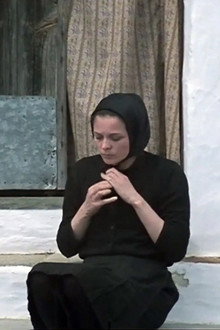
Mãe Genoveva
Blue, Blue
The Alentejo, 1980s. Luísa, still young, manages a family-inherited rural estate on her own. Although she has the support of her brother Alexandre, another sister, and her brother-in-law, the farm’s survival becomes increasingly difficult. While her brother-in-law advocates for transforming the estate into a luxury tourist retreat, Luísa resists the pressure to modernize. Meanwhile, Miguel, a young farmhand, falls in love with the landowner—whom everyone calls "the noblewoman"—in a relationship defined by class differences and the weight of tradition.

Thieves Like Us
During an eclipse in 1984, an iconic gang of armed robbers is dismantled after robbery of the Banco de Portugal. Part of the group is arrested, the other is murdered. Two members are left together. This event is the result of an anonymous call. Who denounced them? “Racing Horses” tells this gang's story, emphasizing the individual motivations that led each member to choose this way of life. As a backdrop, the bathing area of a Portugal about to enter the European Economic Community.