
Personal Info
Known For
Gender
Birthday
Place of Birth
Yasuko Sawaguchi
Known for

Spirited Away
A young girl, Chihiro, becomes trapped in a strange new world of spirits. When her parents undergo a mysterious transformation, she must call upon the courage she never knew she had to free her family.

Yonimo Kimyou na Monogatari Tokubetsuhen

Absolute Zero
Izumi Sakuragi is a new police sergeant with the Special Investigations Office, which was set up within the Metropolitan Police in November last year. The new investigation team uses DNA analysis and the latest in forensics science to investigate cold cases as well as cases suspected to involve missing persons.

The Woman of S.R.I.
Mariko is a forensic scientist working at the Kyoto PD Crime Lab. Her credo is “science never lies” and she delves into the truth of the case with her colleagues with their specialized skills and knowledge in forensic medicine, physics, chemistry etc. Mariko’s steadfast belief in science makes her stand against conventional institutional ethics of the police department, diehard detectives averse to scientific investigation and sometimes even with her own colleagues, but she stays faithful to her belief in science and continues to pursue the truth.

Miotsukushi
In the early Showa era, the town of Choshi in Chiba Prefecture was divided by the conflicts between the worlds of "land" and "sea". Born to Kyubei Bando, the owner of a long-established soy sauce brewery, and his mistress Rui, Kaworu was taken in by her father and raised as a prim and proper lady. As she grew up, she fell in love with Sokichi, the eldest son of an established fisherman; alas, their two families were in conflict. This is a story of pure love between two people that grew beyond the boundaries of the old customs that they were brought up with. It is a drama that depicts their turbulent journey of love and the bonds of the people from an old and established family working tirelessly to protect their naturally brewed soy sauce business through the ups and downs.
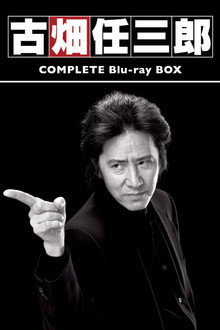
Furuhata Ninzaburo
Furuhata Ninzaburō is a Japanese television series that ran periodically on Fuji Television from 1994 until its final episodes in 2006. It was written by Japanese playwright Kōki Mitani and is often referred to as the Japanese version of Columbo. The series is a police detective drama starring actor Masakazu Tamura as Furuhata Ninzaburo and Masahiko Nishimura as his stereotypically bumbling sidekick, Shintaro Imaizumi. The program aired weekly and featured a guest villain each time, usually a famous talent in Japan. Pop-stars like SMAP, television hosts like Sanma Akashiya and even sports figures like Ichiro Suzuki have been featured on this program. It was one of the most popular television dramas in the history of Japanese television, having spawned several seasons and TV specials.

Masamune Shogun
Broadcast TV drama NHK broadcast on January 4 to December 13, 1987 (Showa 62). In the questionnaire survey conducted by NHK, it is shining in the most favorite river drama. The original is Yamaka Sosaichi's novel "Date Masamune", the biggest drama on the theme of the Date house was the first time in 17 years since the "Shinnogi remained" (1970), which painted Datejo in the Edo period. It depicts the life of Matsudo Date of Sengoku warrior · Date Masamune who built the foundation of Sendai clan 620,000 stones in his generation as a result of my own wisdom and talent.

Hideyoshi
A dramatized biography of the second of Japan's three legendary leaders. Rising from obscurity, Hideyoshi served under the command of Oda Nobunaga. With an extraordinary combination of intelligence, bravery and military skill, Hideyoshi rose to near-absolute power and greatly expanded upon Nobunaga's unification of Japan's warlords. This series also focused on Hideyoshi's personal life, particularly his relationships with his mother and his wife, and the pair's rivalry for influence over him.

Salaryman Kintaro
Kintaro Yajima comes to Tokyo and is hired by Yamato Construction Company when he saves the life of the company's CEO. A former leader of a motorcycle gang, Kintaro is known for his highly principled and forthright way of dealing with matters and is never afraid to tell his superiors exactly what he thinks. This has a tendency of irritating some; but when corruption from within the company begins to surface, he may be the only one who can stand up to it.

Salaryman Kintaro
Kintarō Yajima used to be the leader of a feared and respected biker gang, but out of respect for his late wife he chooses to straighten himself out and work as a salaryman so that he can support his son.
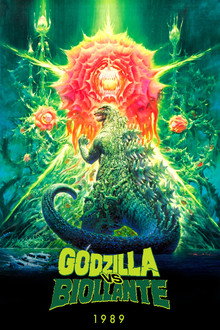
Godzilla vs. Biollante
After the previous Godzilla attack, a miniature arms race ensues to collect his cells. Concerned over Godzilla's possible return, the Japanese government uses the cells to create a new bio-weapon, ANEB (Anti-Nuclear Energy Bacteria). They seeks the aid of geneticist Genshiro Shiragami, who's experiments result in a new mutation.

Godzilla Resurrection
This is a hybrid cut of both the original Japanese version The Return of Godzilla and Godzilla 1985, meant to combine the best aspects of both. This re-edit seeks to accomplish a happy medium between the two versions. The film will still be highly critical of both the United States and the Soviet Union, and will work to marginalize the more humorous aspects of the added Pentagon scenes. Their inclusion will fit better with the bureaucratic behind-the-scenes narrative of the original cut, and most additional music from the American cut will be included. All Japanese dialogue will remain intact, with English subtitles. Finally, this cut will feature a brand new opening to the film, one that seeks to definitely tie the new Godzilla to the original beast in an eerie and unforgettable way. In short, Godzilla: Resurrection will aim to be my definitive version of the return of the King of the Monsters.

The Return of Godzilla
After a fishing boat is attacked, the sole surviving crew member realizes it is none other than a resurrected Godzilla. However, efforts to bring the story to light are suppressed by the Japanese government amid growing political tensions between the United States and the Soviet Union, who are both willing to bomb Japan to stop the monster.

西村京太郎トラベルミステリー
